Phuket Buddhist Temples

Phuket’s Buddhist temples form a network of active Theravada monasteries distributed across the island. Known in Thai as wat, these temple complexes typically include ordination halls, assembly halls, stupas, and monastic residences. Beyond their religious role, Phuket’s temples function as community centers where daily worship, festivals, education, and local ceremonies continue traditions that have shaped Thai society for centuries.

Phuket’s Buddhist Temples

Monasteries, Memory, and the Quiet Architecture of Faith

At first light in Phuket, before the island’s beaches begin their daily theatre of umbrellas and long-tail boats, the temple courtyards are already awake.

A monk sweeps fallen leaves from the stone path. Incense curls into the humid air. A bell sounds somewhere beyond the trees. Within the temple walls the rhythm is measured, deliberate, and largely unchanged from the patterns that have shaped Thai monastic life for centuries.

Phuket is often introduced through its coastline, yet the island’s cultural structure is anchored in its Buddhist temples. These monasteries—known in Thai as wat—are not simply places of worship. They function as community centers, ritual spaces, places of education, and, in many villages, the quiet civic heart of daily life.

Across the island, from the northern plains near Thalang to the hills above Phuket Town and the coastal settlements of the west, temple complexes form a network that reflects the island’s history and settlement patterns. Some are large pilgrimage sites visited by thousands of worshippers each week. Others remain small neighborhood monasteries where monks, local families, and passing visitors share the same shaded courtyards.

Together they form a religious landscape that is both deeply traditional and distinctly local.

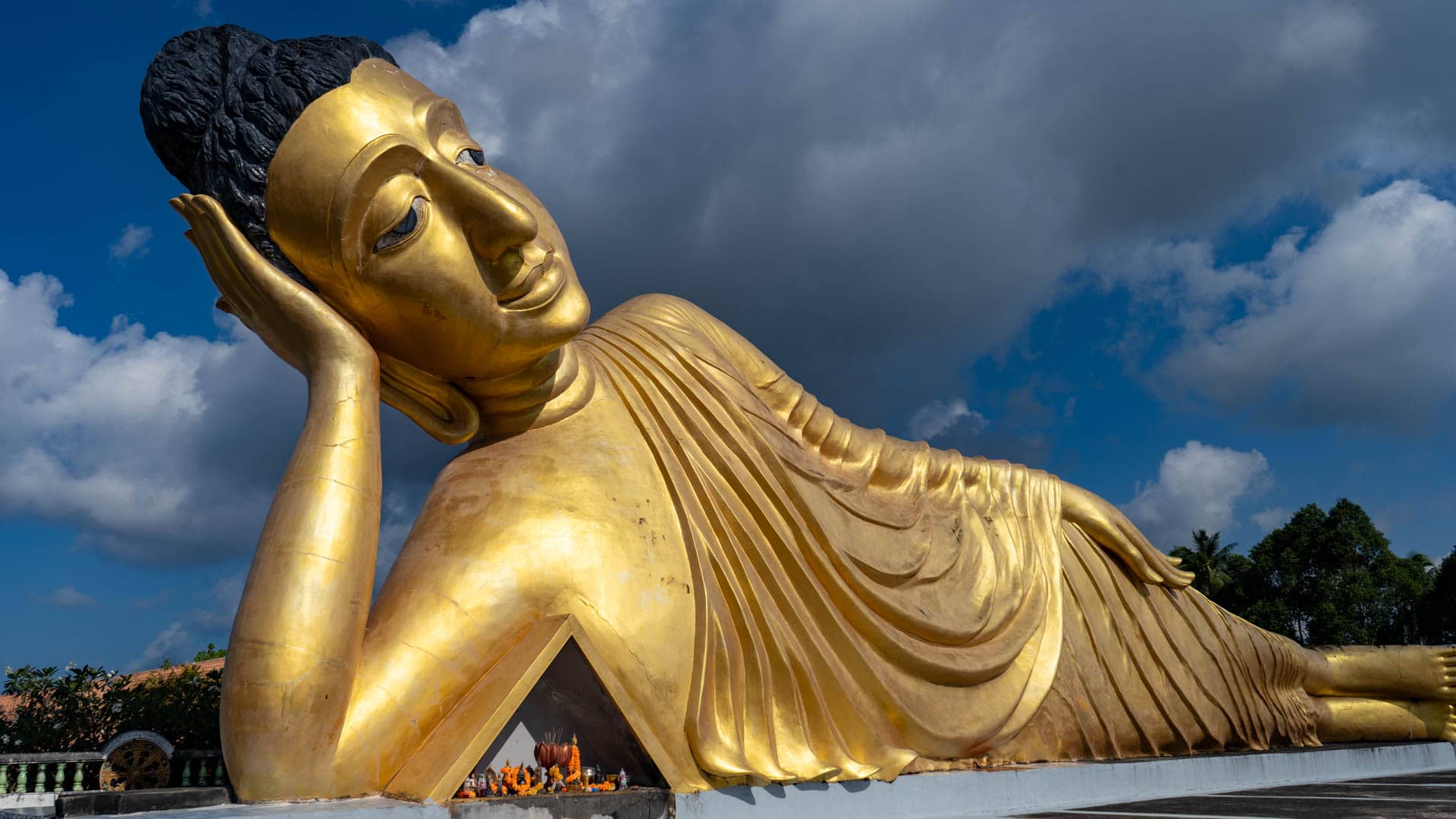
Side view of reclining Buddha with offering recess at Wat Sri Sunthon

Wat Sri Sunthon Phuket

Wat Sri Sunthon is a Buddhist temple complex in Si Sunthon in Thalang, central Phuket. The temple is known for

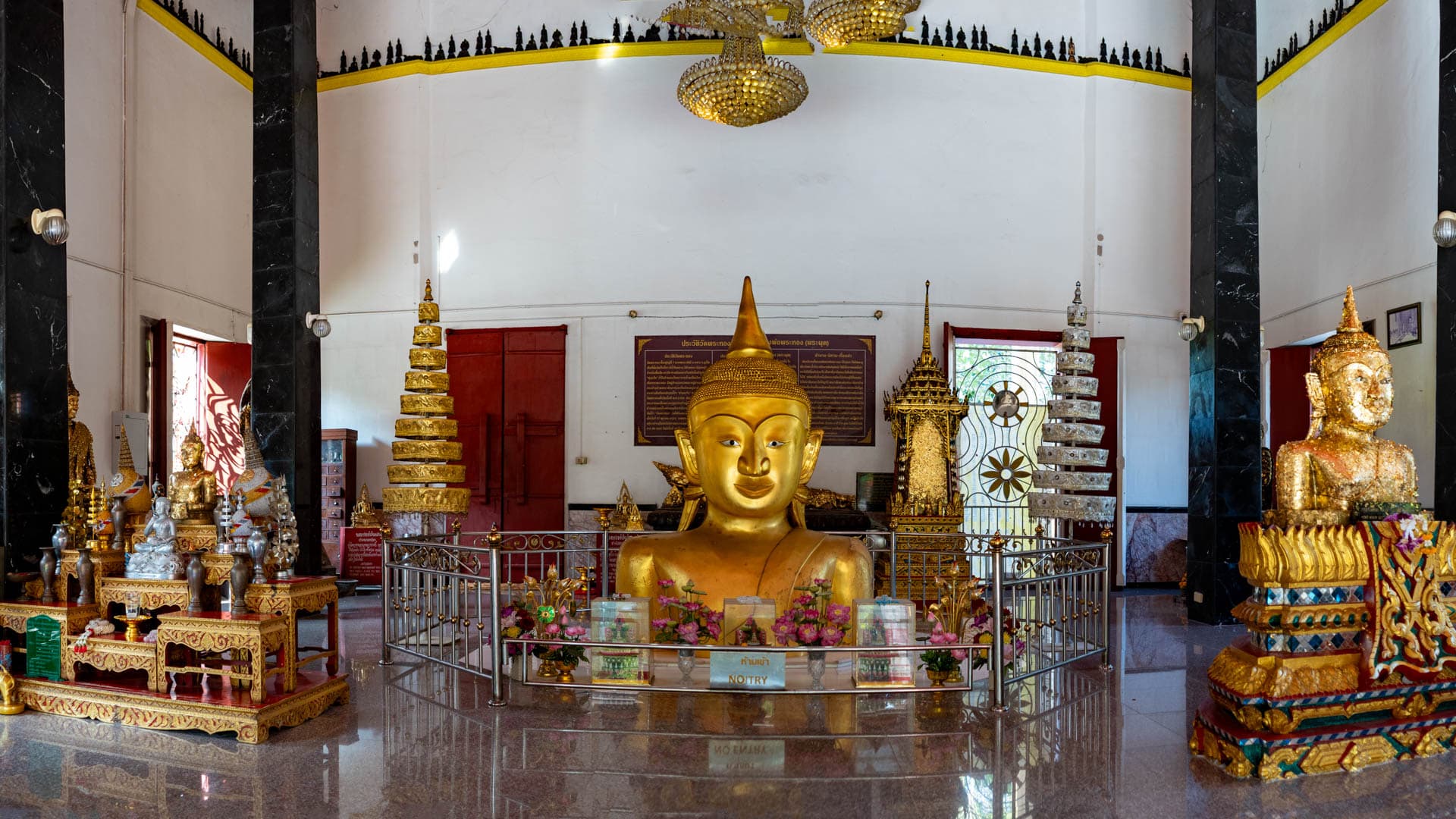
Full interior view of hall with half-buried Buddha at Wat Phra Thong

Wat Phra Thong Phuket

Wat Phra Thong Temple Phuket is a Buddhist temple complex in Ban Na Nai in Thep Krasattri, Thalang, in northern

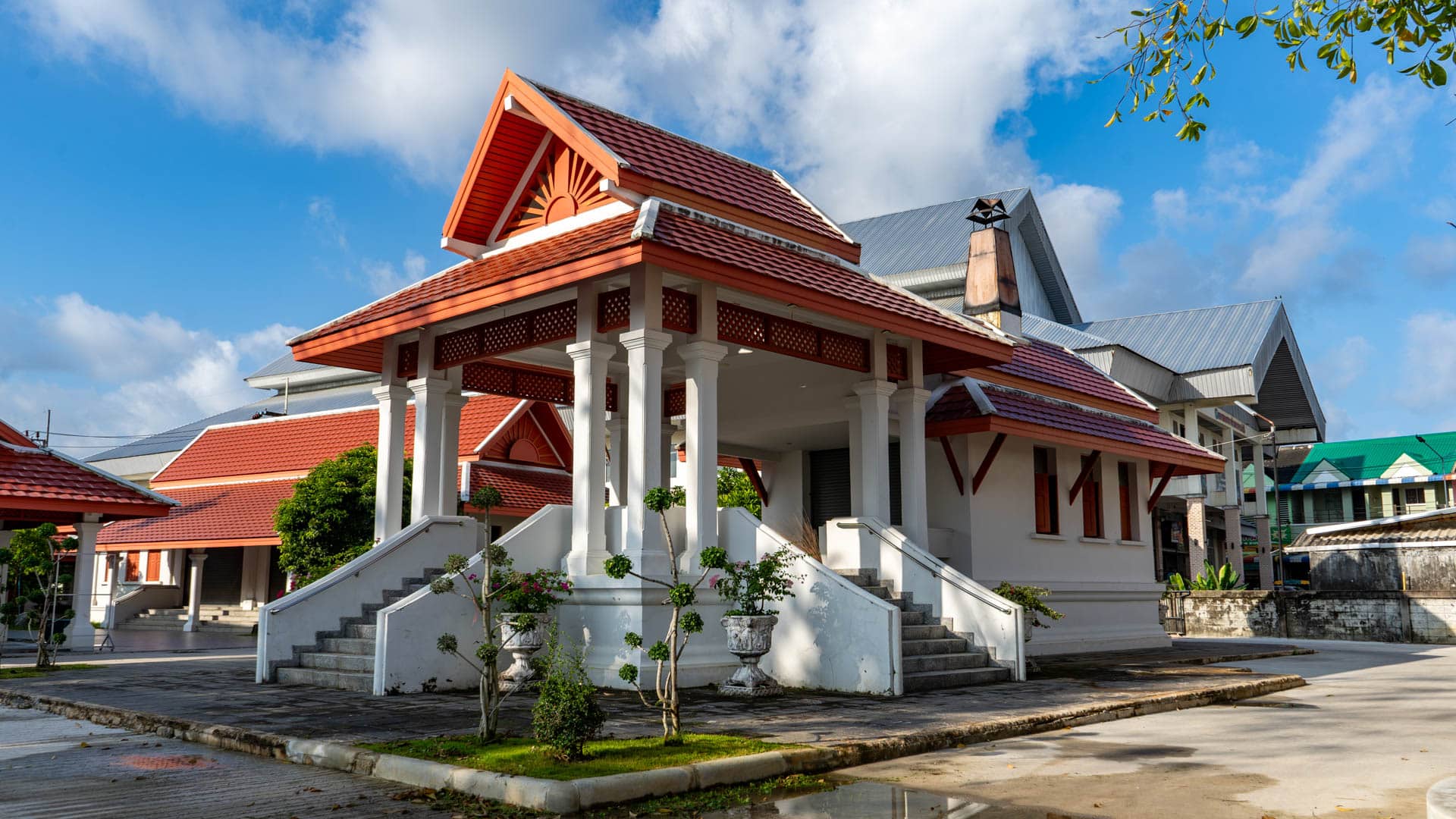
Raised pavilion with twin staircases and red tiled roof in temple grounds

Wat Phra Nang Sang Phuket

Wat Phra Nang Sang Temple Phuket is a historic Buddhist temple complex in Thep Krasattri in Thalang District, northern Phuket.

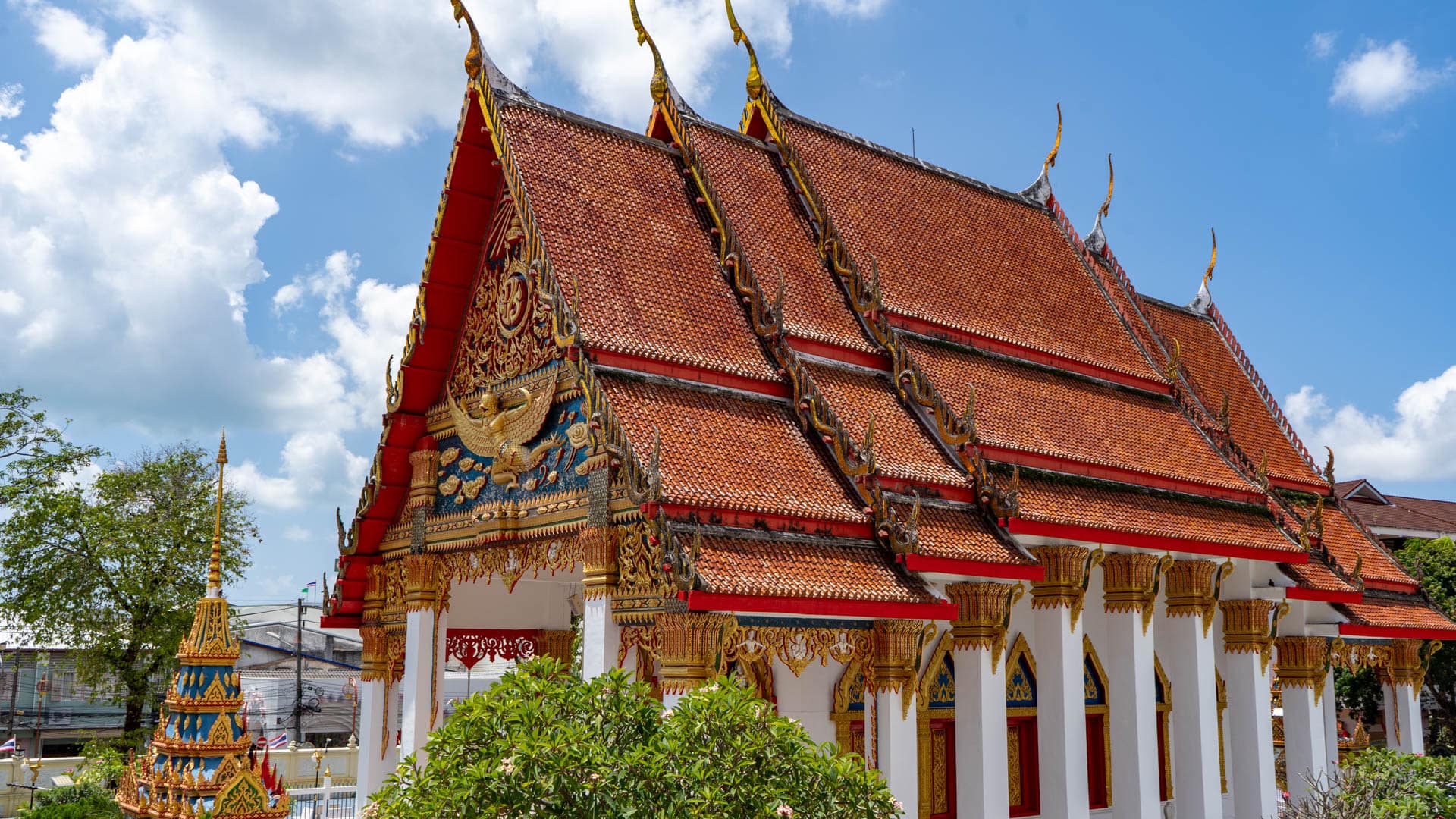
Ornate ordination hall roof and façade at Wat Mongkolnimit temple

Wat Mongkolnimit Phra Aram Luang Phuket

Wat Mongkolnimit Phra Aram Luang Temple Phuket is a Royal Buddhist temple complex on Deebuk Road in Talat Yai, at

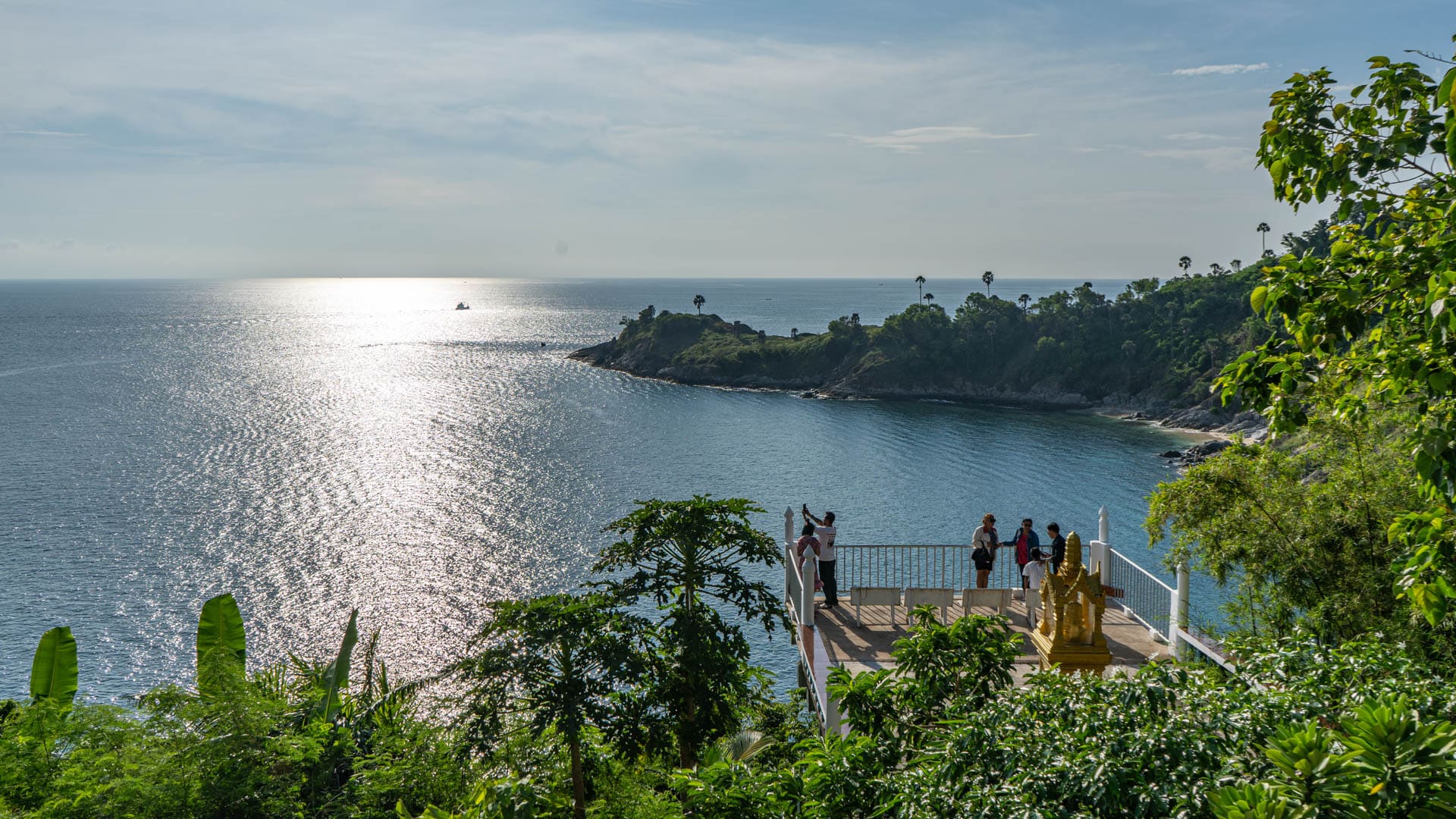
Visitors standing on terrace above the bay at Wat Laem Phromthep

Wat Laem Phromthep Phuket

Wat Laem Phromthep is a Buddhist monastery complex located at Phromthep Cape in Rawai in southern Phuket. The site functions

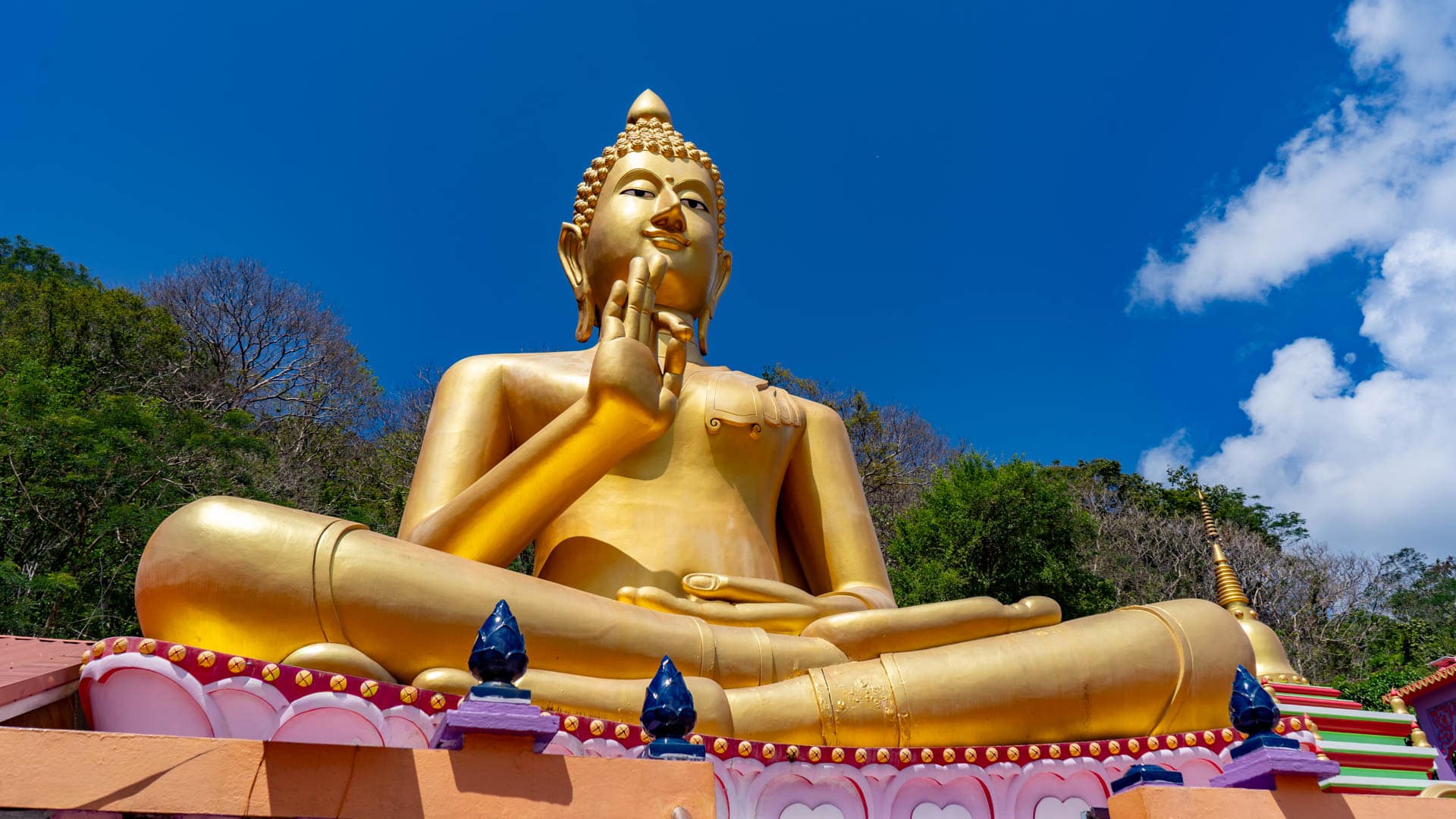
Large golden seated Buddha statue at Wat Khao Rang Samakkhitham Phuket

Wat Khao Rang Samakkhitham Phuket

Wat Khao Rang Samakkhitham Temple Phuket is a Buddhist temple complex on the slopes of Khao Rang Hill in Phuket

The Structure of a Thai Temple

A Buddhist temple in Thailand is rarely a single building. Instead, it is a compound of structures arranged within a walled enclosure.

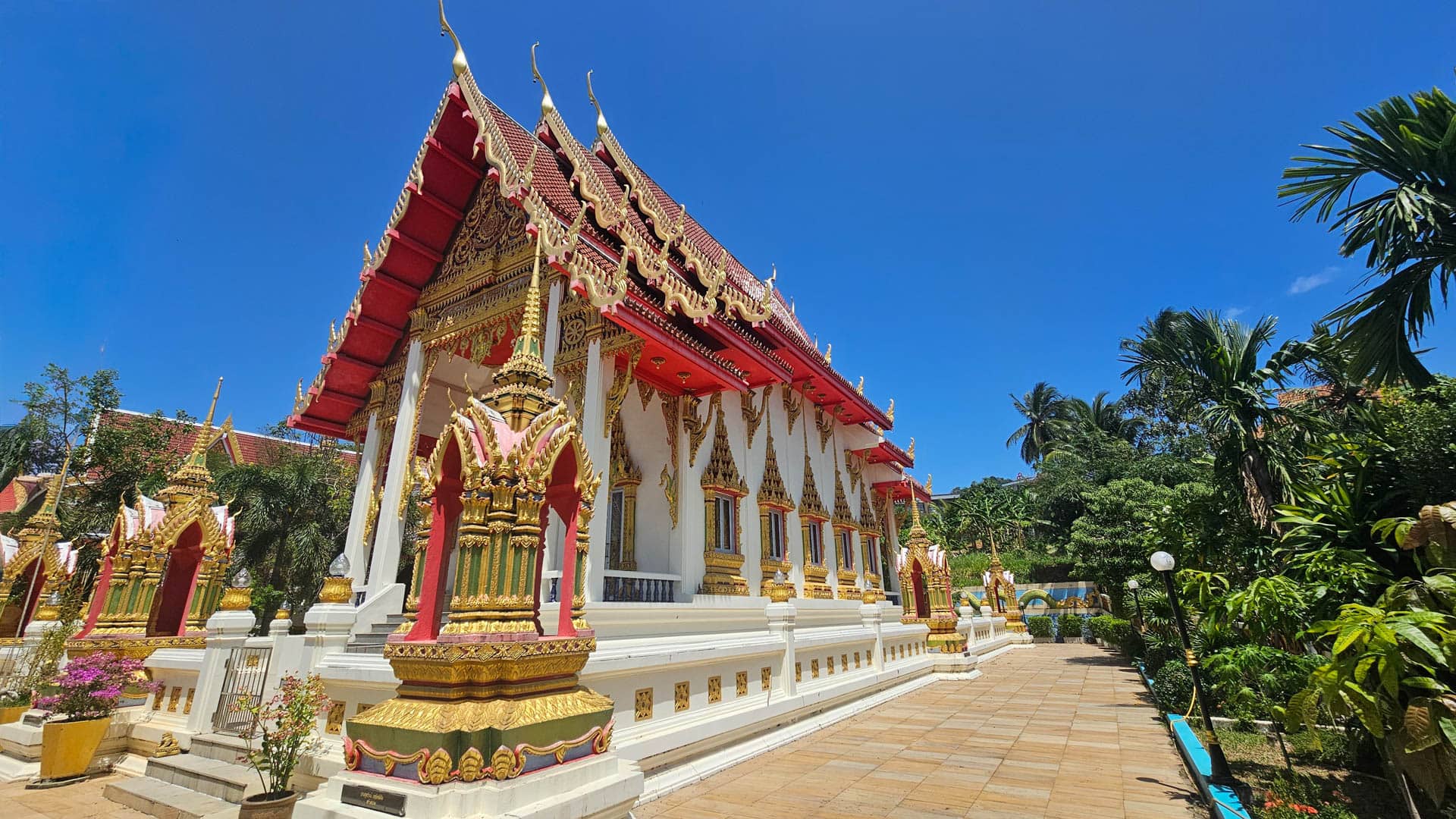
The most sacred structure is the ubosot, the ordination hall where monks are formally admitted to the monastic order. Nearby stands the viharn, an assembly hall used for prayers and ceremonies, often housing large Buddha images that become the spiritual focus of the complex.

Temple grounds may also contain a chedi or stupa holding relics, smaller shrines, bell towers, and the modest wooden or concrete houses where monks live. Trees provide shade, and courtyards serve as gathering places during festivals, funerals, and community ceremonies.

Although these elements follow a common architectural logic across Thailand, each temple develops its own character. Rooflines vary. Buddha images differ in scale and posture. Some temples expand over centuries, while others remain intimate and quiet.

In Phuket, the variety reflects the island’s layered history.

Full interior view of hall with half-buried Buddha at Wat Phra Thong

Wat Phra Thong Phuket

Wat Phra Thong Temple Phuket is a Buddhist temple complex in Ban Na Nai in Thep Krasattri, Thalang, in northern

Raised pavilion with twin staircases and red tiled roof in temple grounds

Wat Phra Nang Sang Phuket

Wat Phra Nang Sang Temple Phuket is a historic Buddhist temple complex in Thep Krasattri in Thalang District, northern Phuket.

Ornate ordination hall roof and façade at Wat Mongkolnimit temple

Wat Mongkolnimit Phra Aram Luang Phuket

Wat Mongkolnimit Phra Aram Luang Temple Phuket is a Royal Buddhist temple complex on Deebuk Road in Talat Yai, at

Visitors standing on terrace above the bay at Wat Laem Phromthep

Wat Laem Phromthep Phuket

Wat Laem Phromthep is a Buddhist monastery complex located at Phromthep Cape in Rawai in southern Phuket. The site functions

Temples and Community Life

Beyond their architectural presence, Phuket’s temples remain deeply woven into the daily lives of local communities.

Families visit to make merit, monks provide spiritual guidance, and temple grounds host ceremonies that mark important moments in life—births, ordinations, marriages, and funerals. Festivals bring larger gatherings, with lanterns, candles, and chanting transforming the quiet courtyards into luminous spaces of collective devotion.

Even for visitors with no religious connection, the temples offer a different perspective on the island. They reveal Phuket not as a resort destination, but as a place where long-standing traditions continue quietly alongside modern tourism.

Visiting Temples in Phuket

Visitors are welcome at most temples, but a few simple conventions help preserve the respectful atmosphere of these spaces.

Modest clothing is expected, particularly inside prayer halls. Shoes should be removed before entering sacred buildings, and it is customary to move quietly within the temple grounds.

Photography is generally permitted, though worshippers and monks should be approached with consideration. In many temples, the most meaningful moments occur not in dramatic architecture but in the smaller gestures of everyday practice—a monk adjusting a candle, a family placing flowers before a statue, or the soft sweep of a broom across the courtyard at dawn.

Side view of reclining Buddha with offering recess at Wat Sri Sunthon

Wat Sri Sunthon Phuket

Wat Sri Sunthon is a Buddhist temple complex in Si Sunthon in Thalang, central Phuket. The temple is known for

Side view of Wat Karon viharn with walkway and gilded columns

Wat Suwan Khiri Khet (Wat Karon) Phuket

Wat Suwan Khiri Khet, commonly known as Wat Karon, is a Buddhist temple complex located in Karon in southwest Phuket.

Phuket’s temples may not command the same international attention as the island’s beaches, yet they offer something the coastline cannot: a sense of continuity.

Within their courtyards the rhythms of Thai Buddhism continue largely unchanged, shaping community life and preserving traditions that long predate the arrival of modern tourism. For those willing to step beyond the shoreline, the temples reveal another Phuket entirely—one measured not by tides and sunsets, but by ritual, memory, and the quiet passage of time.