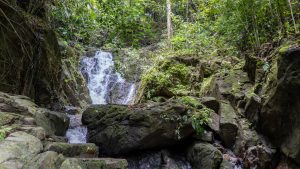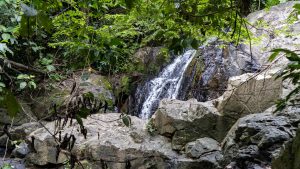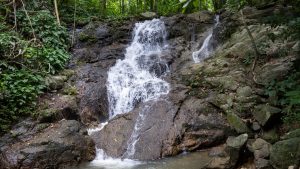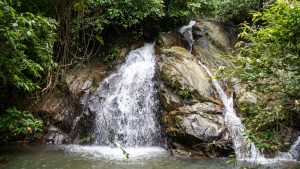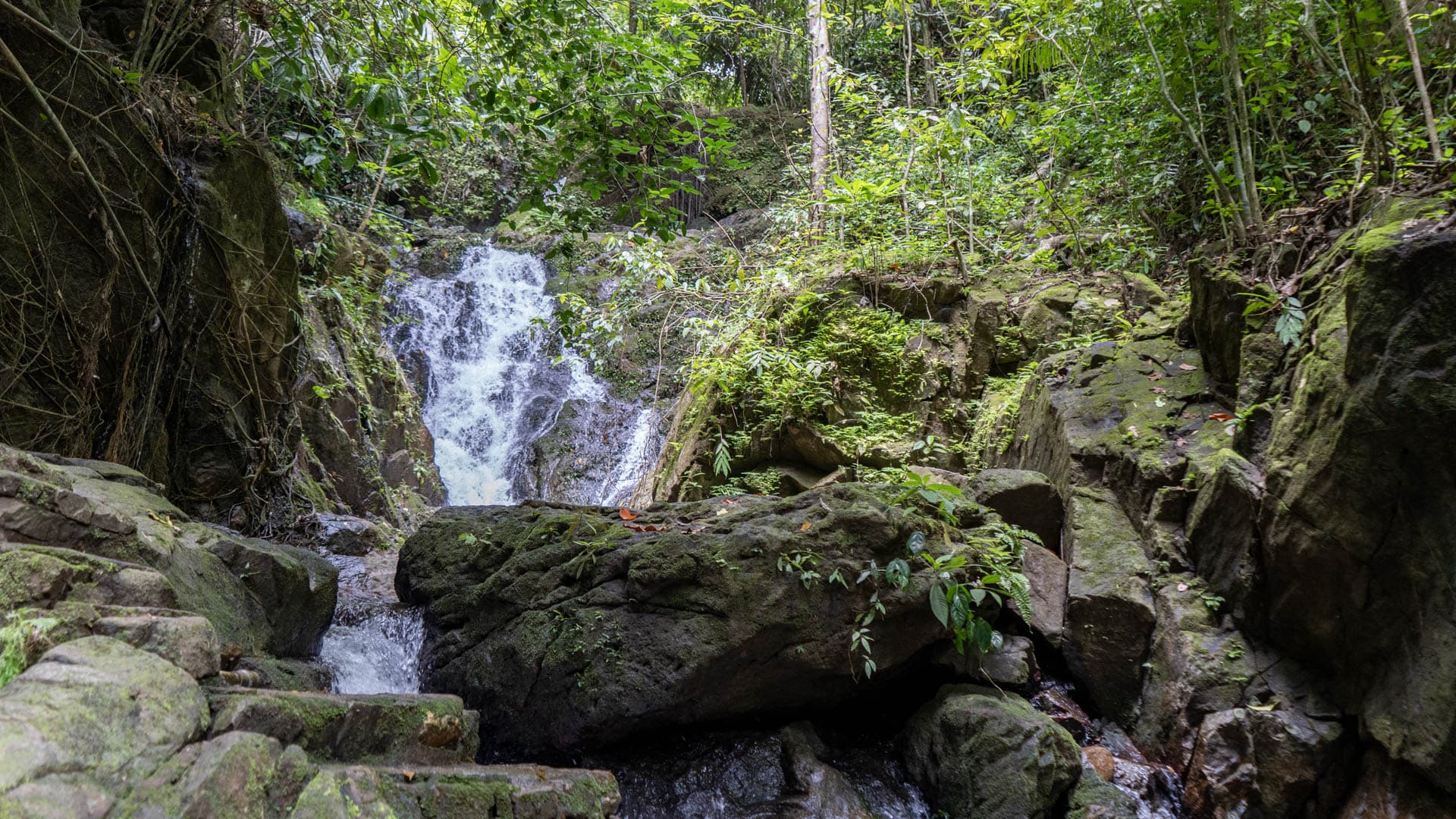
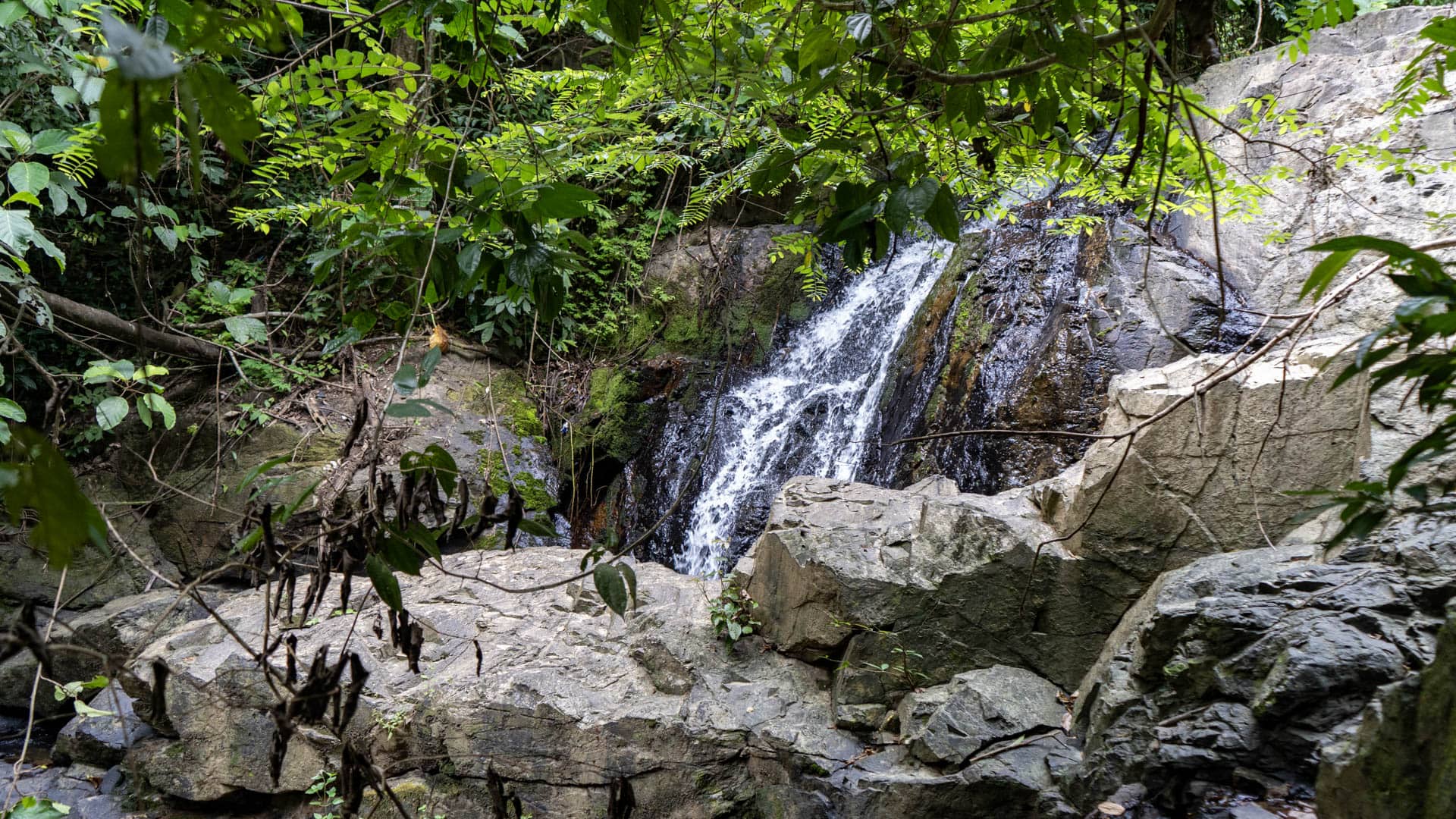
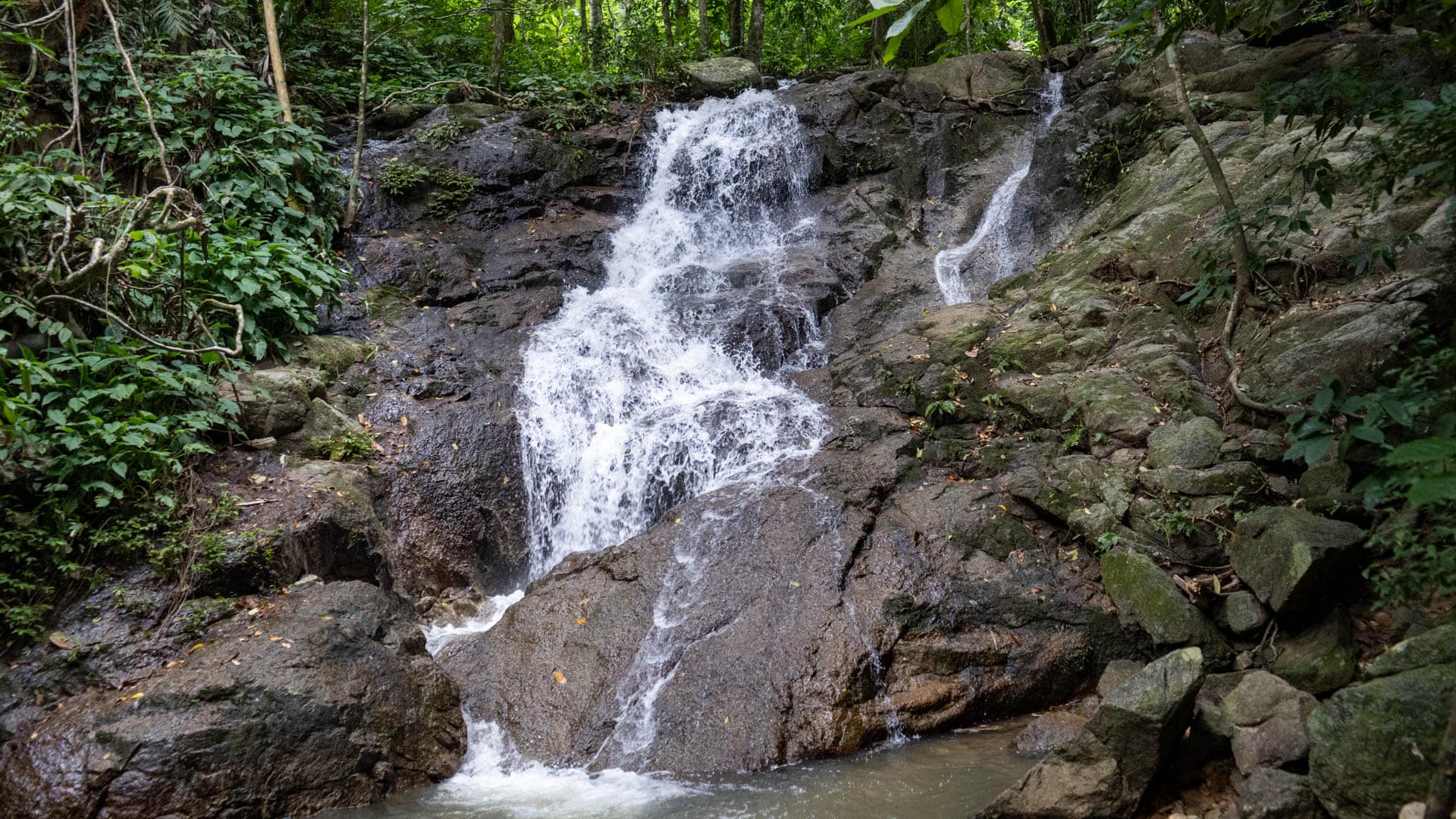
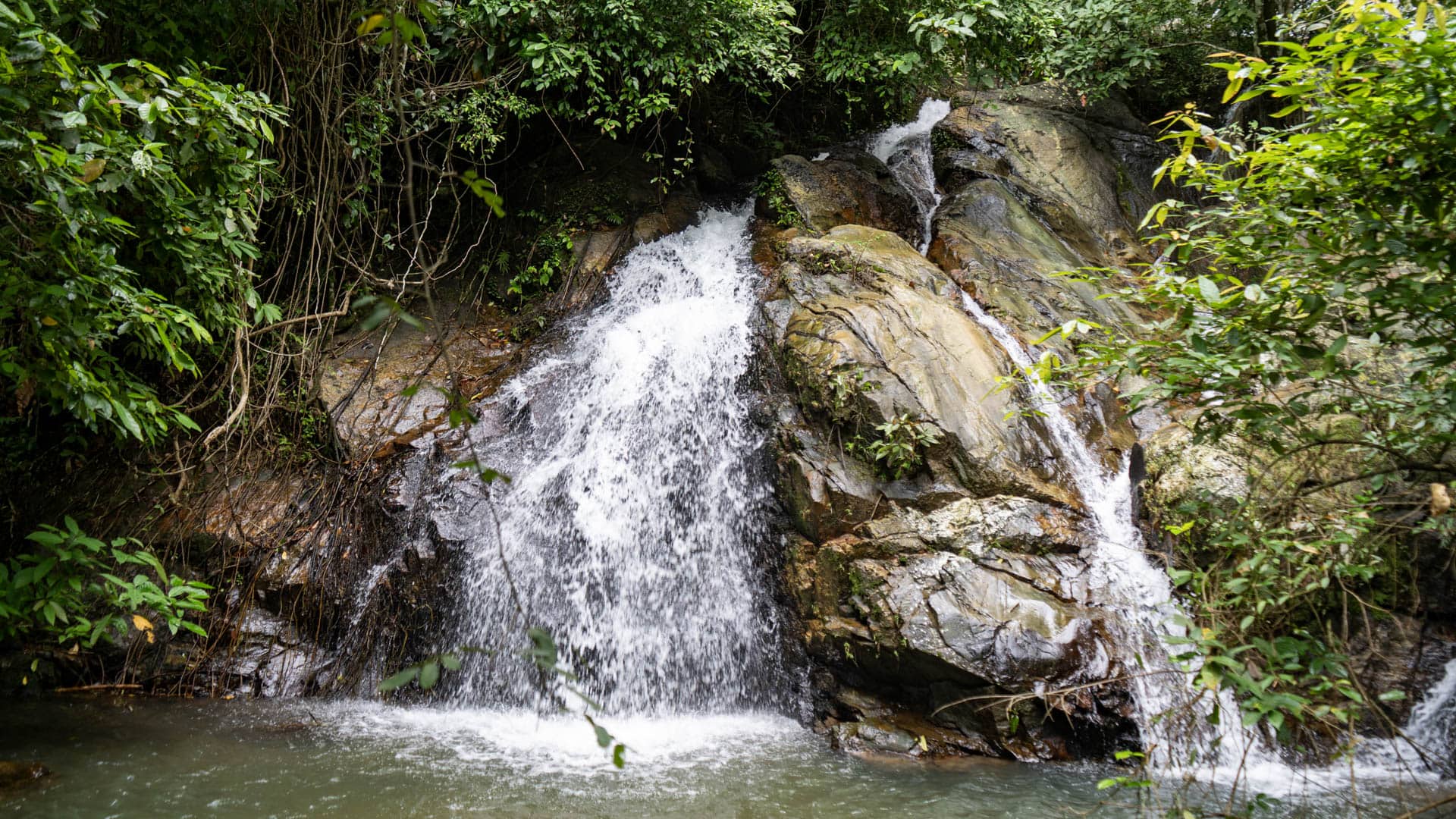
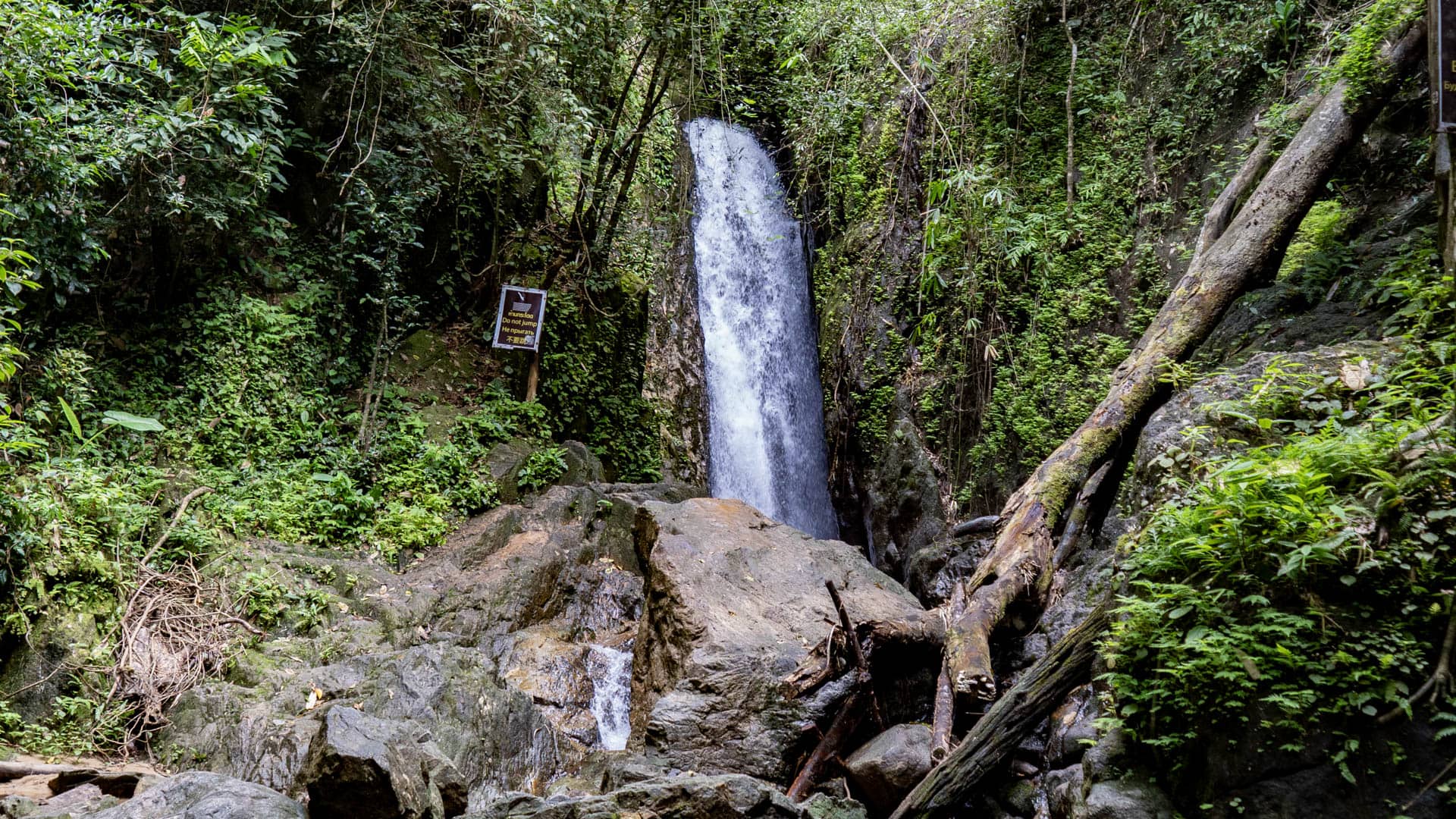

This is the single most useful thing to understand before choosing a site. All five waterfalls are fed by the southwest monsoon, which runs from May through November. Peak flow is typically July through October. From January through April — and especially February through April — the flow at every site drops sharply, and at some it stops entirely.
Kathu, Ton Ao Yon, and Bang Wan are the most affected in the dry months. Bang Pae and Ton Sai, inside Khao Phra Thaeo, retain a trickle through more of the dry season by virtue of the forest that feeds them — but even there, a visit in March will look nothing like a visit in September.
If the date is fixed and the season is dry, the forest around the waterfall — not the water itself — becomes the reason to go. That calculation is worth making honestly before the trip, not after.
The two largest sites — Bang Pae and Ton Sai — are on opposite faces of Khao Phra Thaeo, the last significant tract of primary rainforest in Phuket. A single entry ticket covers both on the same day, which is worth knowing before paying twice.
Bang Pae Waterfall is the island’s largest waterfall, on the eastern side of the mountain in Pa Klok, Thalang District. The main drop runs 10–15 metres onto granite, the trail follows a stream through old canopy, and the Gibbon Rehabilitation Project operates from the same entrance. It draws the most visitors of any waterfall on the island and earns that traffic in the wet months. In the dry months, the same drop can thin to a narrow channel of water tracking down rock rather than falling clear of it. The forest remains regardless of season.
Ton Sai Waterfall sits on the western side, in Thep Krasattri, accessed from a road roughly 5.5 kilometres east of the Thalang Intersection. It carries far less visitor traffic than Bang Pae — most mornings the parking area is close to empty. The falls themselves run as a series of cascades over granite rather than a single vertical drop. What Ton Sai carries that Bang Pae does not is a 2-kilometre loop trail through the deepest section of the sanctuary, where the White-backed Palm — endemic to this specific forest — grows along the trail floor. That is not a detail to skip over. It is the reason the western entrance has its own weight.
Bang Wan Waterfall sits at the end of Bang Wan Road at the eastern edge of Kamala in Kathu District, approximately four kilometres from Kamala Beach. It is free, unmanaged, and small — a four-tier jungle cascade in a narrow, shaded valley. In the dry months it can stop entirely, and anyone arriving in February expecting a cascade will find a wet rock face and not much else.
What Bang Wan offers is proximity and low friction. For anyone staying on the west coast — Kamala, Surin, Bang Tao — it is accessible without crossing the island. The valley is genuinely forested, the atmosphere is local rather than touristic, and a visit takes under an hour. It is not the kind of place that warrants a deliberate drive from Patong. For a Kamala resident or guest, it is a different calculation.
Kathu Waterfall is in Kathu Subdistrict, eight kilometres from Patong Beach — closer to the island’s resort centre than any other waterfall on the list. It sits at the end of a signposted road with a large paved parking area, food stalls, and a concrete staircase of 130 to 150 metres that local residents use as a morning workout circuit. That character — municipal, community-used, logistically easy — is the honest description of the place.
The falls themselves are multi-tiered and run properly from July through November. From January onward, the flow drops, and by March the rocks can be dry. The staircase and the forest cover persist regardless of season, which is why Kathu remains functional as a local exercise destination even when there is no water. Visitors coming for the waterfall rather than the stairs are more time-sensitive here than at any other site on the island.
Ton Ao Yon Waterfall is the outlier. It sits roughly 500 metres inland from Ao Yon Beach on the Cape Panwa peninsula in southern Phuket — in Wichit Subdistrict, a fifteen-minute drive from Chalong. There is no entry fee, no marked trail from the road, and no facilities. The path is the stream.
It is small and rain-dependent, and the dry season renders it close to pointless as a waterfall. What it offers, in the right months, is twenty minutes of genuine forest in a part of the island that has almost no equivalent. For anyone staying near Cape Panwa, or building a day around Ao Yon Beach and the Khao Khad viewpoint, it makes sense as an addition rather than a destination.
About the Author
Mads D is a photographer with 40 years behind the lens, a Google Level 10 Guide, and the General Manager of Kamala Beach Estate. His connection to Thailand began in 1989, and he has since logged more than 500,000 road kilometres across the country, documenting coastlines, cities, and remote provinces through sustained fieldwork. His photography on Google Maps has surpassed 150 million views, forming one of the most widely seen visual archives of contemporary Thailand.