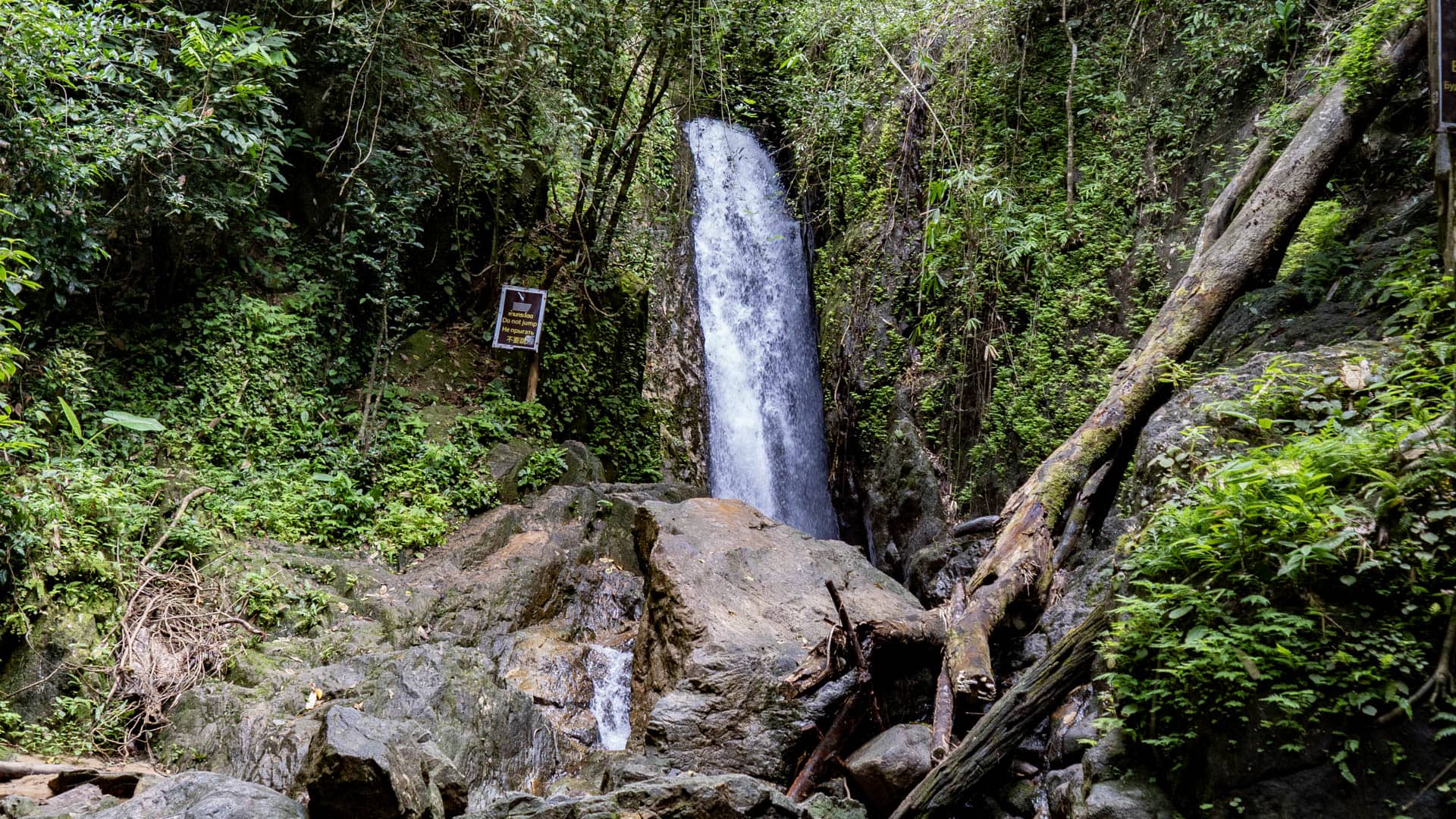
June to November
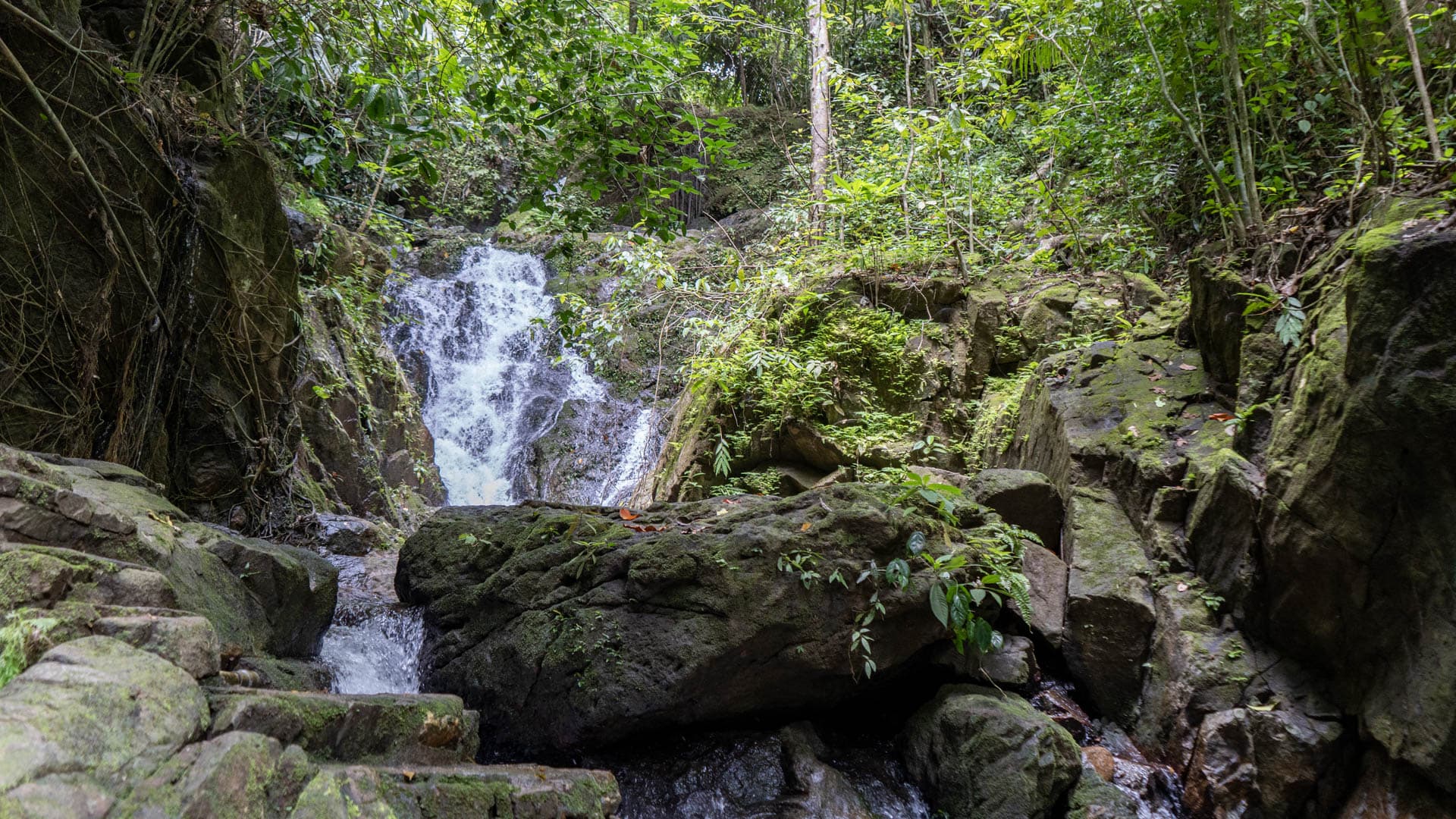
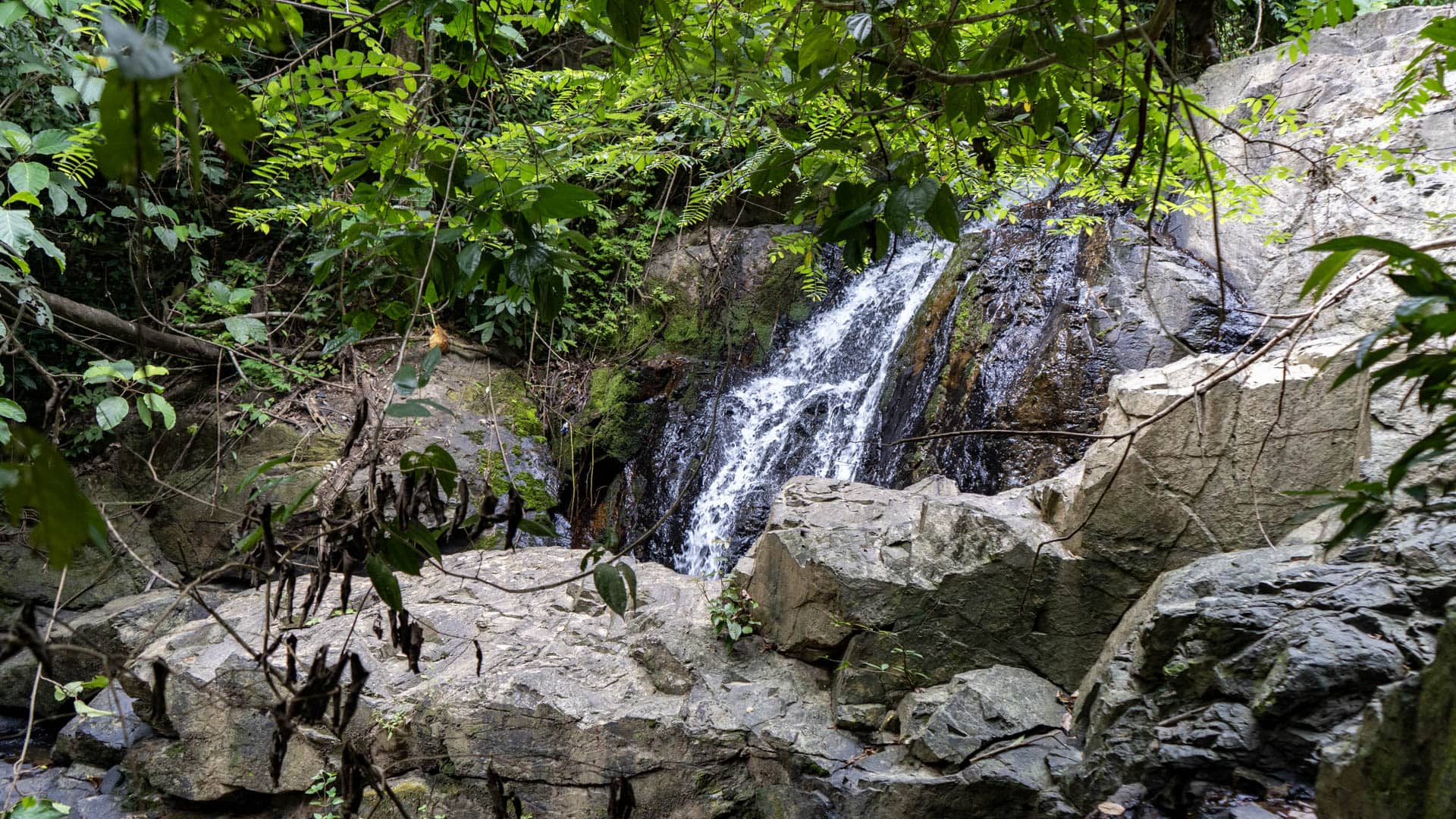
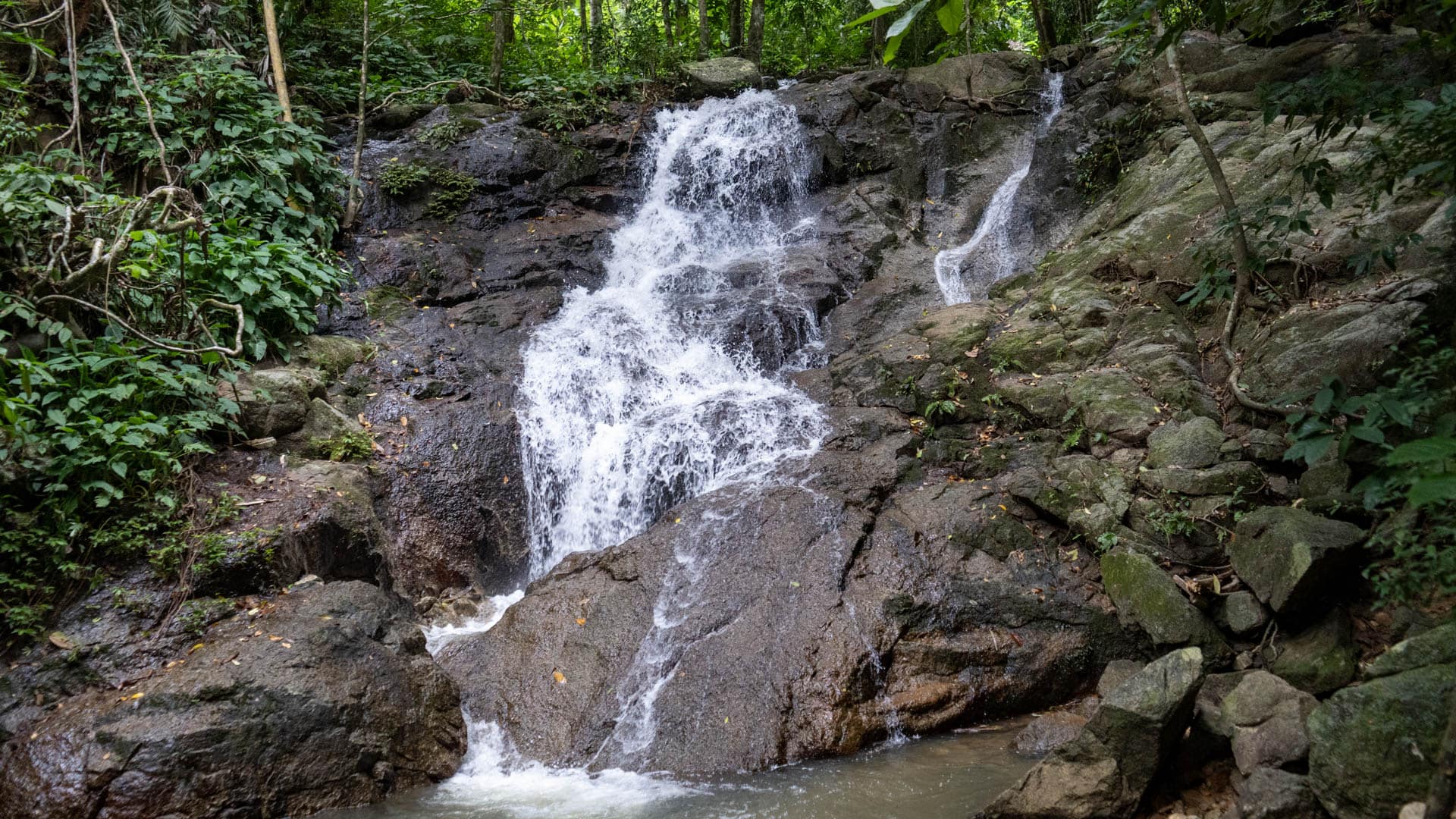
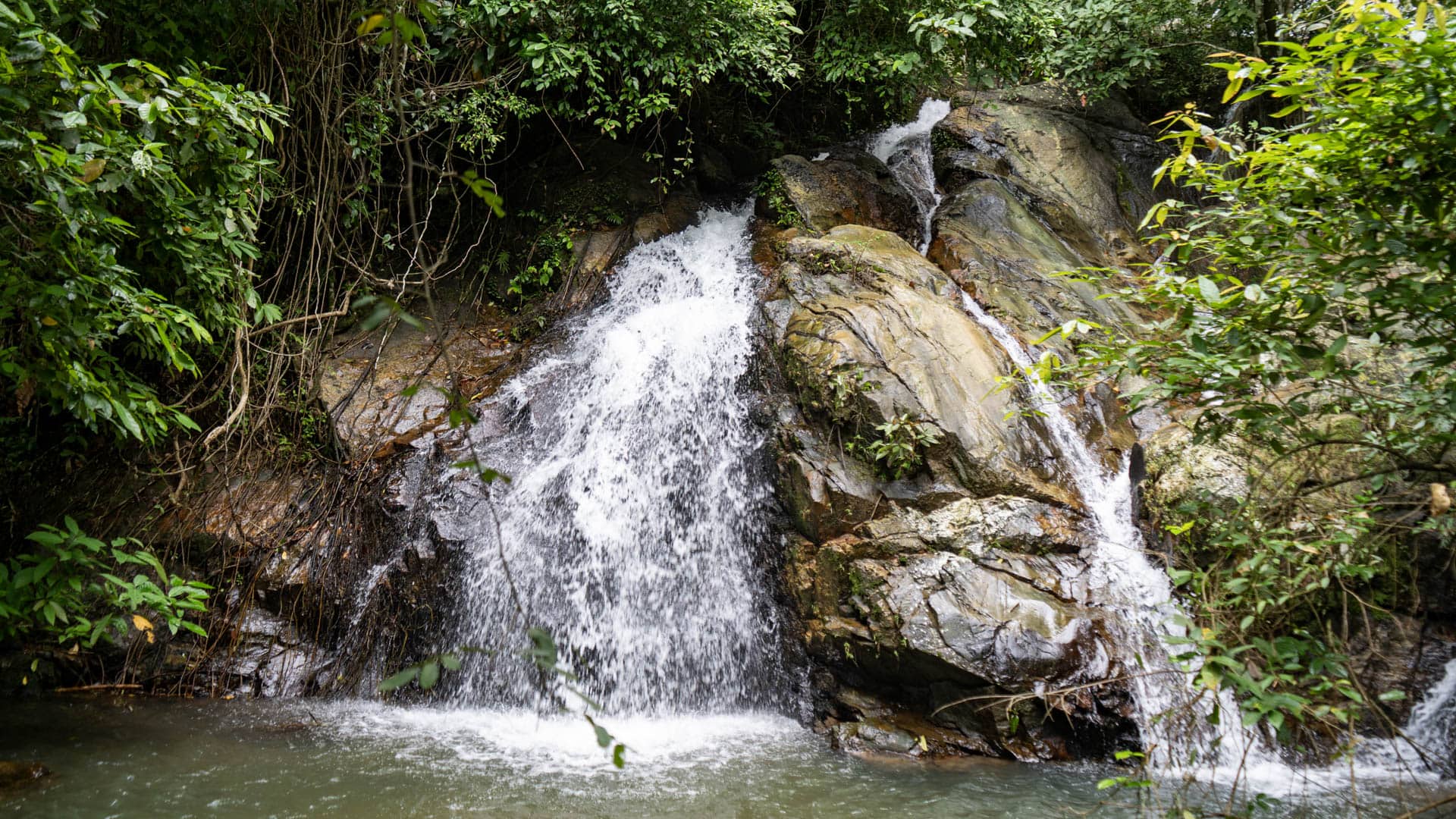
Ton Sai is highly seasonal. Between June and November, when the southwest monsoon has been running for weeks, the cascades run full and the rock stays wet. The sound carries further into the forest than you would expect for a waterfall of this scale.
From January through April the picture changes substantially. The flow can drop to a thin thread over granite — still moving, but not what most visitors picture when they make the drive from the coast. If someone is coming specifically for water volume, the timing matters more here than at almost any other site on the island. The forest remains worth the trip regardless of season, but that is a different kind of visit.
On the Trail
The 2-kilometre loop behind the falls is manageable for most adults and older children. The footing is uneven in places — roots, loose rock, sections that are steep enough to slow the pace — and after rain, some stretches become genuinely slippery. Footwear with grip is not optional. The trail passes through the densest part of the sanctuary, where the palm understorey fills in below the canopy and the forest floor stays dark even at midday.
For those wanting more, an 8-kilometre cross-mountain route connects Ton Sai to Bang Pae on the other side. That walk requires a guide. It is not signposted for independent navigation and the terrain through the interior of the mountain is a different proposition from the loop trail.
The Practical Truth
Entry is 200 THB for foreign visitors, and the ticket covers both Ton Sai and Bang Pae on the same day — useful if you want to see both sides of the sanctuary. The entrance has toilets, a small information centre, and sometimes a snack kiosk, though the latter is not always open.
Swimming is not the point of a visit here. The pools at the base of the cascades are shallow and rocky. Locals occasionally wade in the cooler sections, and the water is clean, but anyone expecting a proper swimming hole will find something more modest. The park surface underfoot — rock faces and trail sections — becomes extremely slippery when wet. This applies to the viewing area as much as the trail.
Mosquito repellent is necessary for the forest walk, not a suggestion.
Northeast Phuket
Getting to Ton Sai from the west coast takes around 25 to 30 minutes depending on where you are starting from. From Phuket Town it is a similar distance heading north through Thalang. The road to the park entrance is paved throughout and easy to follow. The site sits around 18 kilometres north of Phuket Town via the main inland routes.
The Thalang area does not see the visitor volume of Patong or Kata. Ton Sai is surrounded by the kind of quiet that most of the island’s west coast no longer has. Coming here early in the morning — before 9 AM — the trail and the falls are typically empty.
Map
Ton Sai Waterfall is on the western edge of Khao Phra Thaeo Wildlife Sanctuary in Thep Krasattri, Thalang District, approximately 5.5 kilometres east of the Thalang Intersection via Ton Sai Waterfall Road.