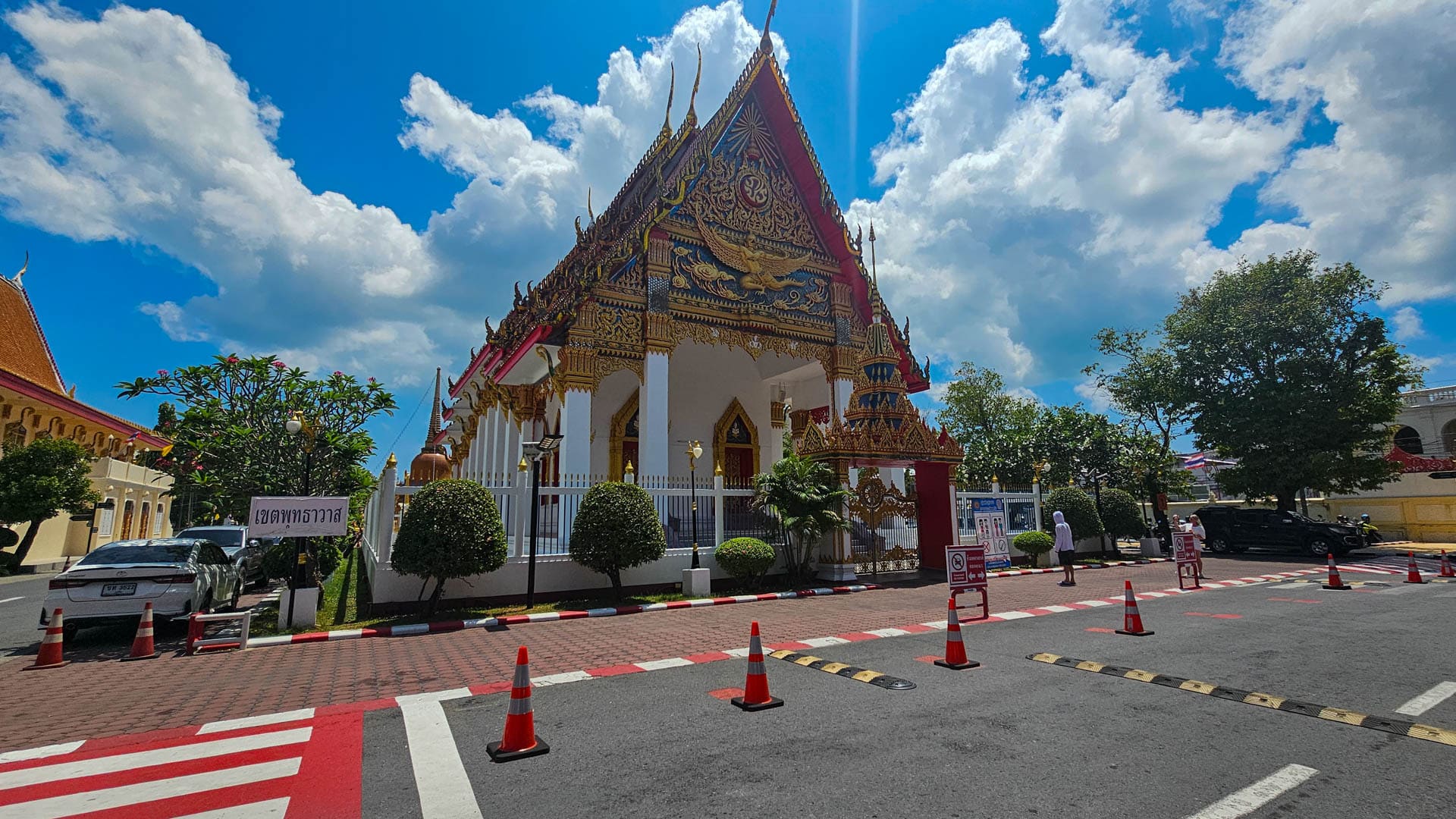
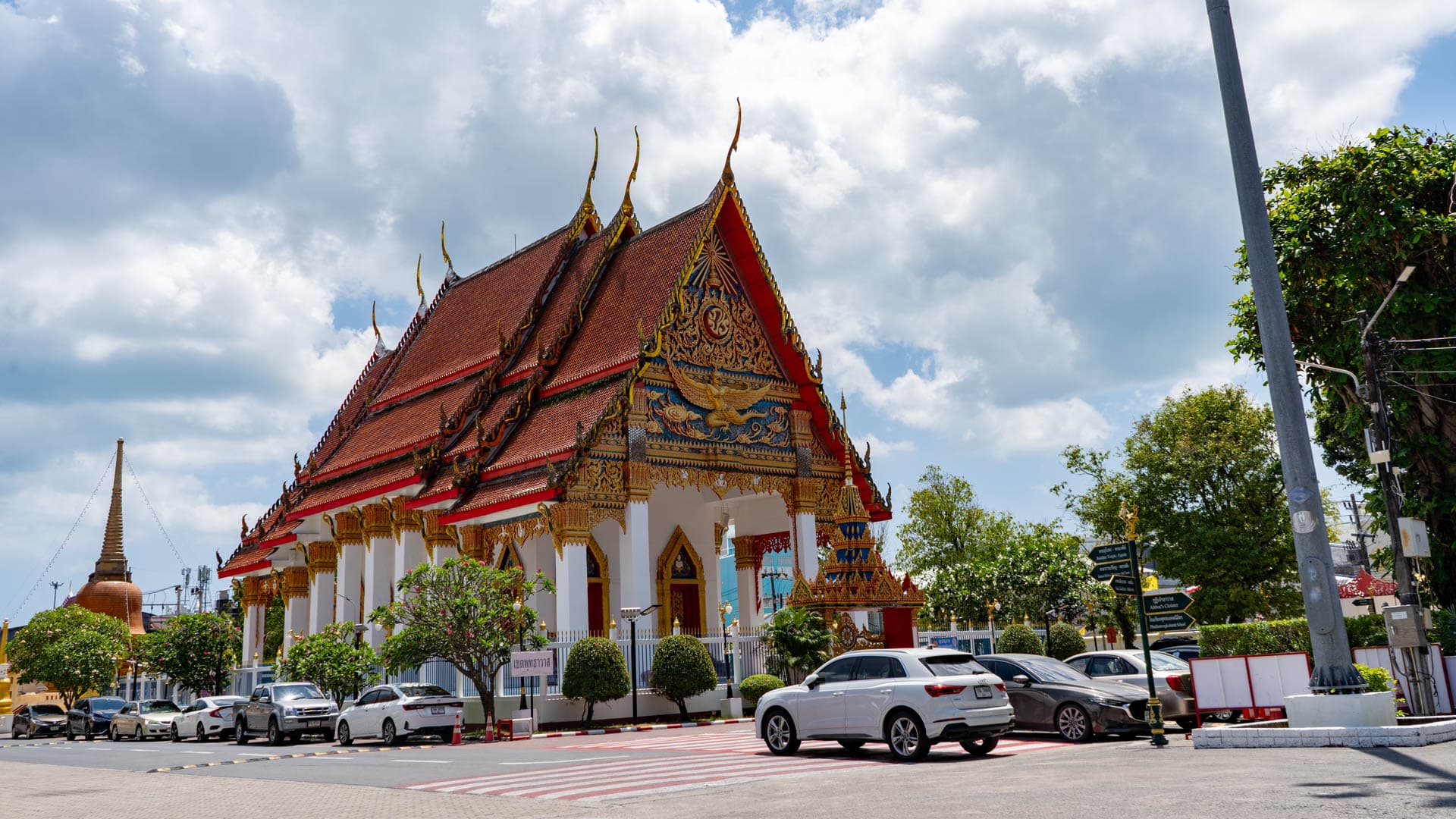
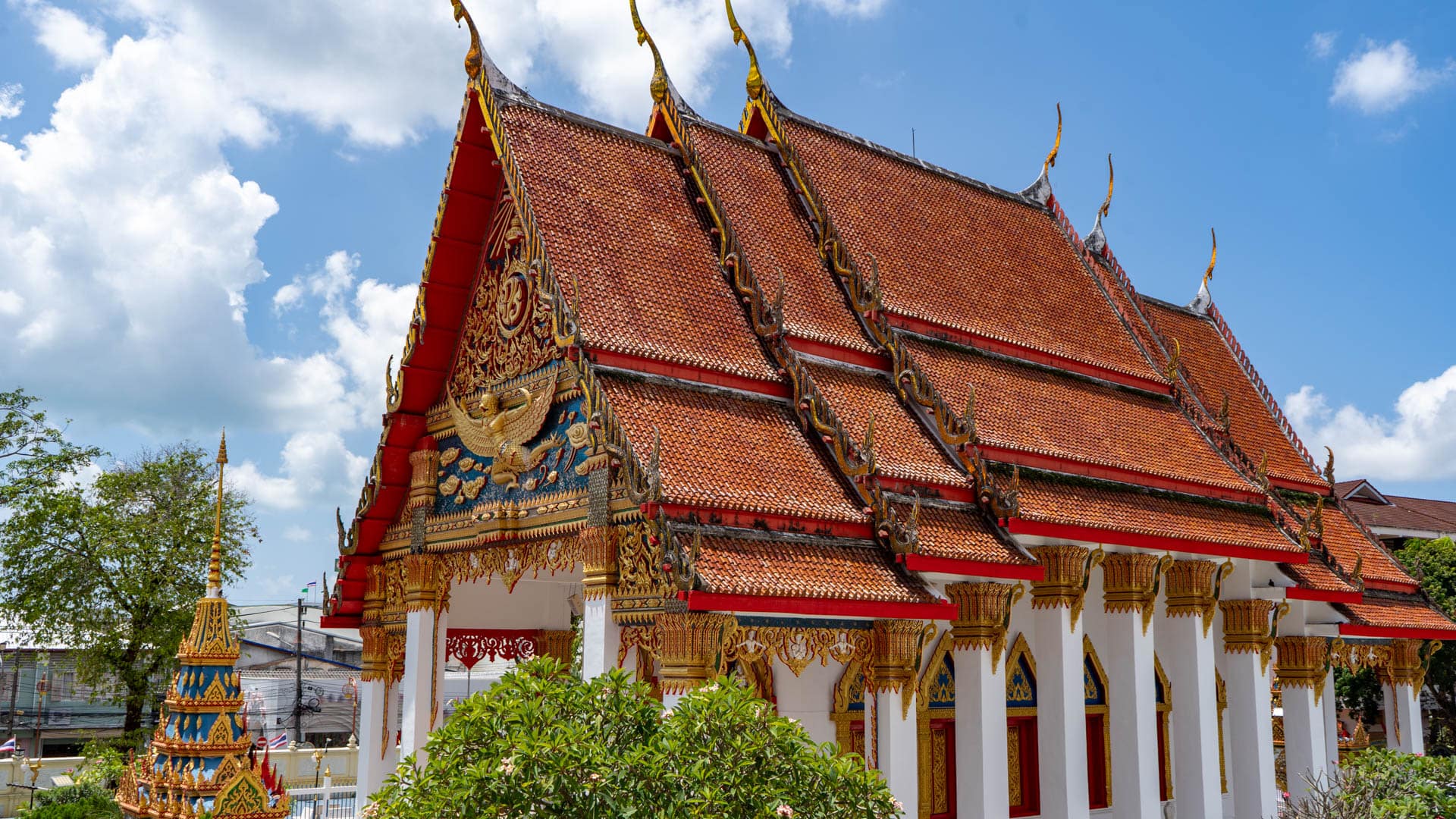
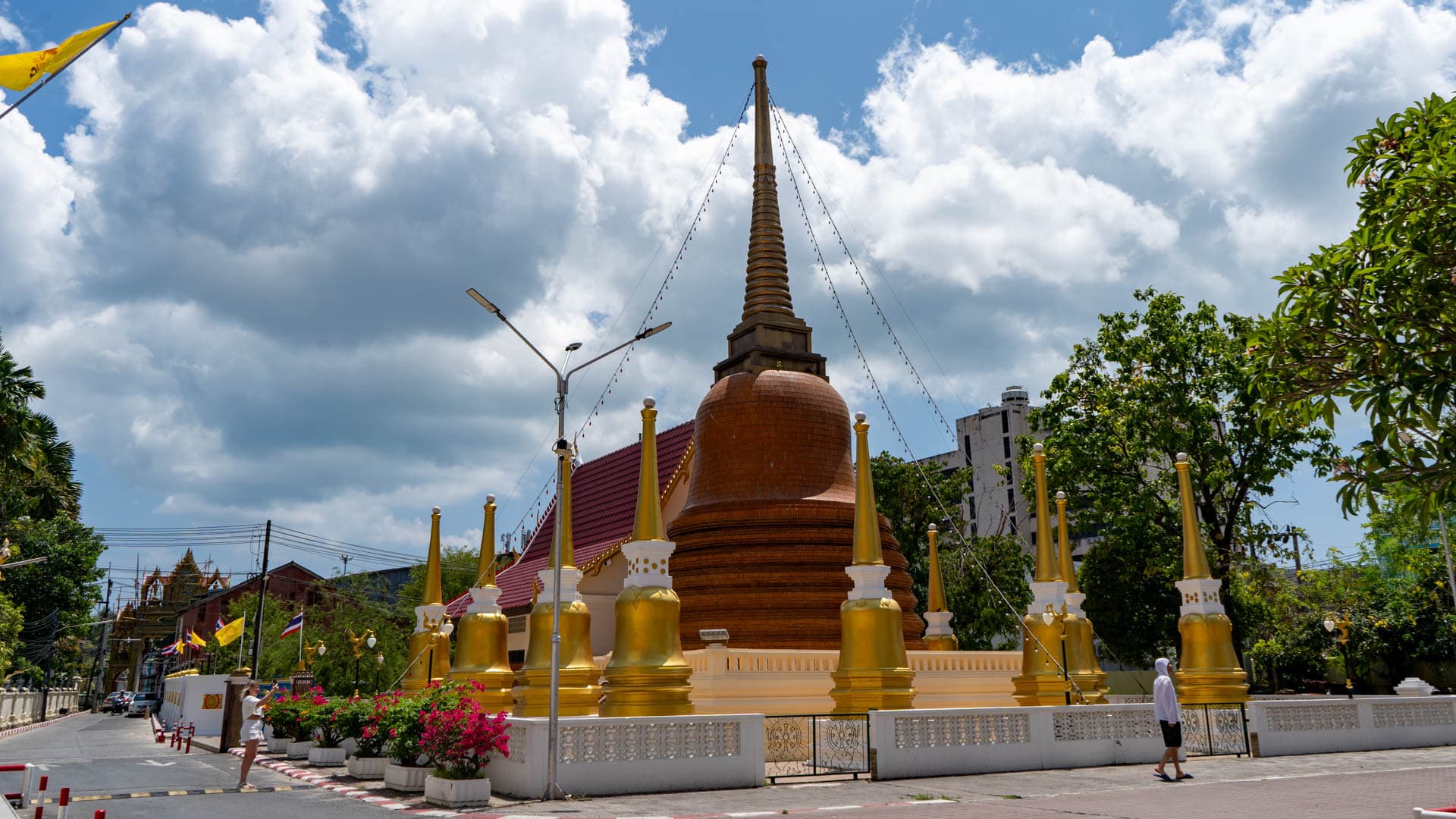

Wat Mongkolnimit Phra Aram Luang Temple Phuket is a Royal Buddhist temple complex on Deebuk Road in Talat Yai, at the northern edge of Phuket Old Town. Commonly known as Wat Klang, the temple supports daily worship, merit-making, Buddhist education, and provincial ceremonies, with activity building in the morning, late afternoon, and on Buddhist holy days.
Wat Mongkolnimit Phra Aram Luang is a Royal Buddhist temple complex on Deebuk Road in Talat Yai in central Phuket Town. It is commonly known as Wat Klang, a local name linked to its central position within the old town street grid.
The temple functions as a city-centre religious complex rather than a small neighbourhood wat. Its role combines worship, merit-making, Buddhist education, and formal ceremonies connected to Phuket’s civic and religious calendar.
The present complex developed during Phuket’s late nineteenth-century growth period and received royal temple status in 1953. That status places it above an ordinary local temple in administrative rank and public function.
The compound is arranged as a rectangular urban enclosure, with the main religious buildings concentrated toward the centre and south of the grounds. Quieter monastic and service areas sit further back from the main entrance.
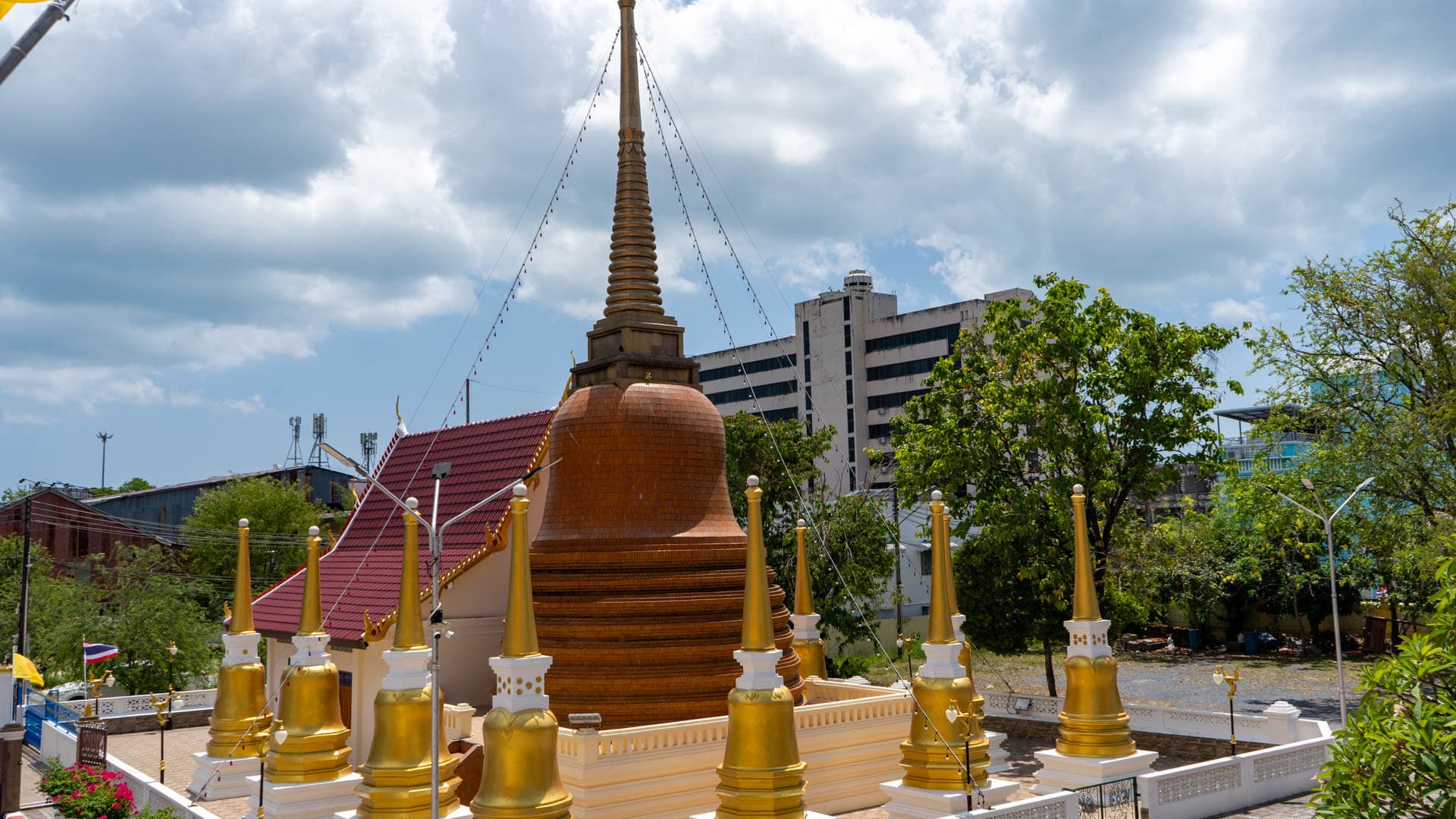
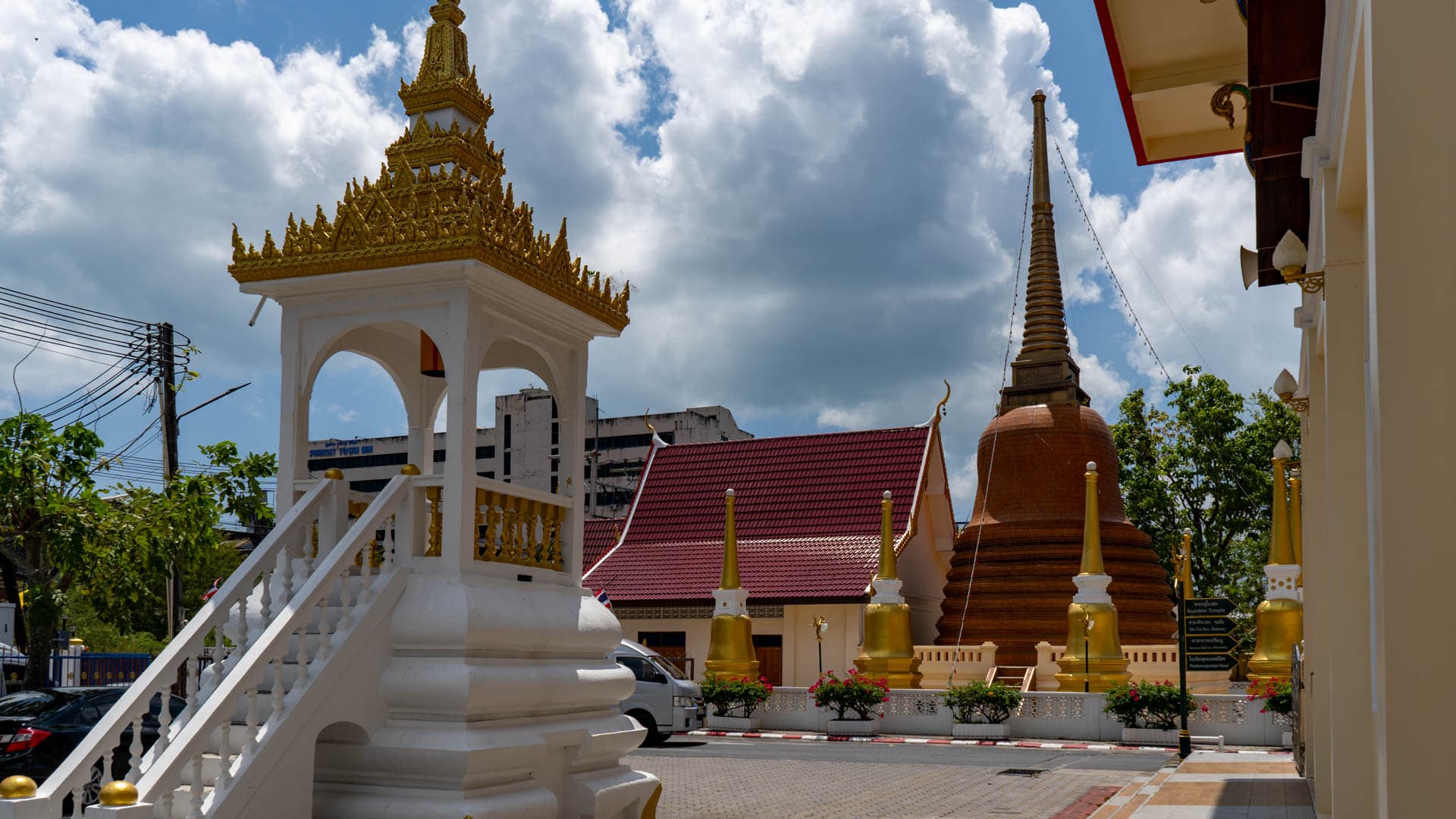
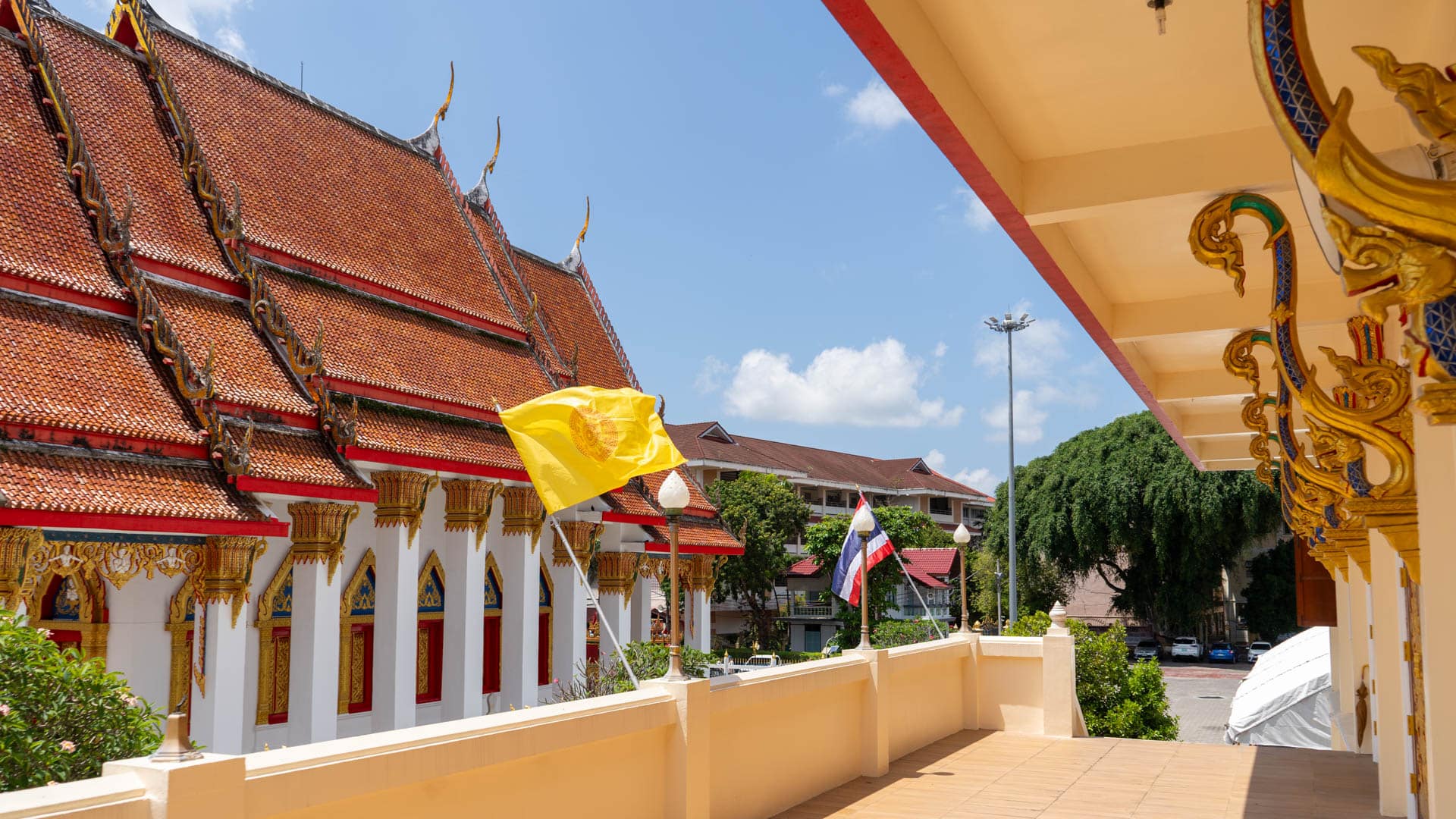
The ubosot serves as the principal ritual hall and is accompanied by a viharn, a golden chedi, shrine spaces, and open courtyard areas used for prayer movement and public gatherings. Incense points and offering areas are distributed near the main worship buildings.
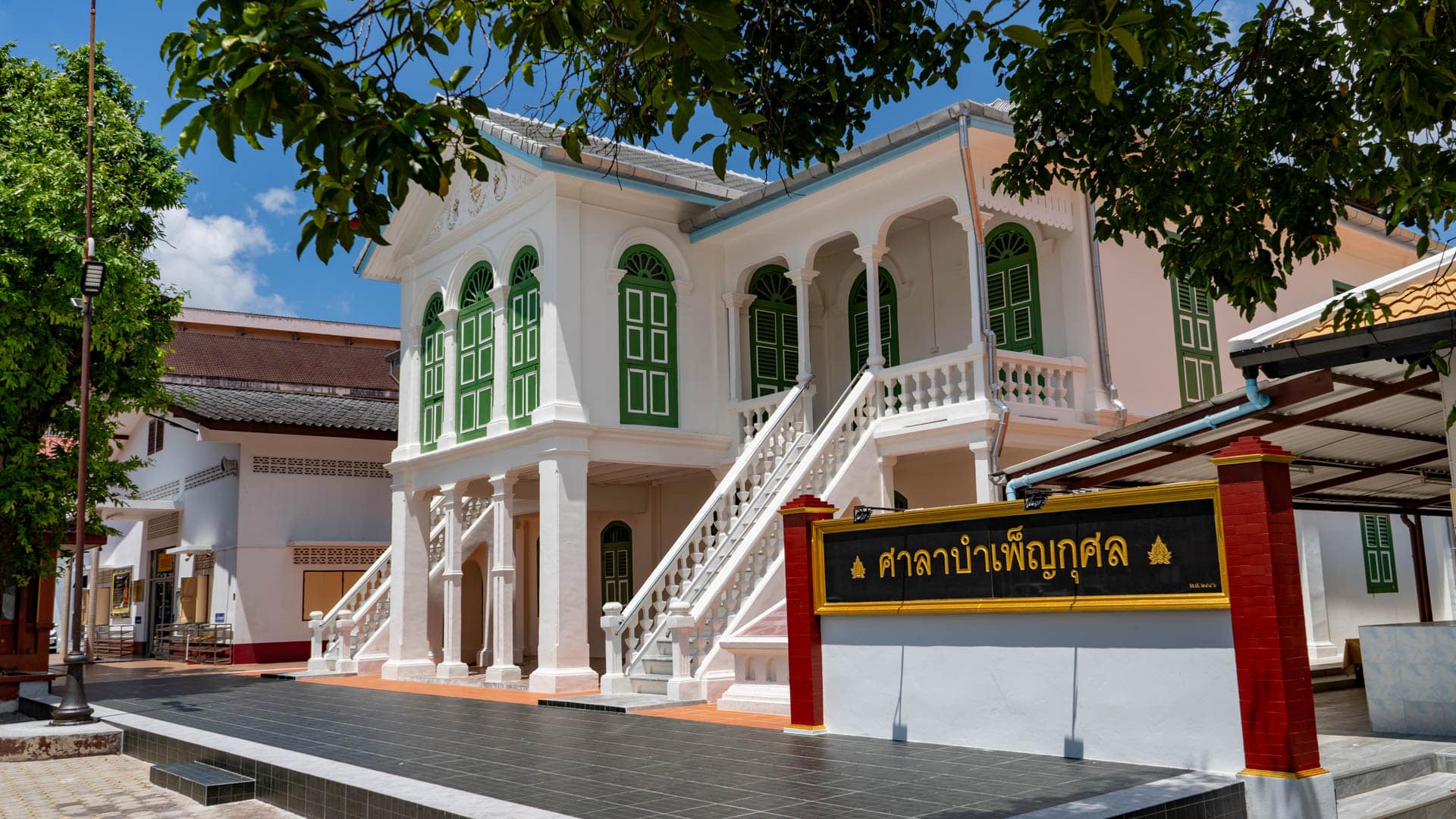
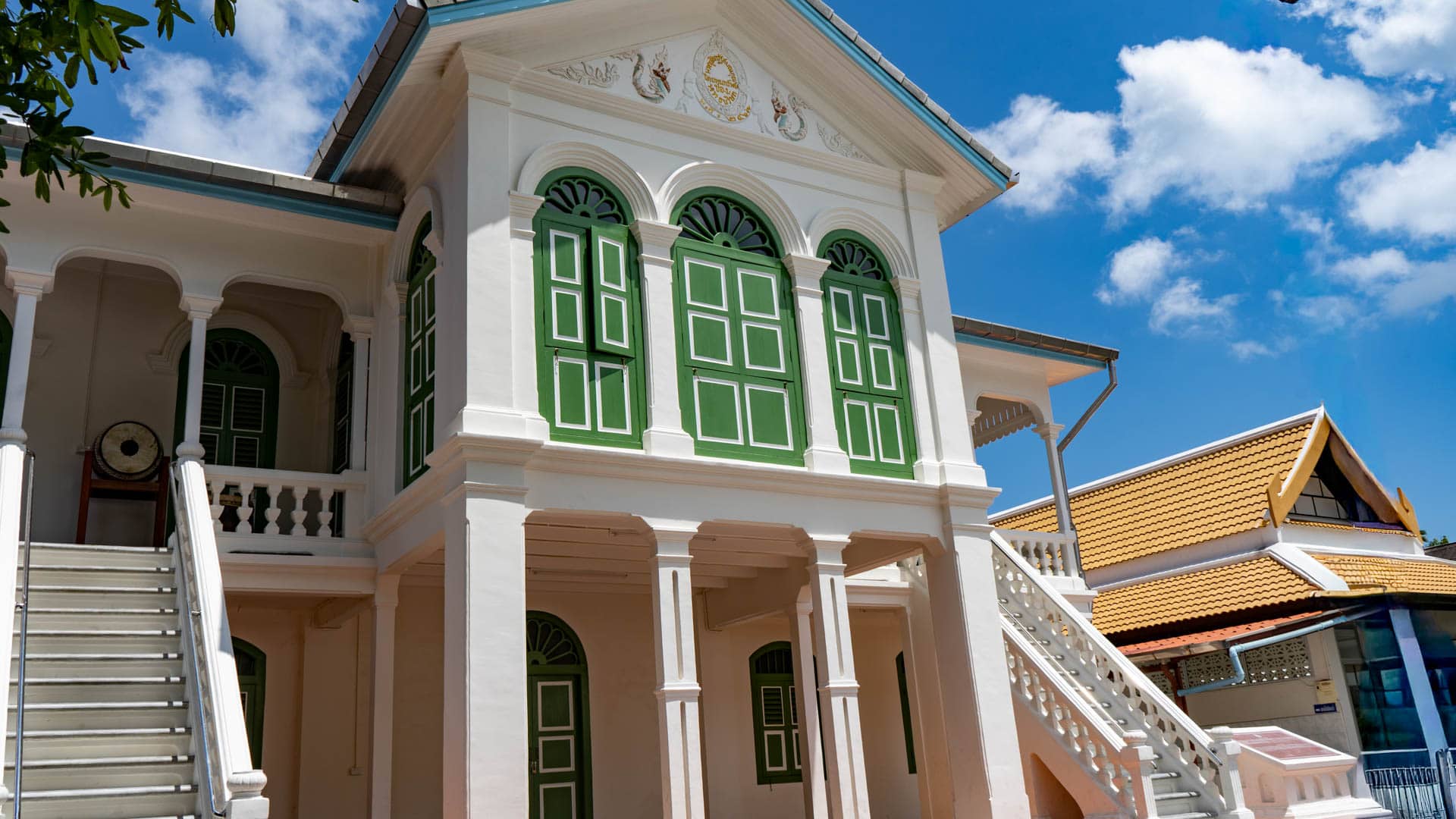
One of the most visible buildings is the Phra Pariyatti Dhamma school, a two-storey structure with yellow-and-white masonry and arched openings. Its colonial-influenced façade gives the temple a built form that differs from many other temple compounds in Phuket.
Local worshippers typically arrive to light incense, make offerings, and move between the main halls and courtyard shrine points. Visits are often short and purposeful, centred on prayer, merit-making, and routine religious observance.
The temple also has a strong educational function. Monks and novices use the school building for Buddhist study, creating a daily routine that combines religious activity with formal learning.
Non-local visitors usually move through the grounds more slowly, pausing at the ubosot, chedi, and school building. Architectural interest and the temple’s location in Phuket Old Town attract a steady flow of heritage-oriented foot traffic.
Activity is usually strongest in the early morning, especially around alms and chanting periods, and rises again in the late afternoon. Midday movement continues, but the open courtyard areas are generally quieter outside prayer peaks.
Attendance increases on Wan Phra and during major Buddhist dates such as Makha Bucha and Visakha Bucha. During these periods, the temple functions as a larger public gathering point for Phuket Town worshippers.
Town-wide religious events also affect the flow of people through the temple. The compound becomes busier during the Phuket Vegetarian Festival, although it remains a Buddhist temple rather than a Chinese shrine.
The temple reads as an urban religious compound embedded directly into the old town rather than a hilltop or roadside landmark. The entry from Deebuk Road leads quickly into an open internal space, framed by halls, shrine structures, and school buildings.
Many non-worship visitors spend around 20 to 40 minutes on site. Movement is usually simple and linear, with most people crossing the courtyard, viewing the main halls, and then returning to the surrounding heritage streets.
The experience is shaped by the contrast between active religious use and the nearby dense commercial streets. Within a short distance of shopfronts and traffic, the temple shifts into a slower pattern of prayer, study, and ceremonial order.
Ground surfaces are mostly flat, which makes movement through the compound relatively straightforward. Entrances to the main halls usually involve steps, so access becomes less even at building thresholds.
Shade is moderate, provided by trees and roof overhangs, but the central courtyard remains exposed during the hotter part of the day. Toilets are available on site, though facilities are secondary to the temple’s religious and educational functions.
Parking is limited and internal spaces are largely used by temple and school activities. Street parking on Deebuk Road is restricted, and some areas of the compound may be closed off during classes or temple operations.
Temple etiquette remains part of the practical setting. Modest clothing and quiet behaviour are expected in worship areas, especially near the main halls and monastic zones.
Wat Mongkolnimit Phra Aram Luang stands on Deebuk Road in Talat Yai, directly inside the Phuket Old Town street network. The temple occupies a central position at the northern end of Soi Rommanee and within walking distance of Thalang Road.
Most non-local visitors arrive on foot as they move through the historic centre. Motorbike and taxi access is straightforward on surrounding roads, but the final approach is often made through the old town lanes.
The temple sits about 200 metres north of Thalang Road and close to several established town landmarks. Its urban setting makes it easier to combine with other old town locations than temples positioned in outlying districts.
Wat Mongkolnimit plays a larger civic role than many village temples elsewhere on the island. In Phuket Town, it functions as a central urban temple for public worship, formal ceremonies, and Buddhist education.
Its royal designation gives it added institutional weight within the province. That status, combined with its location in the historic centre, helps explain why it is used for official religious occasions as well as everyday devotional activity.
The temple also serves as a visible Buddhist landmark in a part of town better known for Sino-Portuguese streets and Chinese shrine traditions. This gives it a balancing role within the religious landscape of central Phuket.
Within Phuket’s temple network, Wat Chalong remains the island’s largest and most widely recognised pilgrimage temple. Wat Mongkolnimit differs in scale and setting, operating instead as the main town temple inside Phuket Old Town.
Compared with smaller neighbourhood temples, it has a broader ceremonial and educational function. The presence of the Phra Pariyatti Dhamma school and its royal status give it a stronger administrative role than many local wats.
It’s built character also stands apart from temples that follow only Thai or Thai-Chinese forms. The colonial-style school building ties the temple visually to Phuket Town’s nineteenth-century urban architecture.
Wat Mongkolnimit forms part of the Phuket Temples cluster and also sits within the wider Phuket Old Town cultural area. Its closest geographic relationship is with Soi Rommanee, which connects the temple directly to the old commercial streets.
Nearby reference points include Thalang Road, the Thai Hua Museum, and Queen Sirikit Park. Jui Tui Shrine also lies within the wider central town religious network and becomes more relevant during major festival periods.
These surrounding places help explain the temple’s role as a town-centre religious site rather than a stand-alone destination. The temple is best understood as part of a dense historic and ceremonial landscape in central Phuket.
Wat Mongkolnimit Phra Aram Luang is located on Deebuk Road in Talat Yai in central Phuket Town, at the northern end of Soi Rommanee within Phuket Old Town.