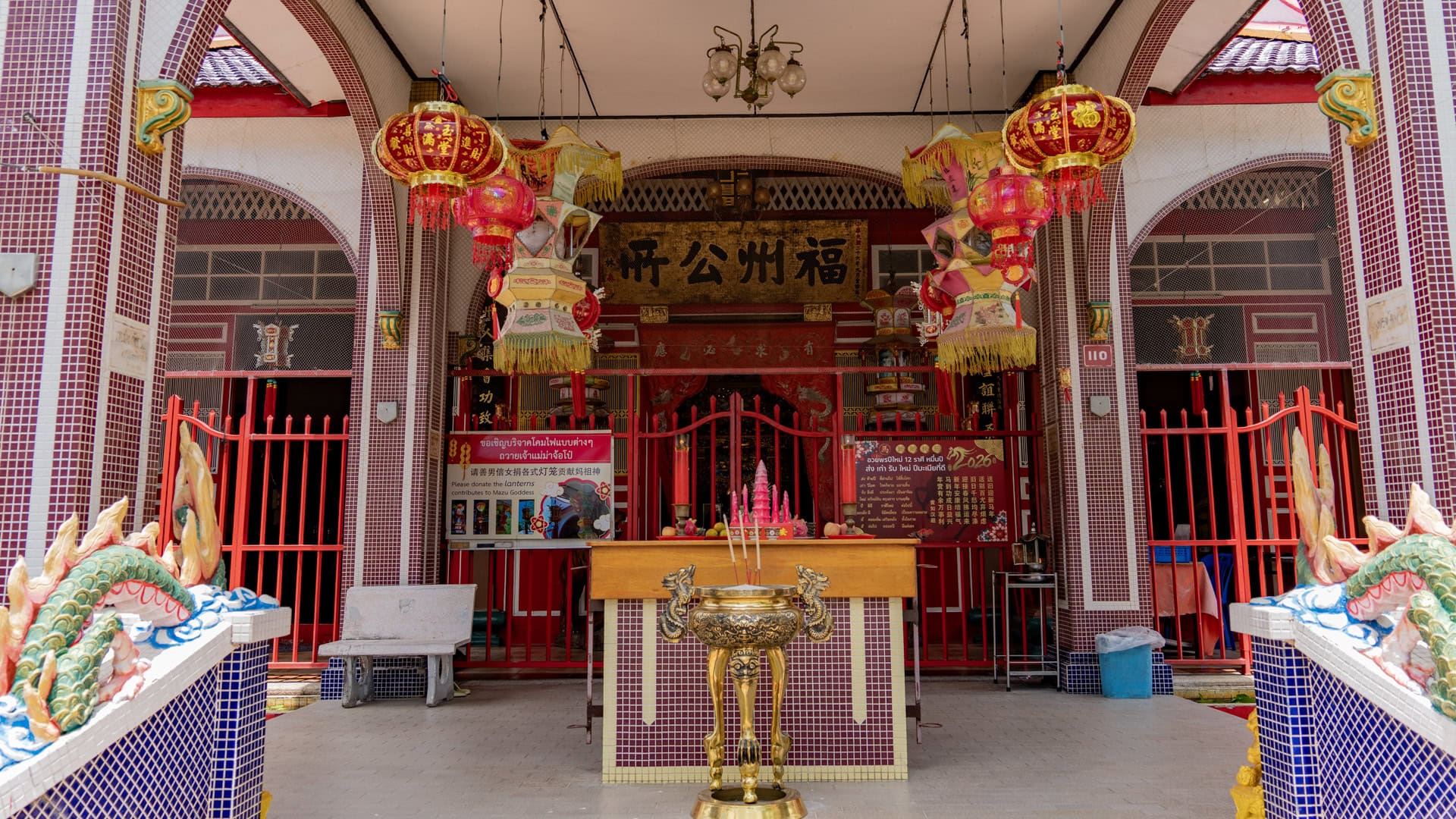

Mae Yanang Shrine is a historic Chinese Taoist shrine on Krabi Road in Phuket Town, known for its connection to protection, travel, and the Hokkien community of the old town. :contentReference[oaicite:1]{index=1}
Mae Yanang Shrine, formally known as San Chao Mae Yanang, is a Chinese Taoist shrine in Phuket Town’s old historic core. It is associated with Mae Yanang, understood here in relation to the sea-protecting goddess Mazu, and has long been tied to prayers for safe journeys and protection in transit.
Within Phuket Town, the shrine stands out as a community shrine with a specific protective role rather than a large ceremonial complex. The research describes it as one of the historic Chinese shrines of the old town and identifies its maritime and transport-linked identity as a defining part of its local relevance.
The site is commonly described as dating to 1853, during Phuket’s tin-boom era, though the research also notes some uncertainty around whether an earlier spirit structure may have existed on the site before the formal shrine. That history is relevant because it helps explain why a voyage-protection shrine took root in a town shaped by Chinese migration and seaborne arrival.
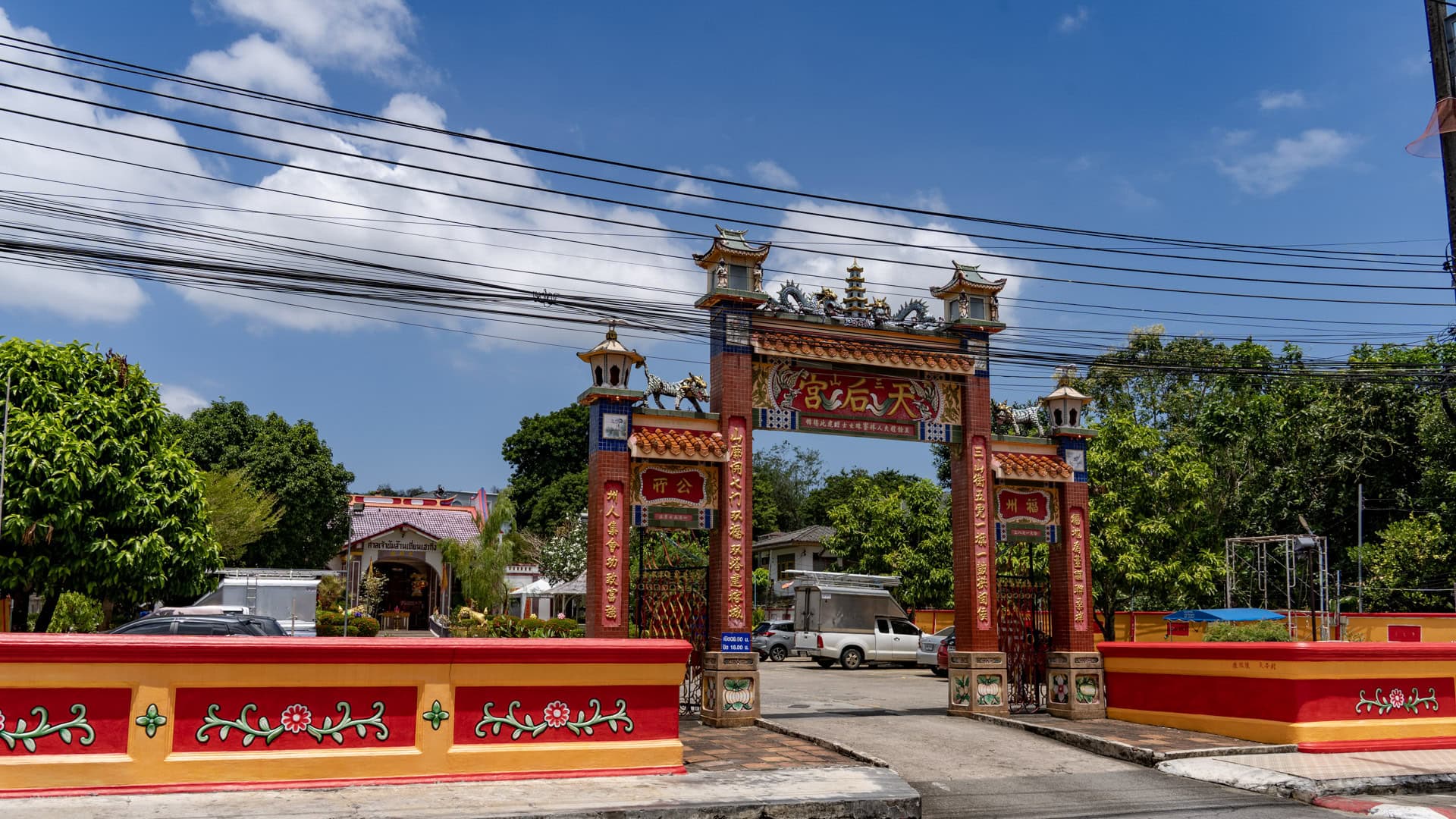
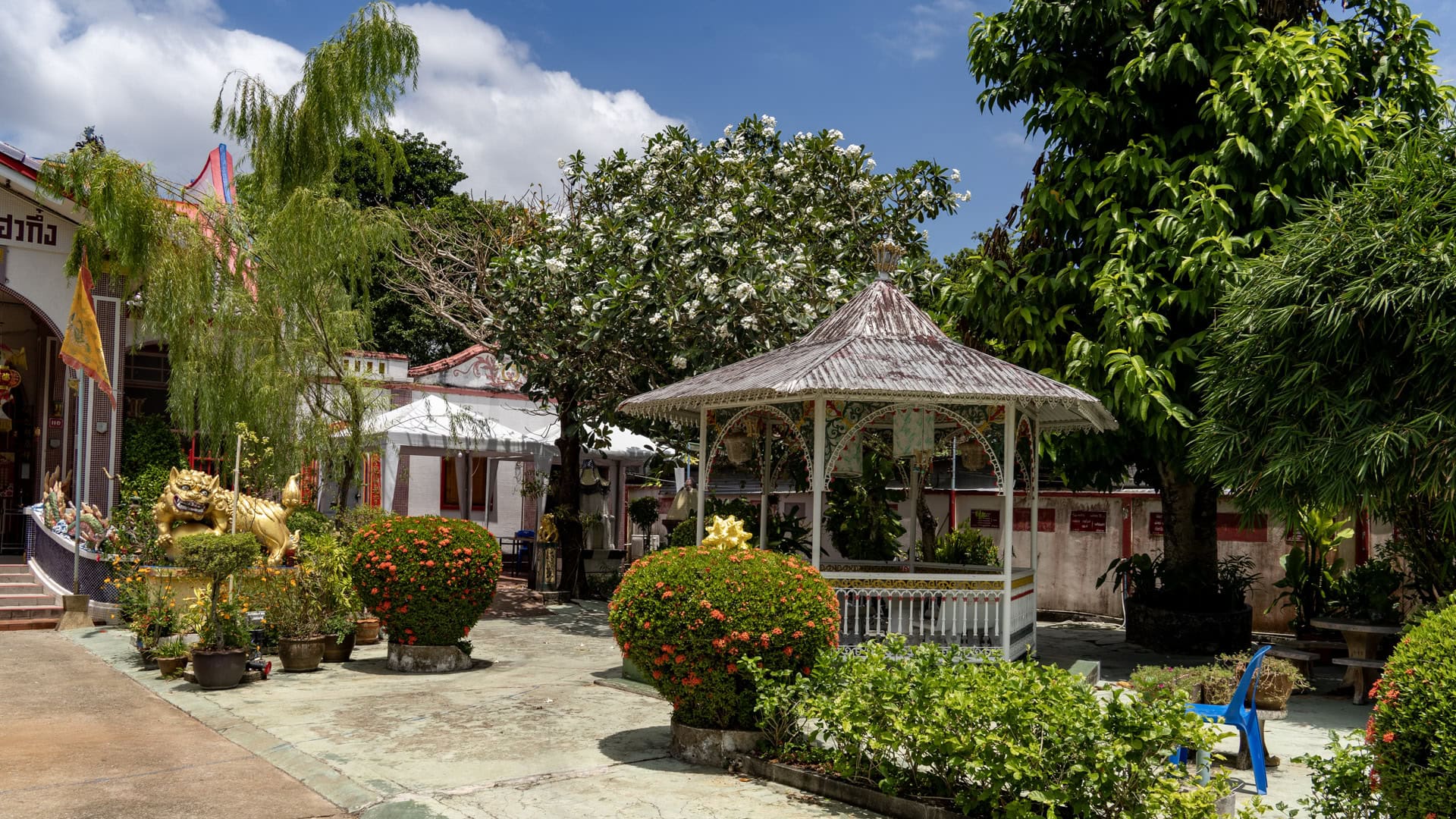
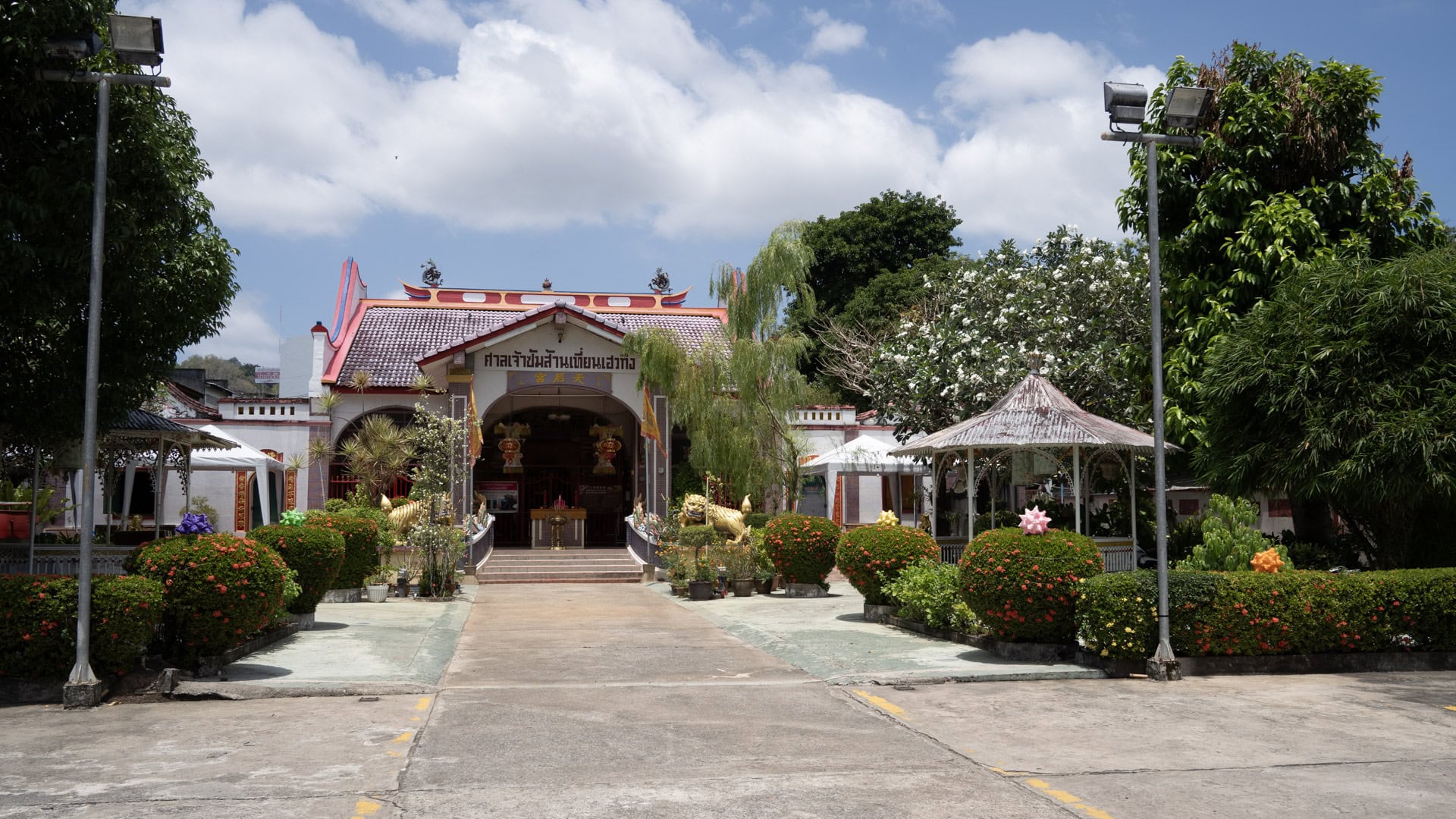
The shrine sits behind a prominent red ceremonial gate facing Krabi Road. From the street, the entrance opens into a plot that is deeper than it first appears, with an open courtyard leading back to the main shrine hall.
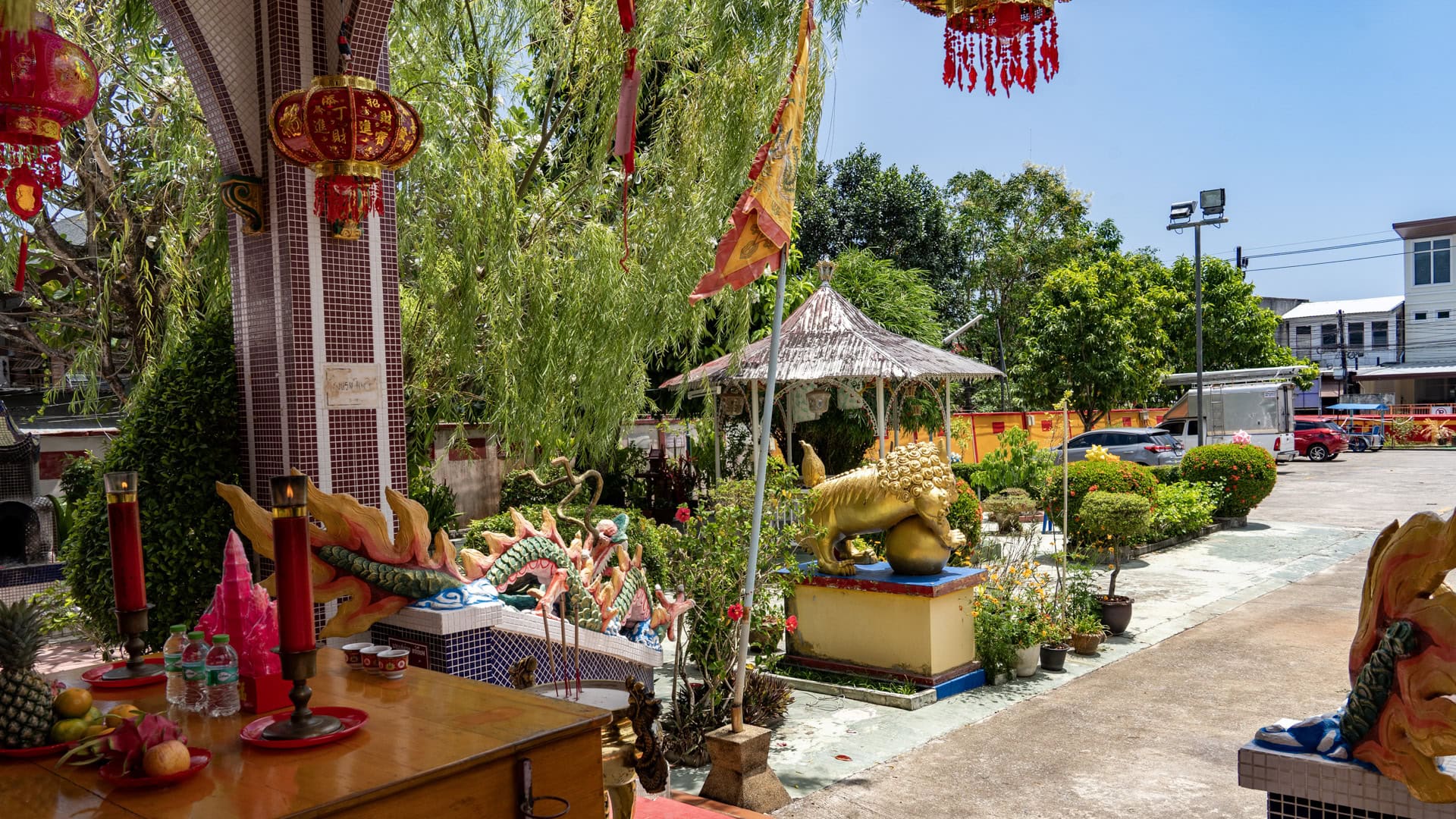
This layout is one of its clearest physical distinctions. In a dense old-town streetscape lined with shophouses, Mae Yanang Shrine has a notably open forecourt rather than a compressed shophouse-style interior. The sequence is straightforward: road frontage, entrance gate, courtyard, then the main devotional building at the rear.
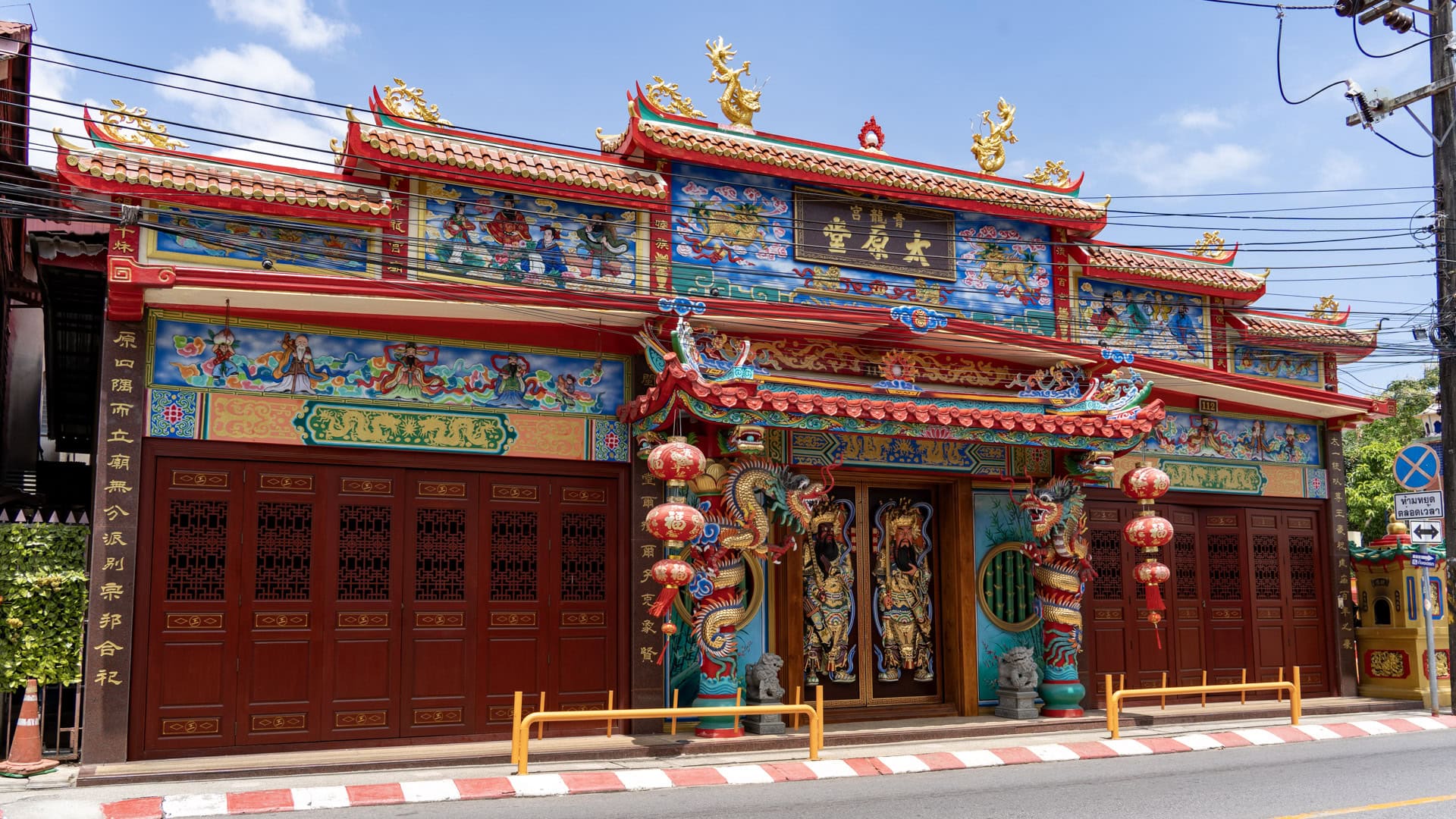
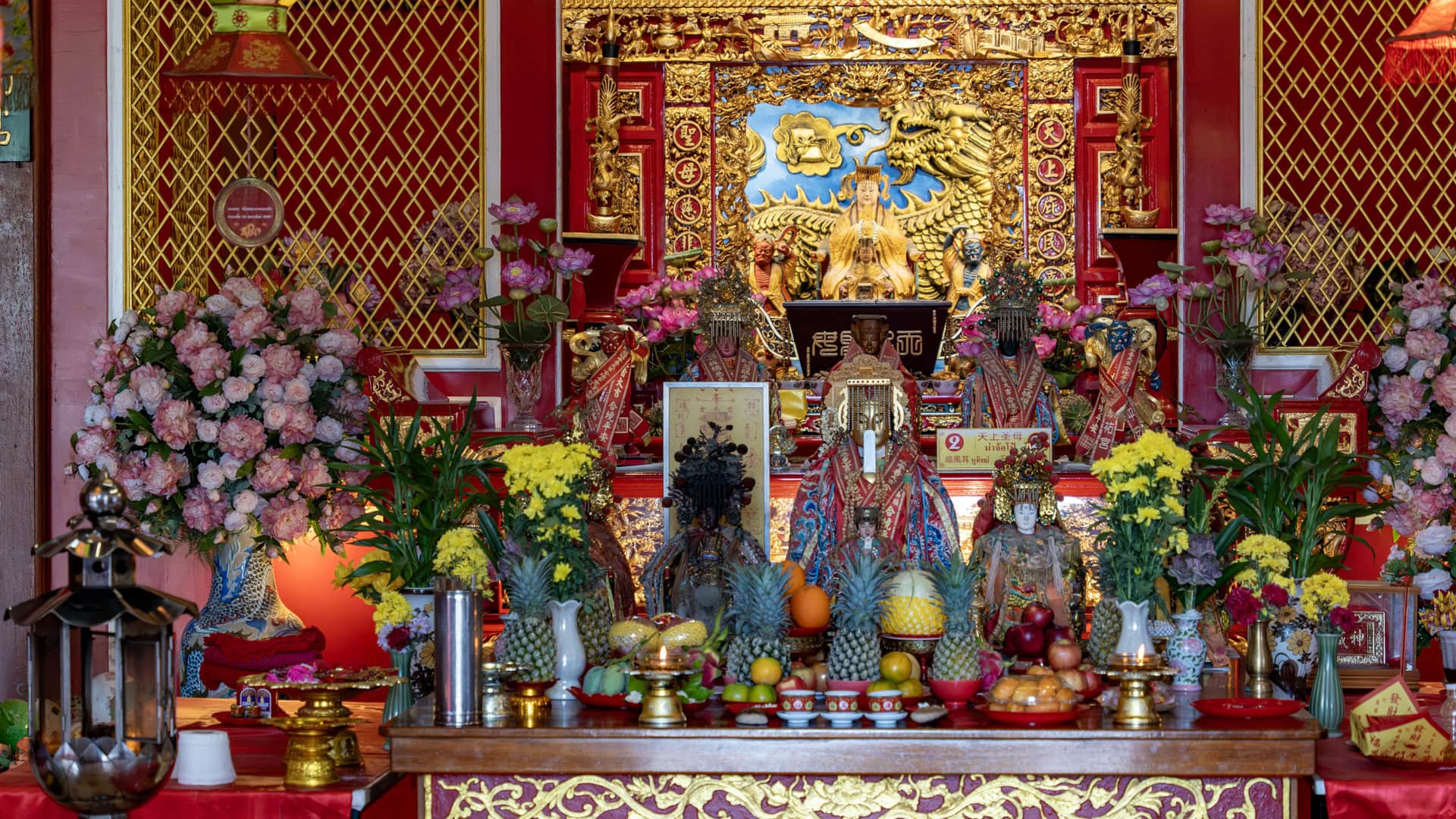
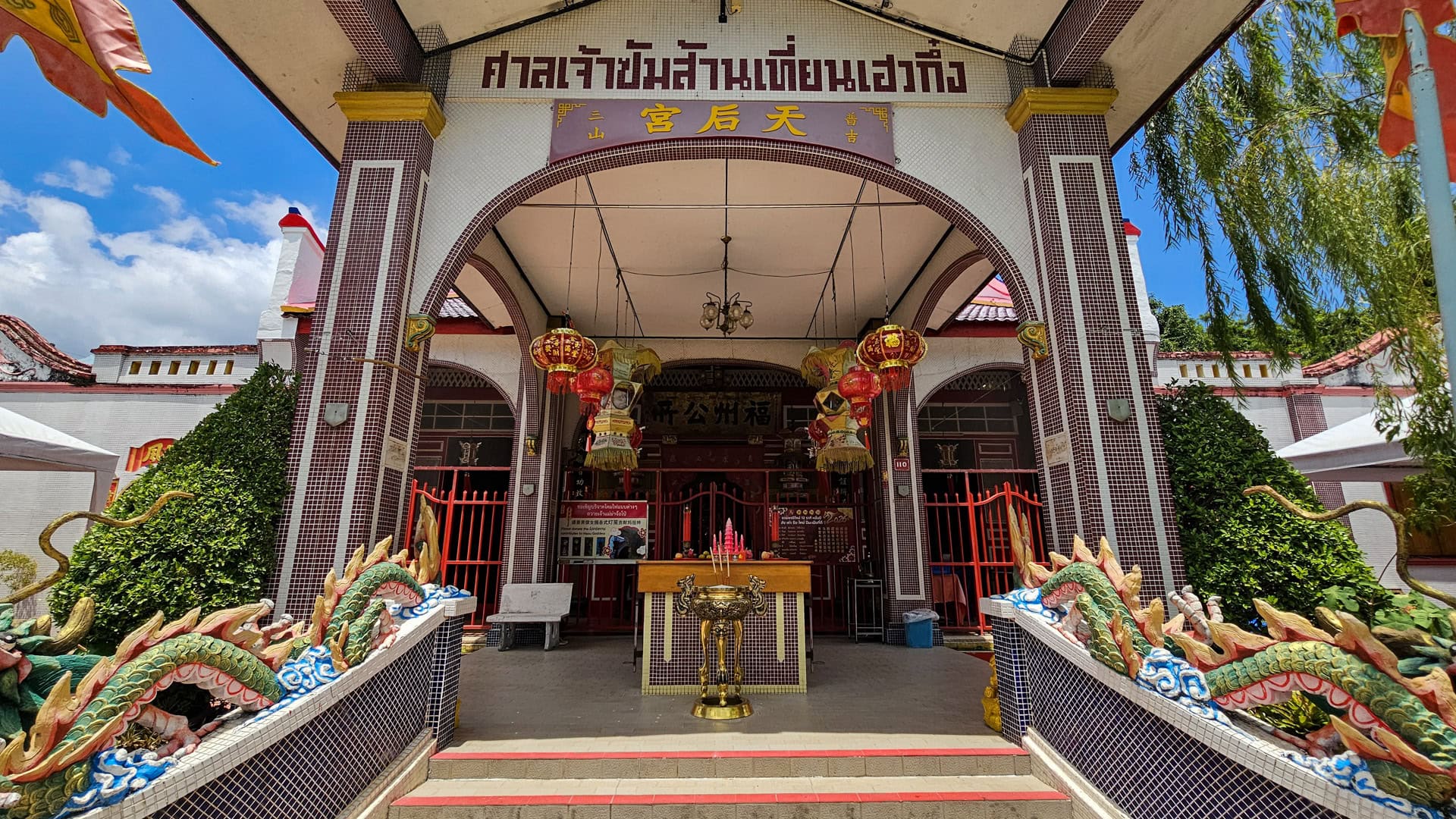
The architecture is described in classic Hokkien-Chinese terms, with curved rooflines, red-painted structural elements, carved detail, and calligraphy. Inside, the main altar centres on Mae Yanang, while side altars may hold other Taoist deities commonly found in Phuket’s Chinese religious tradition.
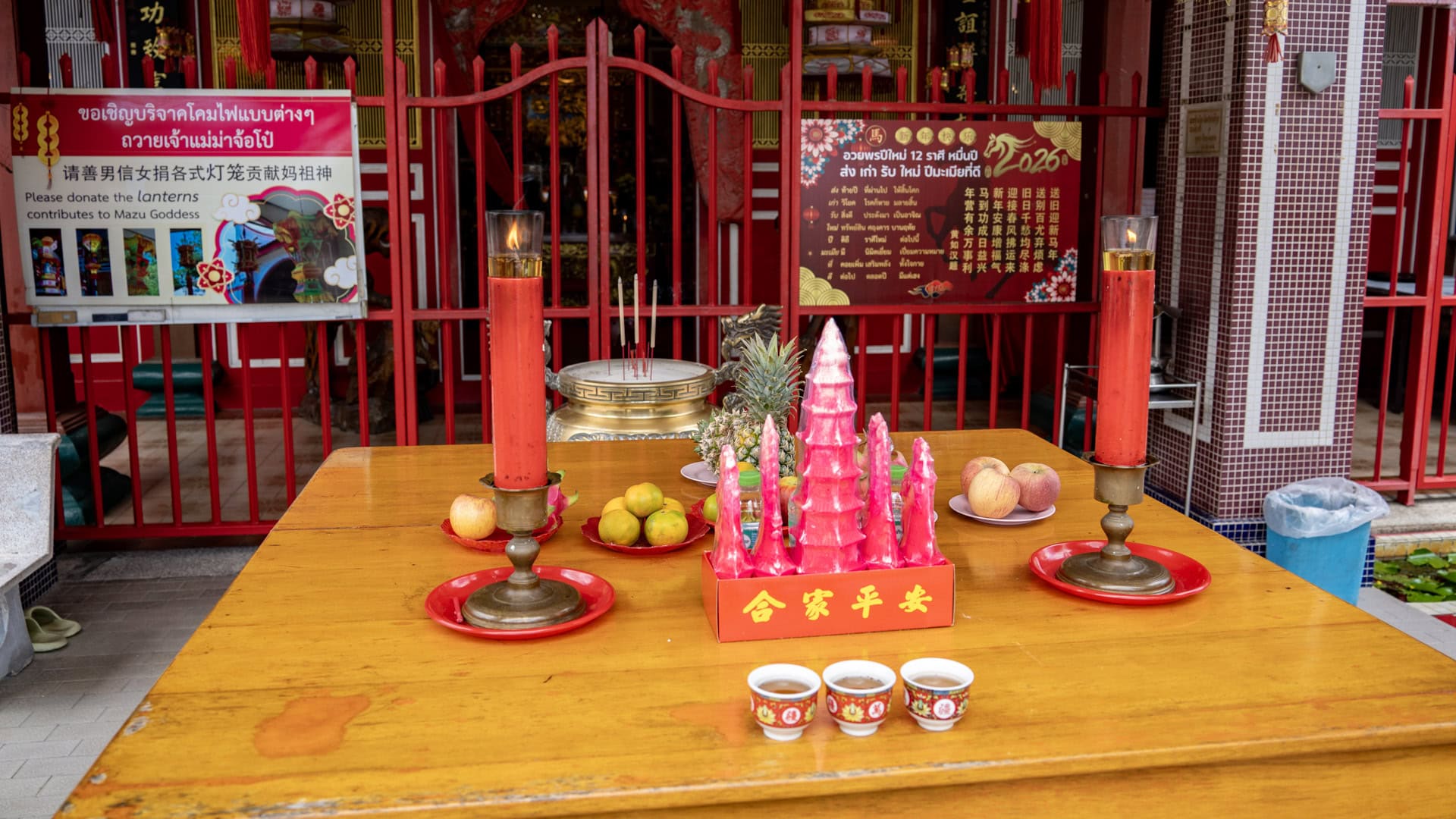
Mae Yanang Shrine functions first as a working religious site. It is used for prayer, incense offering, and protection rituals, especially by people whose work or daily life is connected to transport, travel, or movement. The research notes that drivers and boat owners are among those commonly associated with offerings here.
Its role appears to have shifted over time without losing its original meaning. A shrine once closely linked to sea travel is now also used in relation to cars, motorbikes, and general travel safety. That gives it a living function in present-day Phuket rather than a purely historical one.
The shrine also has a neighborhood role within Phuket Town’s Hokkien-Chinese community. During the Phuket Vegetarian Festival, it becomes more publicly visible through ritual activity, spirit-medium participation, and procession links, extending its function from daily devotion to festival use.
On ordinary days, the shrine appears to be relatively calm, with quieter periods through the middle of the day on weekdays. Its physical openness and modest scale make it read as a pause point within the surrounding urban fabric rather than a constantly crowded religious compound.
Its rhythm changes most clearly during the Phuket Vegetarian Festival in the ninth lunar month, usually around September or October. At that time, the courtyard becomes an active ritual space connected to flags, firecrackers, spirit-medium activity, and procession movement.
The research also notes increased activity on the first and fifteenth days of the lunar month. That pattern reinforces the shrine’s continuing religious use beyond festival periods.
This is a compact shrine visit rather than a long-form site. Much of its character is grasped quickly through the gate, courtyard, and main hall, though the open layout gives it more spatial clarity than many smaller shrines in the old town.
On foot, it fits naturally into a Phuket Town walk, especially for anyone moving through the western side of the old heritage area. By car, the research indicates that parking is difficult and relies on finding space on surrounding streets.
The main hall follows normal shrine etiquette. Shoes are removed before stepping onto the raised interior floor, and the expected tone is quiet and respectful. Photography appears generally acceptable in practical terms, though the site remains an active place of worship rather than a display space.
Mae Yanang Shrine is located on Krabi Road in Phuket Town, near the junction with Patiphat Road, in the western part of the old historic centre. It sits within Mueang Phuket district and within walking distance of other long-established Chinese shrines in the town core.
In island terms, that places it in the east-coast urban centre rather than in Phuket’s beach zones or resort belts. Its context is firmly urban, heritage-oriented, and embedded in the old Chinese commercial quarter of Phuket Town.
The shrine’s position on the quieter western side of the old town also helps explain why it can be overlooked beside better-known shrine sites on more heavily visited routes.
Compared with Jui Tui Shrine, Mae Yanang Shrine is smaller in scale and more specialized in identity. Jui Tui has a broader public profile and a larger ceremonial presence, while Mae Yanang Shrine reads more as a community shrine with a distinct protection function.
Compared with Hainan Shrine on Thalang Road, the difference is not only in community lineage but also in physical form. The research describes Hainan Shrine as a converted shophouse setting, whereas Mae Yanang Shrine occupies a standalone compound with a more open courtyard arrangement.
Within Phuket Town’s shrine network, its strongest distinction is the combination of a sea-goddess tradition, a transport-protection role, and a surprisingly open spatial layout in a dense old-town block. That makes it less monumental than some of the town’s larger shrines, but more spatially legible than many smaller ones.
Mae Yanang Shrine is located on Krabi Road in Phuket Town, in the western part of Phuket Old Town.