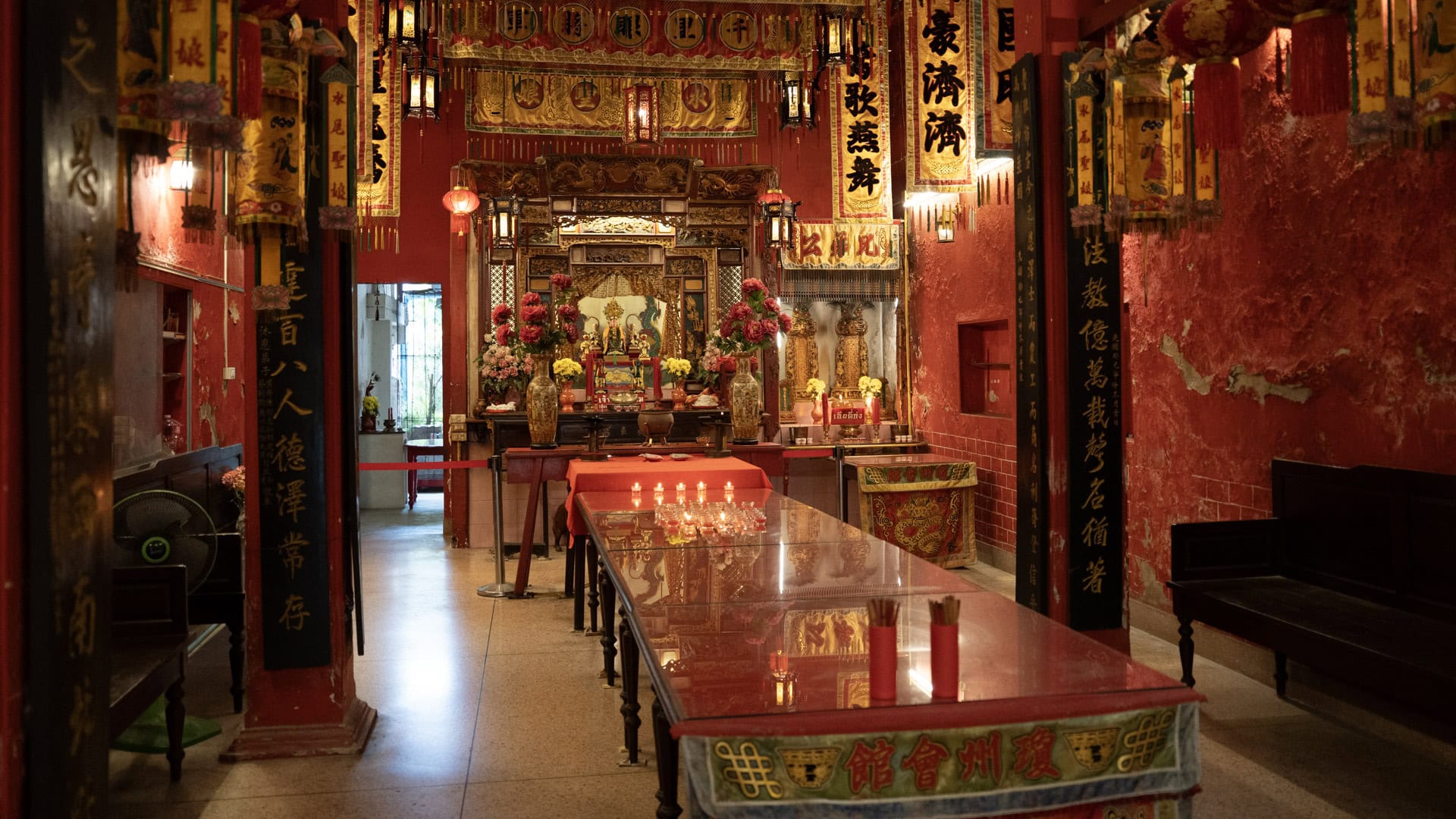
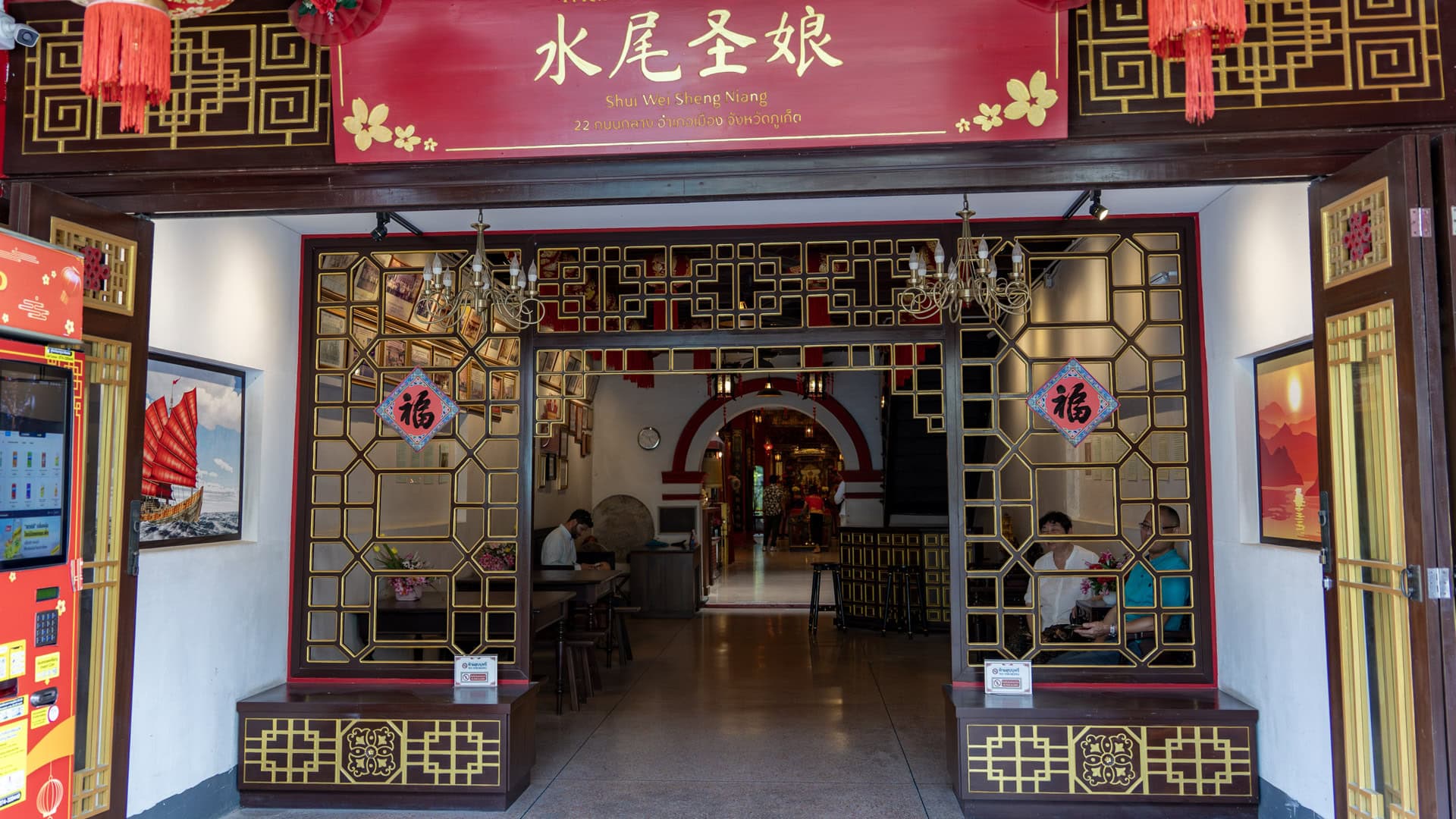
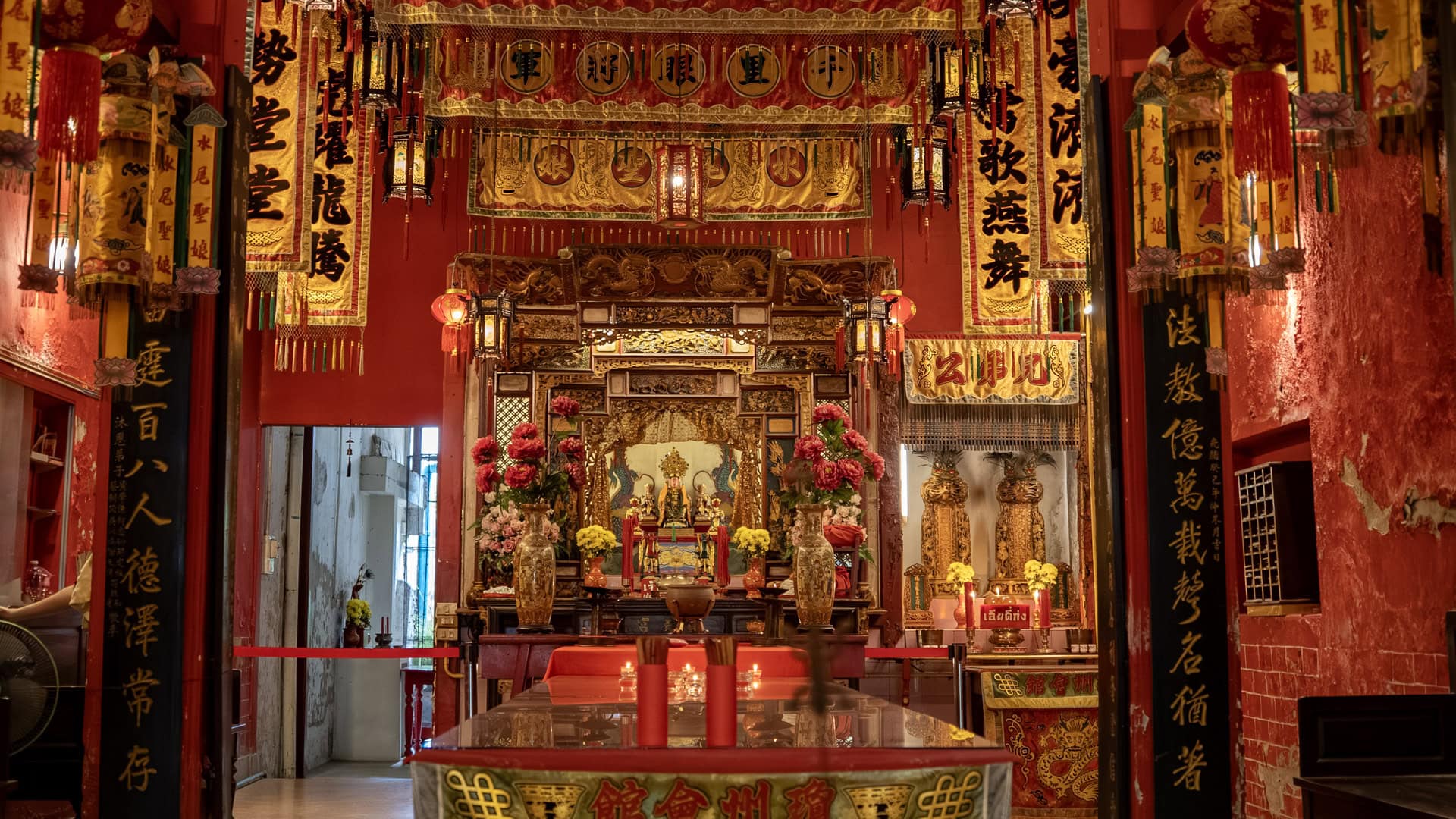
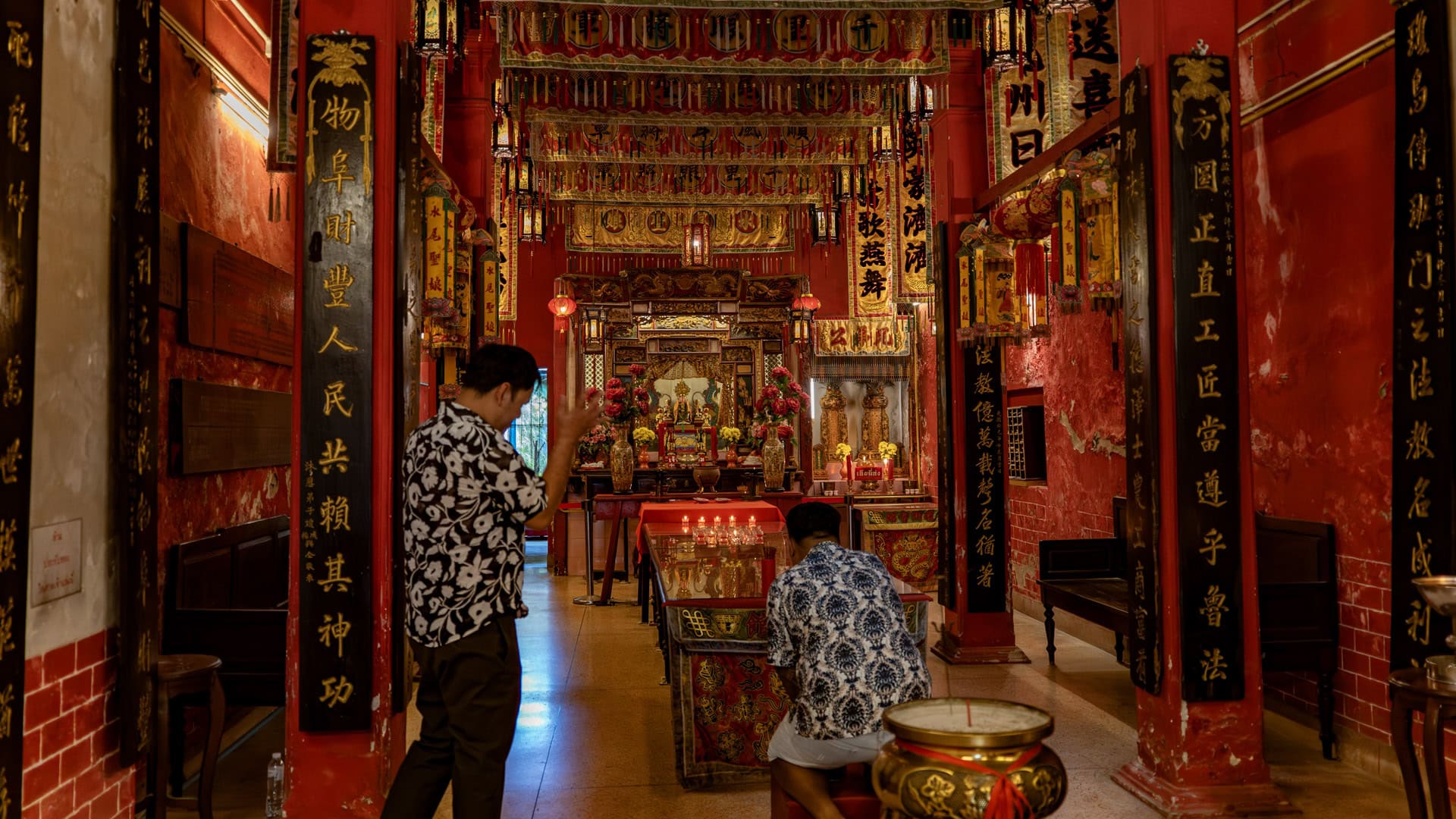
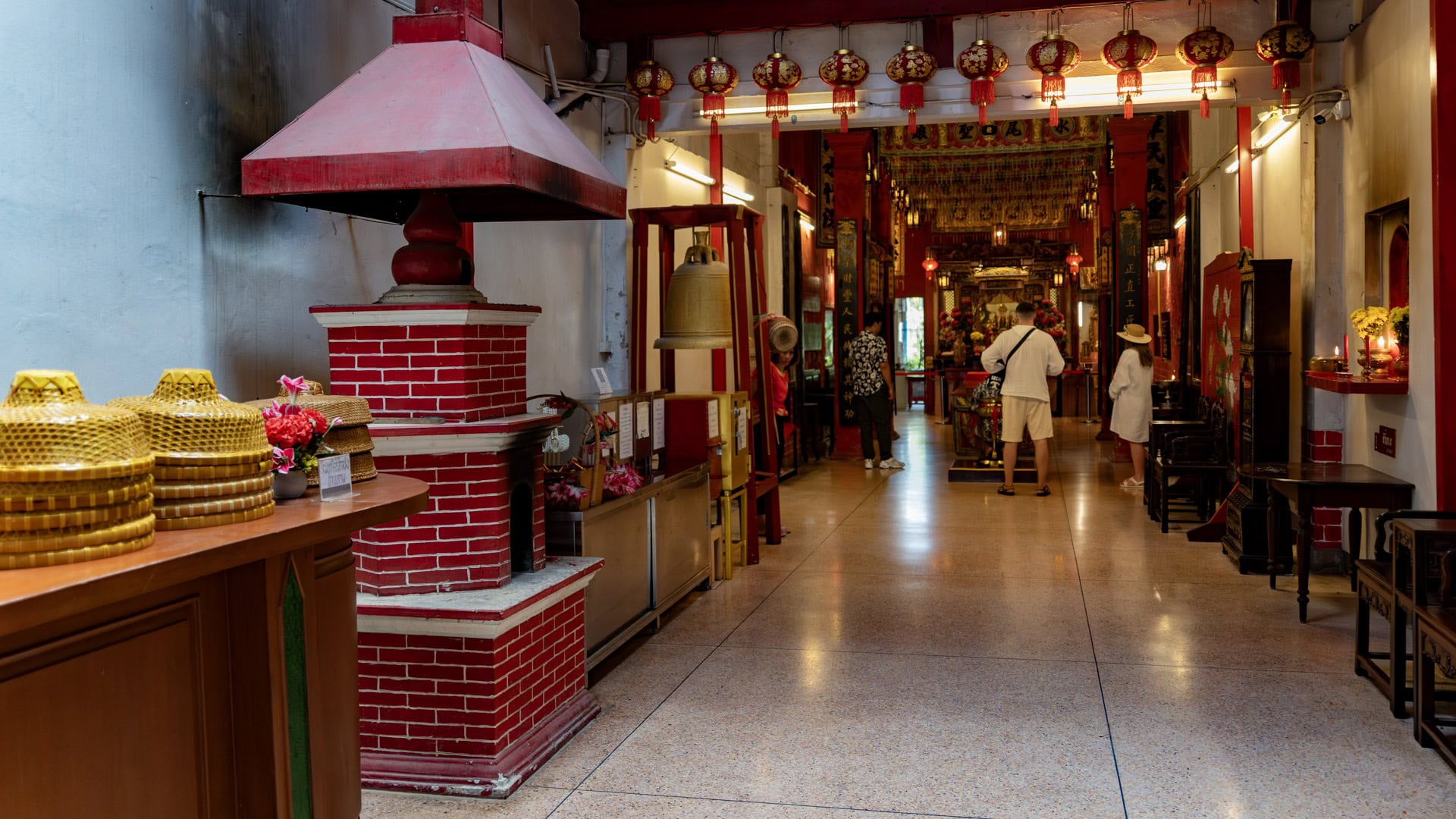

San Chao Hainan is a Chinese shrine on Phuket Road in Phuket Town, serving the island’s Hainanese community and forming part of the old eastern spiritual corridor toward Saphan Hin.
San Chao Hainan is a Chinese Taoist shrine in Phuket Town, on the eastern side of Phuket Road near the transition from the old commercial quarter toward Saphan Hin. It is closely associated with Phuket’s Hainanese community and functions as both a place of worship and a community anchor.
Within Phuket’s Chinese shrine network, it stands out as a community-specific shrine rather than a large island-wide ceremonial centre. Its identity is tied to Hainanese migration, ancestor-linked worship, and the maritime history of southern Chinese settlement in Phuket. In daily terms, it remains an active local shrine, while during major lunar-calendar events it becomes part of a much more visible ceremonial landscape.
The shrine sits in an urban roadside setting, enclosed within a compound slightly set back from Phuket Road and marked by a prominent ceremonial gateway. The entrance creates a clear threshold between the street traffic and the quieter interior space beyond.
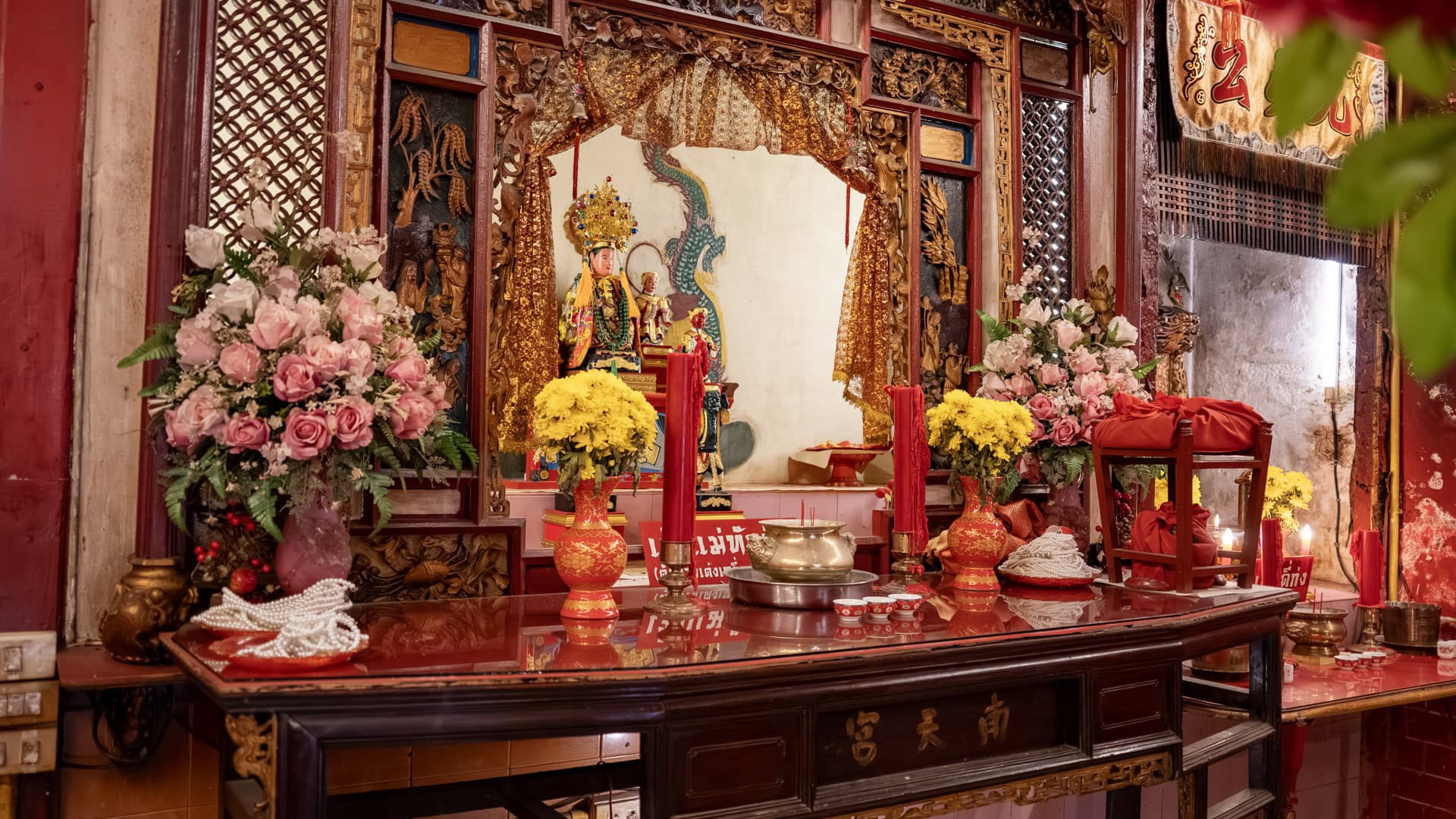
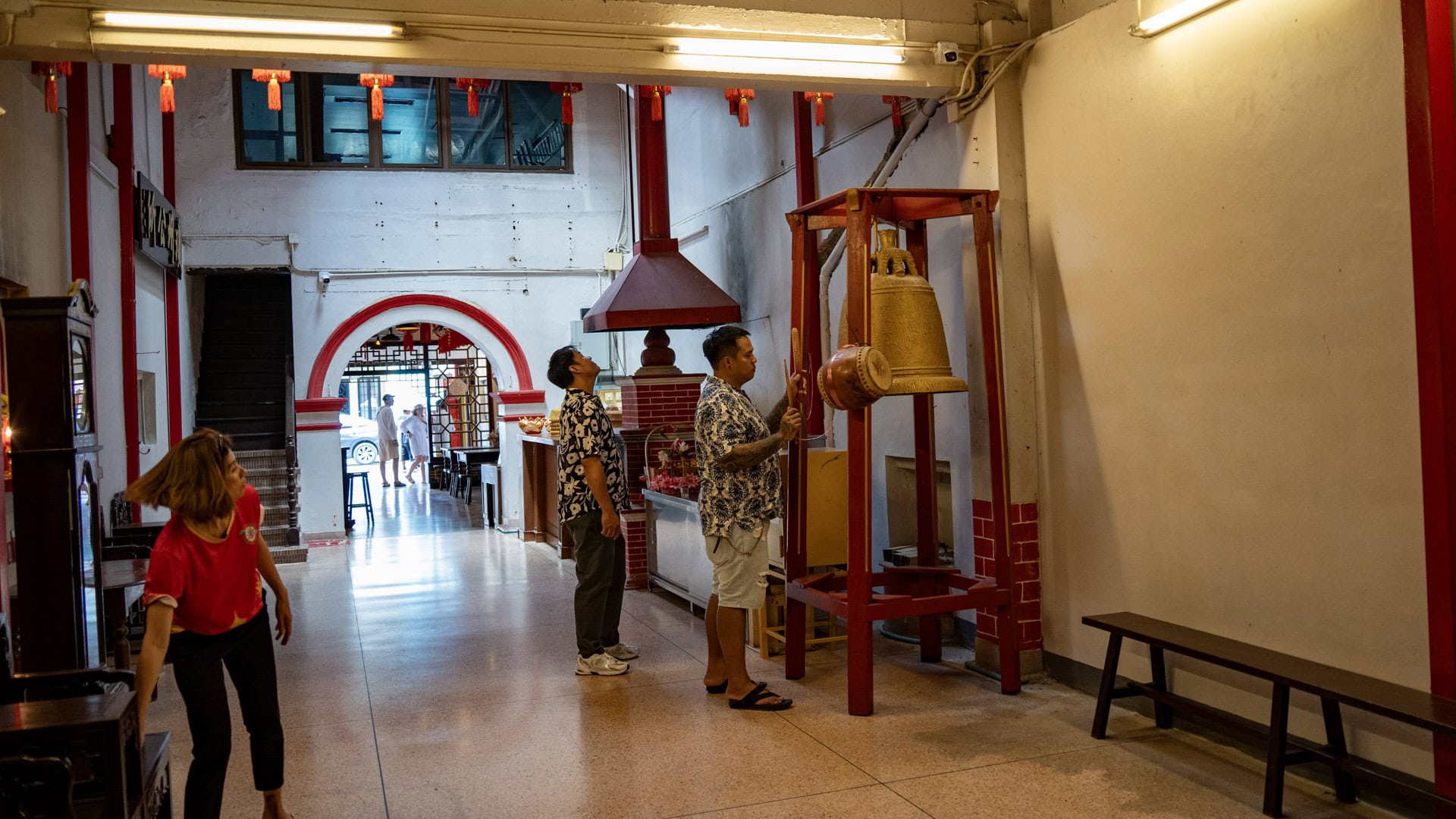
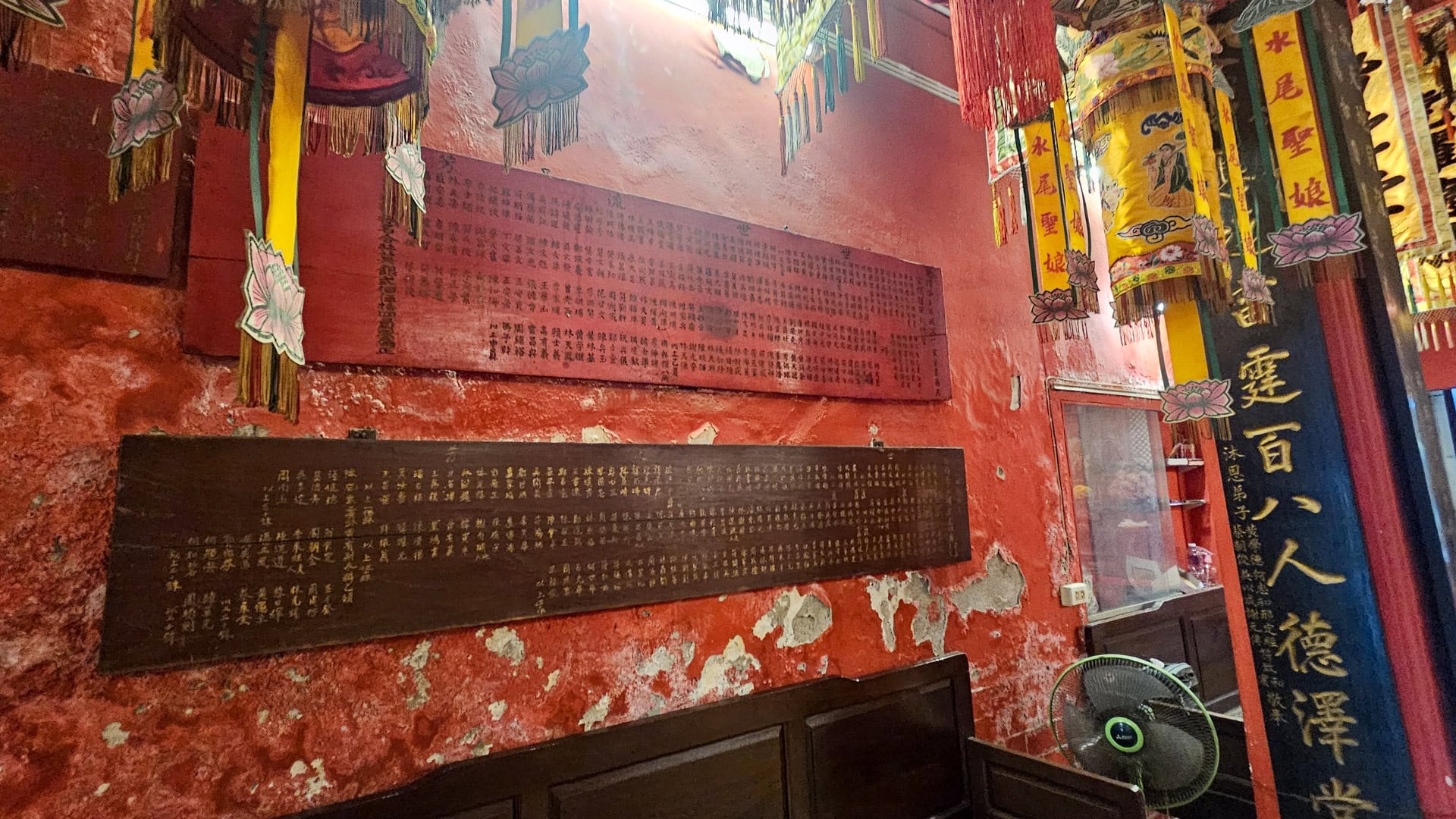
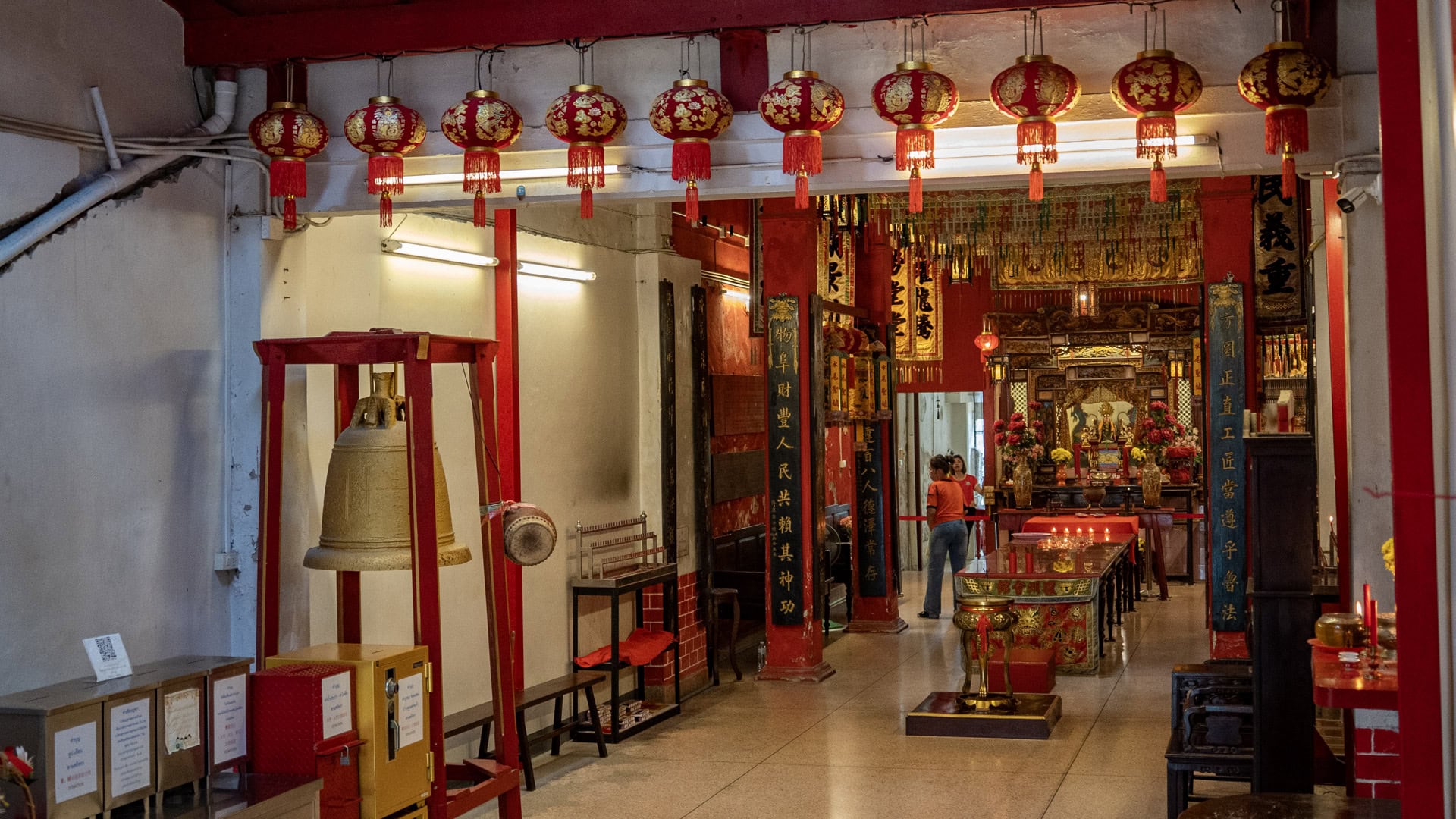
Inside, the layout follows a straightforward axial arrangement. A paved forecourt leads toward the elevated main shrine hall, with the central altar visible on approach. The compound is compact rather than sprawling, and its structure feels formal but not large. Red-and-gold detailing dominates the visual character, with stone lions at the entrance, carved altar woodwork, and a traditional roofline that reinforces its Chinese architectural identity.
San Chao Hainan functions primarily as a working neighborhood shrine. Daily use centres on prayer, incense lighting, offerings, and quiet visits by local worshippers, especially families with Hainanese roots. It also serves a broader social role as a point of continuity for Hainanese heritage in Phuket.
Its use becomes much more public during the Phuket Vegetarian Festival, when the shrine is active within the island’s wider procession and ritual network. At those times, the forecourt and entrance area take on a more ceremonial role, while the shrine’s community significance becomes more visible to people moving through Phuket Town. Outside festival periods, activity is usually steady but restrained.
The shrine’s daily rhythm appears strongest in the morning, when local worship activity is more noticeable. Through the middle of the day, it tends to feel quieter, with a calmer and more contemplative character.
Its most intense period is during the ninth lunar month, when the Vegetarian Festival transforms the atmosphere with flags, incense, ceremonial movements, and greater local participation. At that time, the shrine shifts from a relatively compact community space into a more visibly active ritual site. For most of the year, however, its character is defined by regular neighborhood use rather than crowd-heavy visitor traffic.
The shrine is generally approached as a short stop rather than a long visit. Its scale is compact, and much of its interest lies in its courtyard sequence, altar arrangement, architectural detailing, and community context within Phuket Town.
As with other Chinese shrines in Phuket, modest dress is appropriate, and shoes are typically removed before entering the raised inner altar area. Parking is limited, especially along Phuket Road, and the entrance can be easy to miss when passing quickly by car because the compound sits between other roadside buildings. On foot, it is easier to read as part of the older eastern side of town.
San Chao Hainan is in Talat Yai, on the south-eastern side of Phuket Town. It stands on Phuket Road near the junction with Klang Road, in the corridor that leads from the historic commercial district toward Saphan Hin.
This places it just beyond the better-known core of the Old Town streets while still closely connected to that urban fabric. Geographically, it lies on the eastern side of central Phuket Town, rather than in the inland temple zones or the resort-oriented coasts. Its setting makes sense in relation to old trade routes, port-facing movement, and the Chinese commercial communities that shaped this part of town.
Compared with Jui Tui Shrine or Bang Neow Shrine, San Chao Hainan is smaller in scale and more community-specific in identity. It does not project the same broad ceremonial presence in everyday conditions, and outside major festival periods it feels quieter and more localized.
Compared with Sang Tham Shrine, it is less hidden in urban terms, since it faces a main road rather than sitting deep within a lane. At the same time, it shares a similar sense of being a functioning local shrine rather than a heavily staged visitor site. In Phuket’s wider shrine landscape, San Chao Hainan is best understood as a compact Hainanese community shrine with a clear cultural role rather than a large ceremonial landmark.