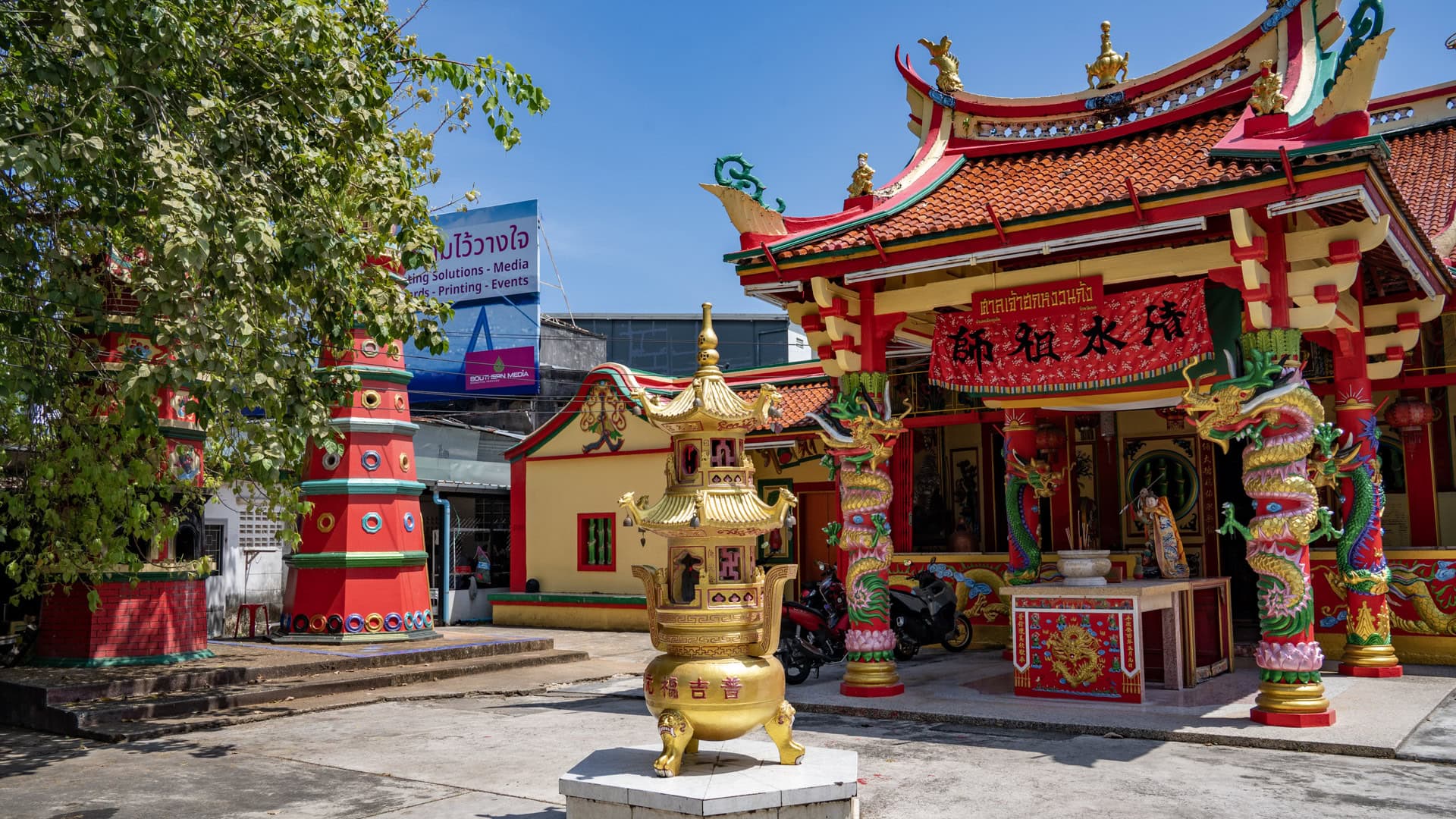

San Chao Hok Nguan Kong is a Thai-Chinese shrine in Phuket Town beside Surin Circle, known as a community place of worship and a visible ceremonial stop during the Phuket Vegetarian Festival.
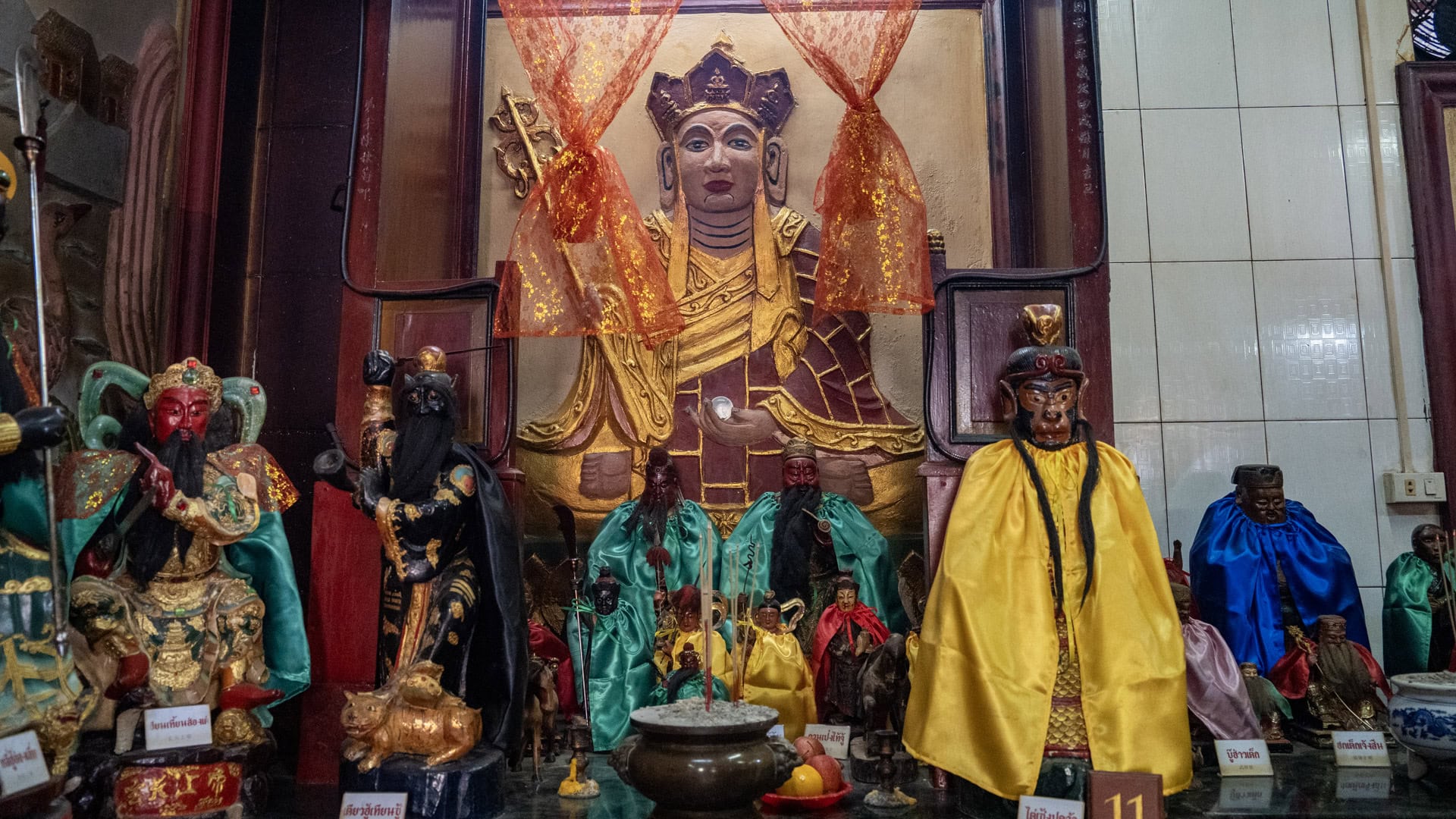
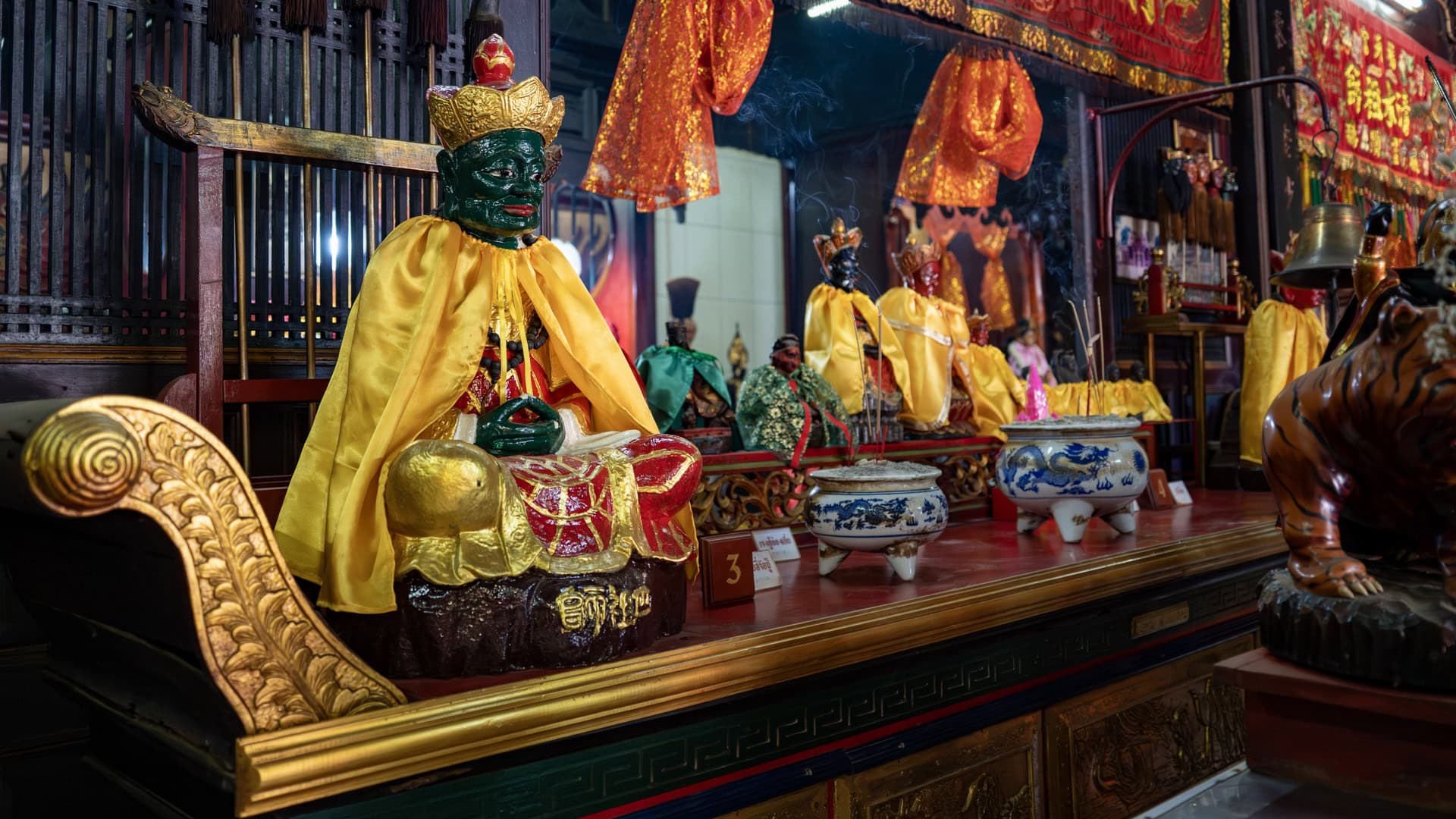
San Chao Hok Nguan Kong, also known in English as Hok Nguan Kong Shrine, is a Chinese Taoist shrine in Talat Yai, Phuket Town. It stands directly beside Surin Circle at the meeting point of Phuket Road and Thep Kasattri Road, giving it a far more exposed and public setting than many of the town’s smaller shrines. The shrine is associated with the local Thai-Chinese community in this part of town and is centered on the worship of Guan Yu, the deity linked with loyalty and martial virtue.
Its identity within Phuket is shaped by both religion and location. While it is a functioning neighborhood shrine rather than a large ceremonial complex, its position on a major roundabout makes it one of the more immediately recognizable Chinese religious landmarks in the eastern side of central Phuket Town. It also has a known role in Vegetarian Festival activity, when processions and spirit-medium movements pass through this part of the island’s most established ritual routes.
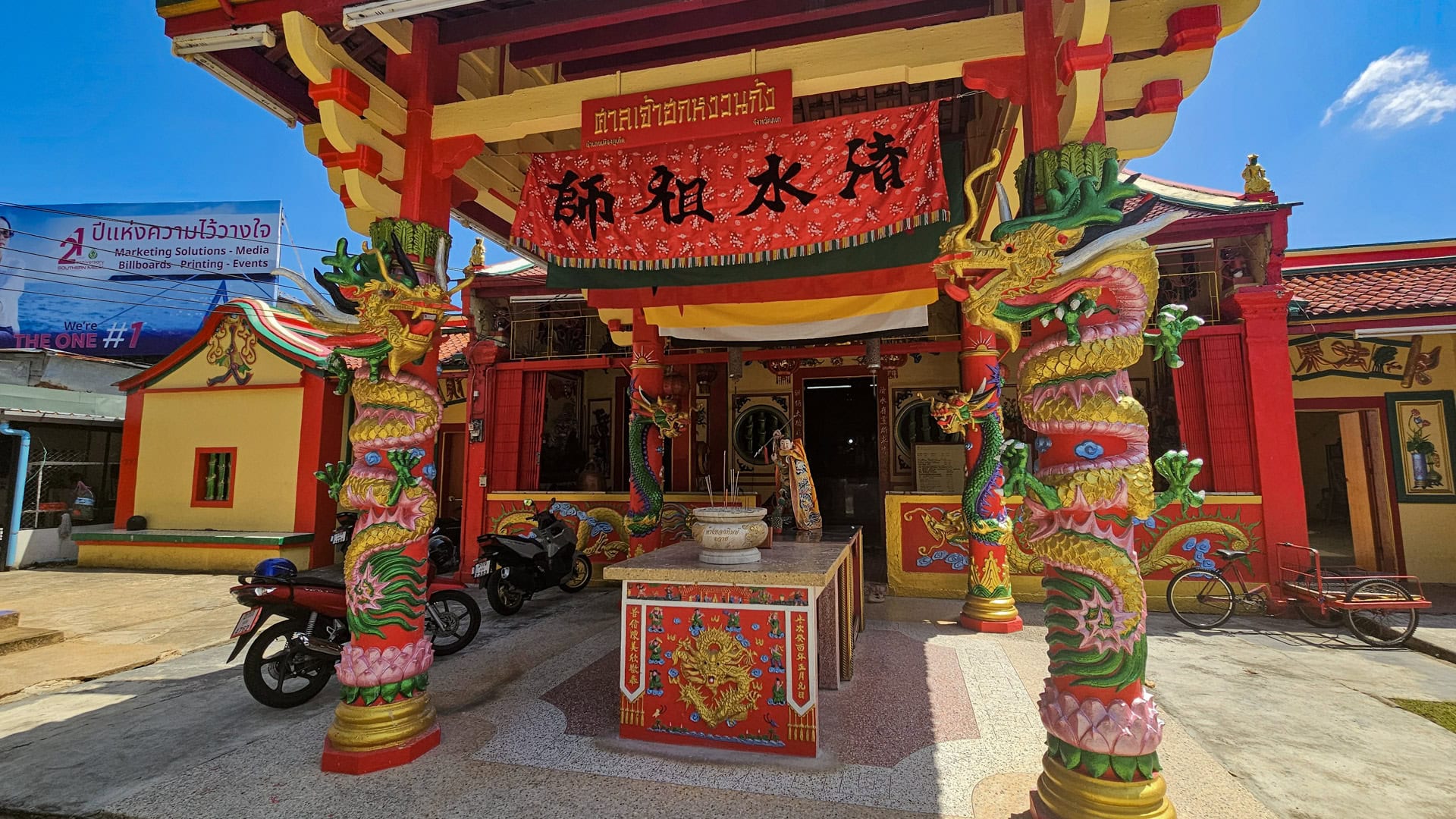
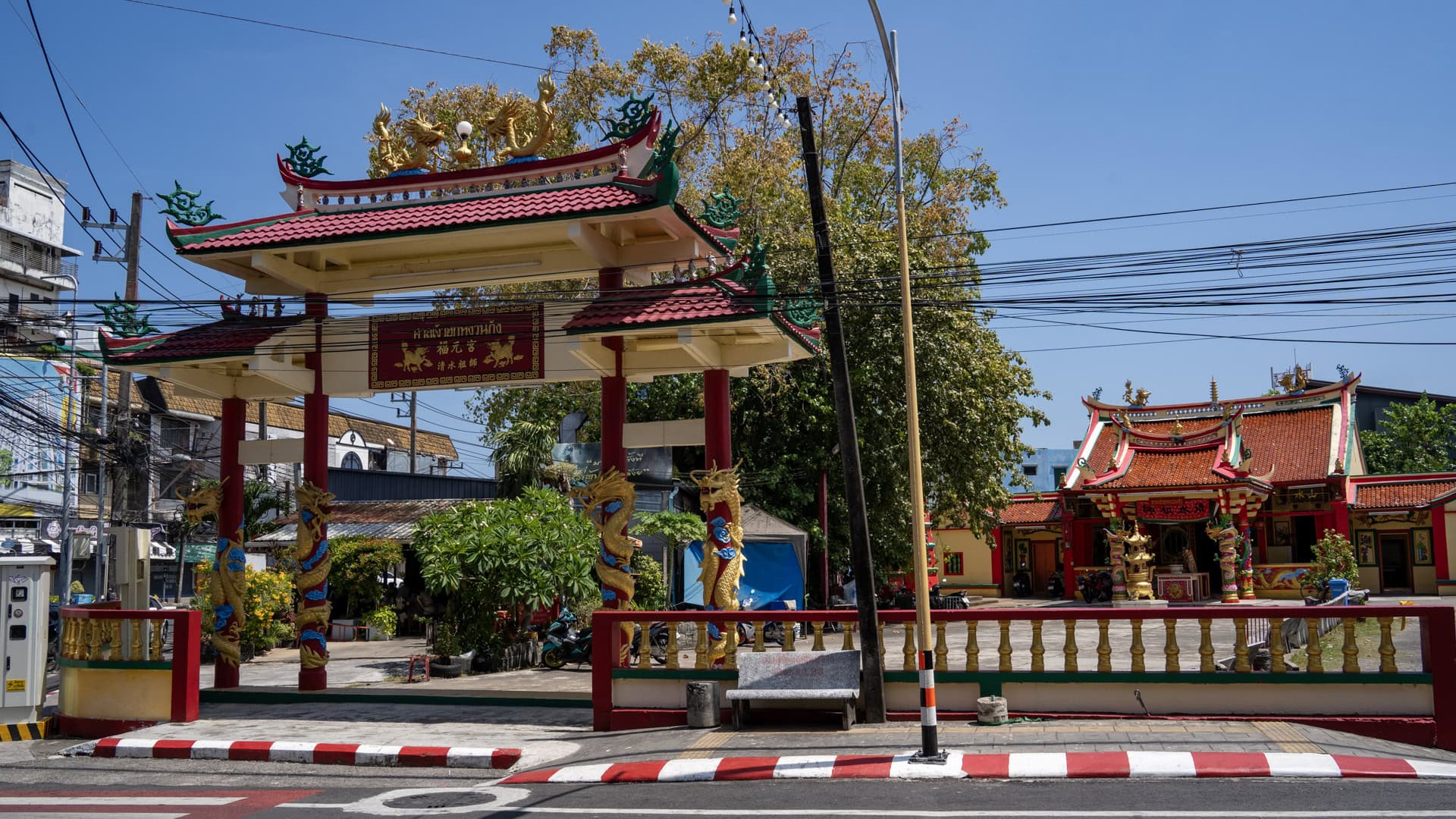
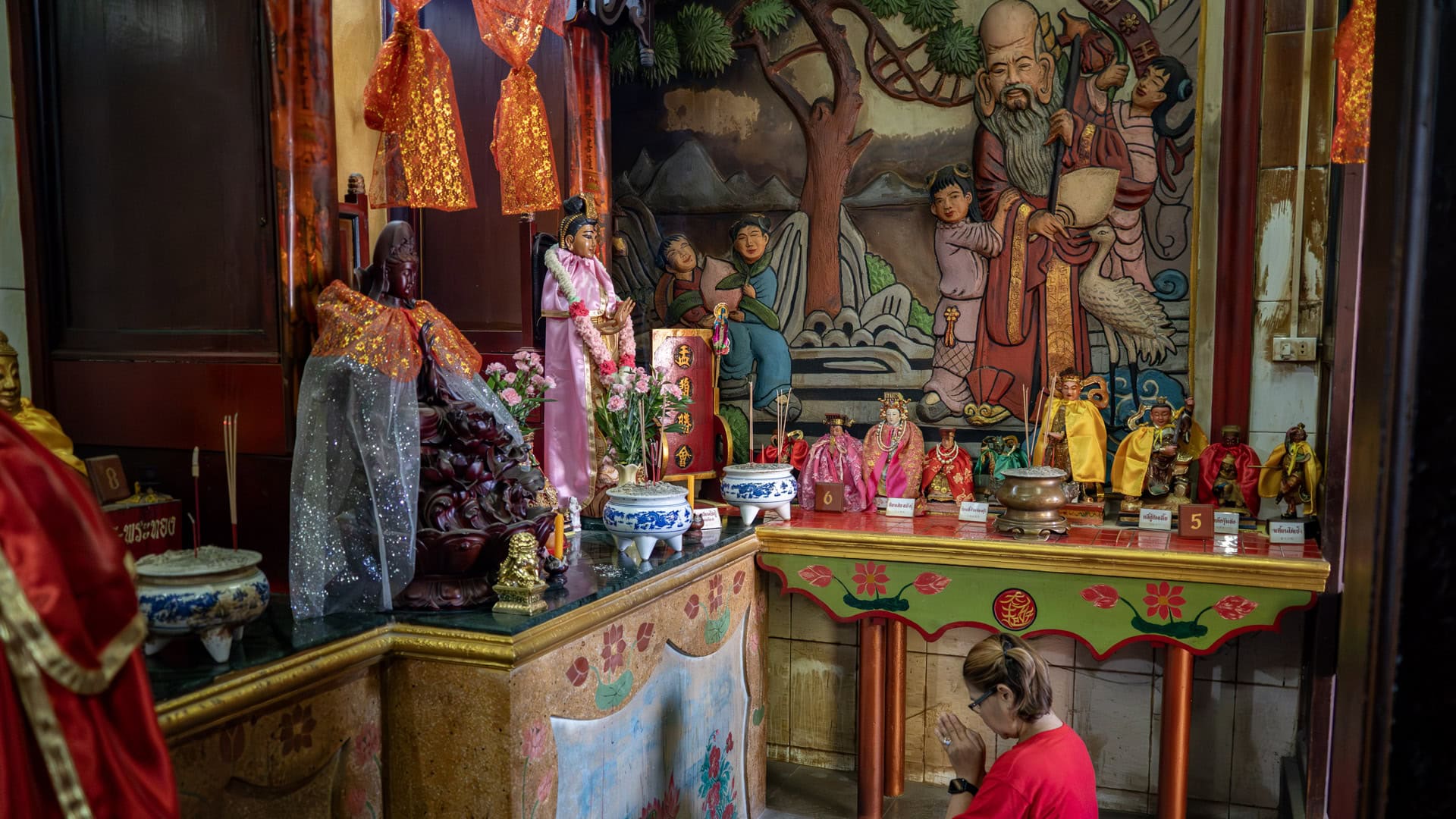
The shrine occupies a prominent corner site facing the roundabout and clock tower, with traffic moving continuously around it. This gives the building a civic visibility that differs from shrines hidden along side streets or inside older residential blocks. The structure is described as a single-storey traditional Chinese temple building with a sweeping tiled roof, an entrance framed by stone lions, and decorative details including carved door panels and roof ridges with dragon motifs.
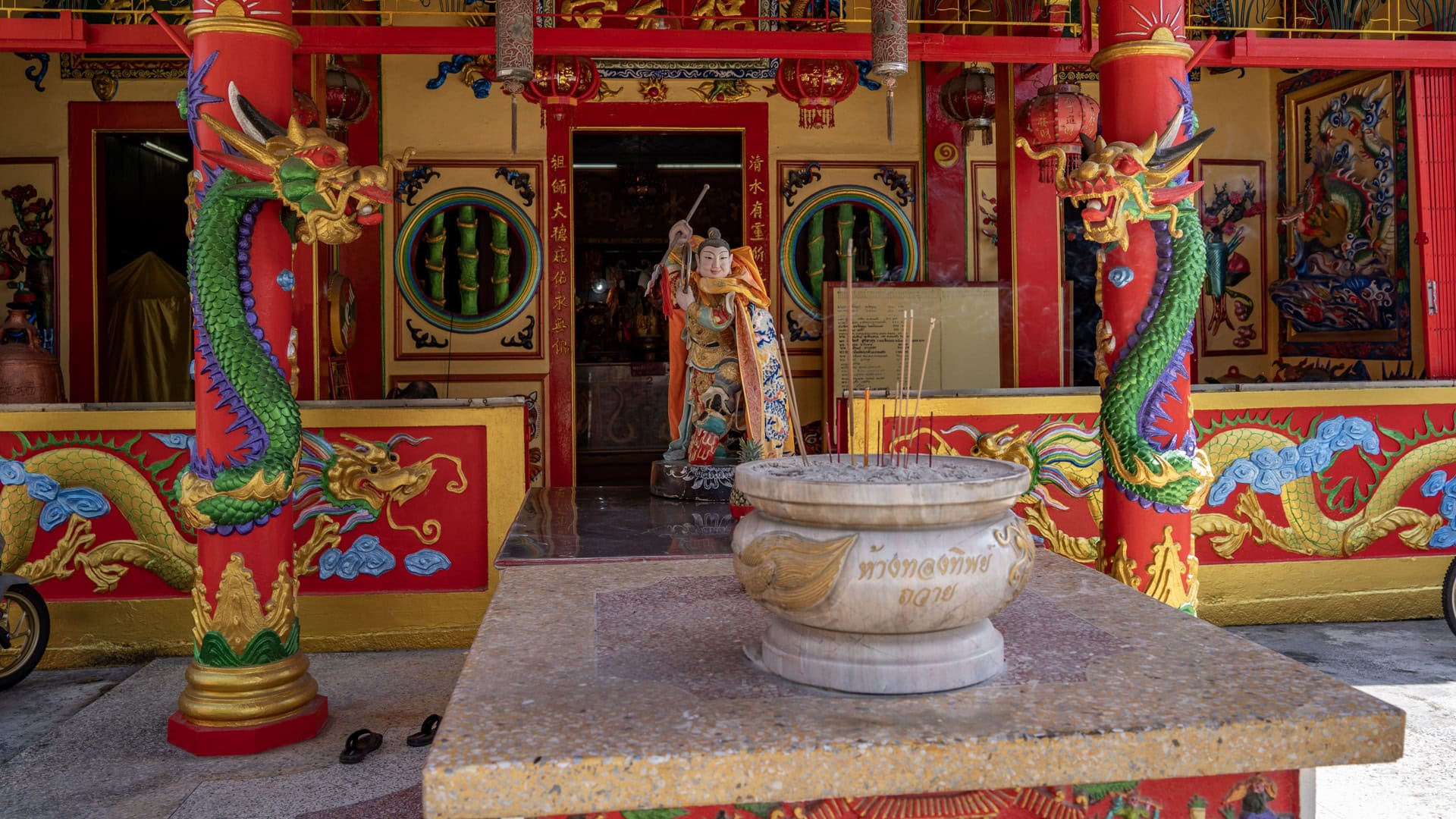
In front of the main hall is a paved forecourt between the entrance and the roadside edge. During the Vegetarian Festival, this forecourt takes on added ceremonial use, including the raising of the Go Teng pole. The internal layout is direct and formal, with the central altar ahead and secondary altars around it, while smaller side spaces support administration and storage linked to shrine activity.
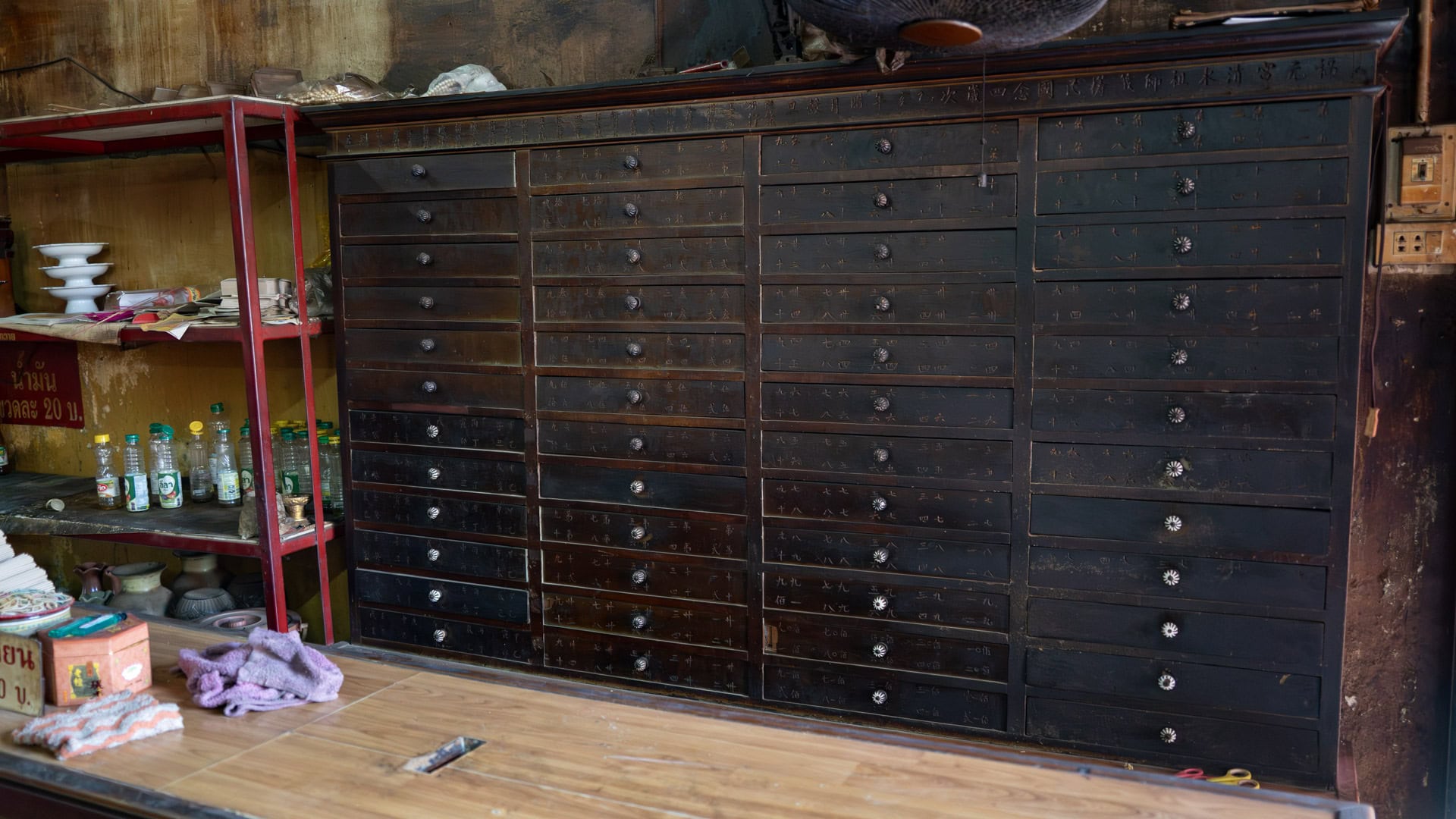
In daily terms, the shrine functions as a local place of worship. Activity is generally steady but not heavy, with residents and nearby shopkeepers stopping for brief prayers, incense offerings, and fortune-stick rituals. Its use pattern is more community-based than tourism-led, and it appears to serve the immediate Phuket Road and Surin Circle area rather than operating as a large island-wide pilgrimage site.
Its wider ceremonial role becomes clearer during the Phuket Vegetarian Festival. At that time, the shrine serves as a visible gathering point and stopping place for processions and spirit-medium activity moving along major parade routes toward Saphan Hin. This makes it part of Phuket’s broader ritual geography even though it remains smaller in scale than major festival shrines such as Jui Tui or Bang Neow.
Outside festival periods, the shrine appears to follow a relatively modest daily rhythm, with stronger activity in the morning when local worship is more common. The overall pattern is that of a working urban shrine rather than a site with constant visitor flow throughout the day.
Its most intense period is the ninth lunar month during the Phuket Vegetarian Festival, when the surrounding streets become louder, more crowded, and more visibly ceremonial. At that point the shrine shifts from a compact neighborhood religious site into an active ritual node marked by yellow flags, firecrackers, and procession traffic.
The shrine is easy to identify because of its position at Surin Circle, but the roadside setting means the atmosphere is shaped by traffic as much as by the building itself. Noise, vehicle movement, and exhaust are part of the on-the-ground reality here, and the site reads more as an urban religious landmark than as a quiet retreat.
Practical conditions are straightforward. The site is better approached on foot than by car, as on-site parking is very limited. Standard shrine etiquette applies, including modest dress and shoe removal before entering the inner area. Entry is free, with donations forming the usual contribution for incense or candles.
San Chao Hok Nguan Kong is in Talat Yai within Phuket Town, on the east-central side of the town grid. Its position beside Surin Circle places it close to one of the best-known traffic junctions linking older commercial streets with the wider road network leading toward other parts of town and the waterfront side of Saphan Hin.
This location helps explain both its visibility and its ceremonial function. Unlike shrines embedded more quietly within lanes of the old town, Hok Nguan Kong sits at a threshold point between movement, commerce, and older community life. It belongs clearly to Phuket Town’s Chinese religious landscape, but in a more roadside and public-facing form.
Compared with Jui Tui Shrine, San Chao Hok Nguan Kong is smaller, less monumental, and more neighborhood-scaled in daily use. Jui Tui functions as one of Phuket’s major ritual centers, while Hok Nguan Kong reads more as a local shrine with an important festival role because of where it sits rather than because of its scale alone.
Compared with Sang Tham Shrine, which is known for a more tucked-away and enclosed setting, Hok Nguan Kong is visually exposed and integrated into the town’s traffic flow. Its distinct character comes from this combination of religious function and roundabout prominence. It is less secluded, less atmospheric in the narrow-lane sense, and more directly tied to the public street life of Phuket Town.