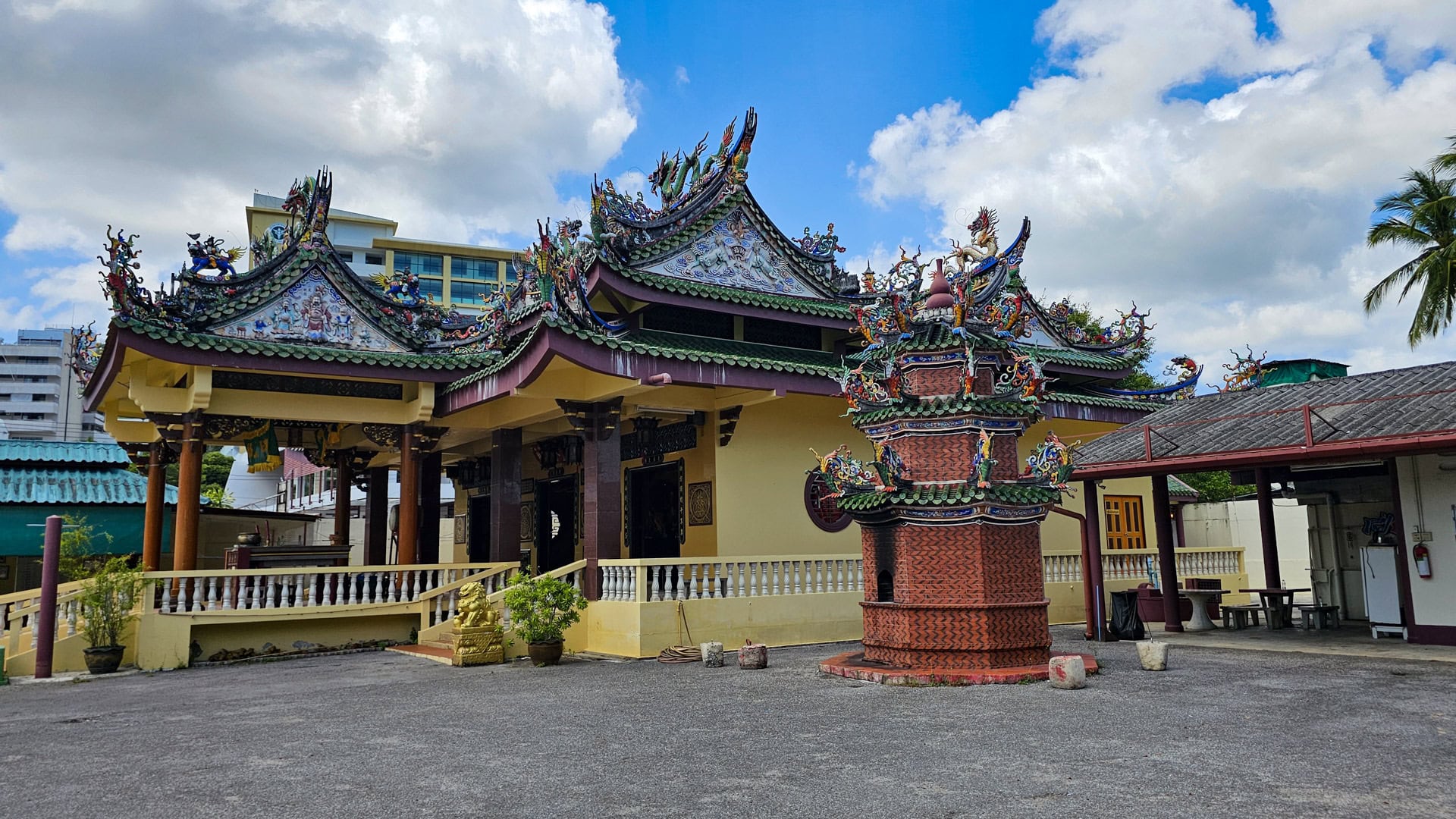

San Chao Jeng Ong Shrine is a Chinese folk-religion shrine on Yaowarat Road in Phuket Town, opposite Vachira Phuket Hospital, with a strong local role in daily worship and the Phuket Vegetarian Festival.
San Chao Jeng Ong Shrine, also known by its official Thai name San Chao Jeng Ong, is a medium-sized Chinese shrine on the western side of Phuket Town. It belongs to the island’s long-established Thai-Chinese religious landscape and is closely associated with Hokkien community life.
Its position opposite Vachira Phuket Hospital gives it a distinct role within the town. In practical terms, it functions not only as a neighborhood shrine but also as a place where local residents, hospital staff, patients, and families stop to make offerings connected with health, protection, and recovery.
The shrine is also part of Phuket’s Vegetarian Festival network. Although smaller in scale than the better-known city shrines, it remains ritually complete and locally significant, particularly during the nine-day festival period.
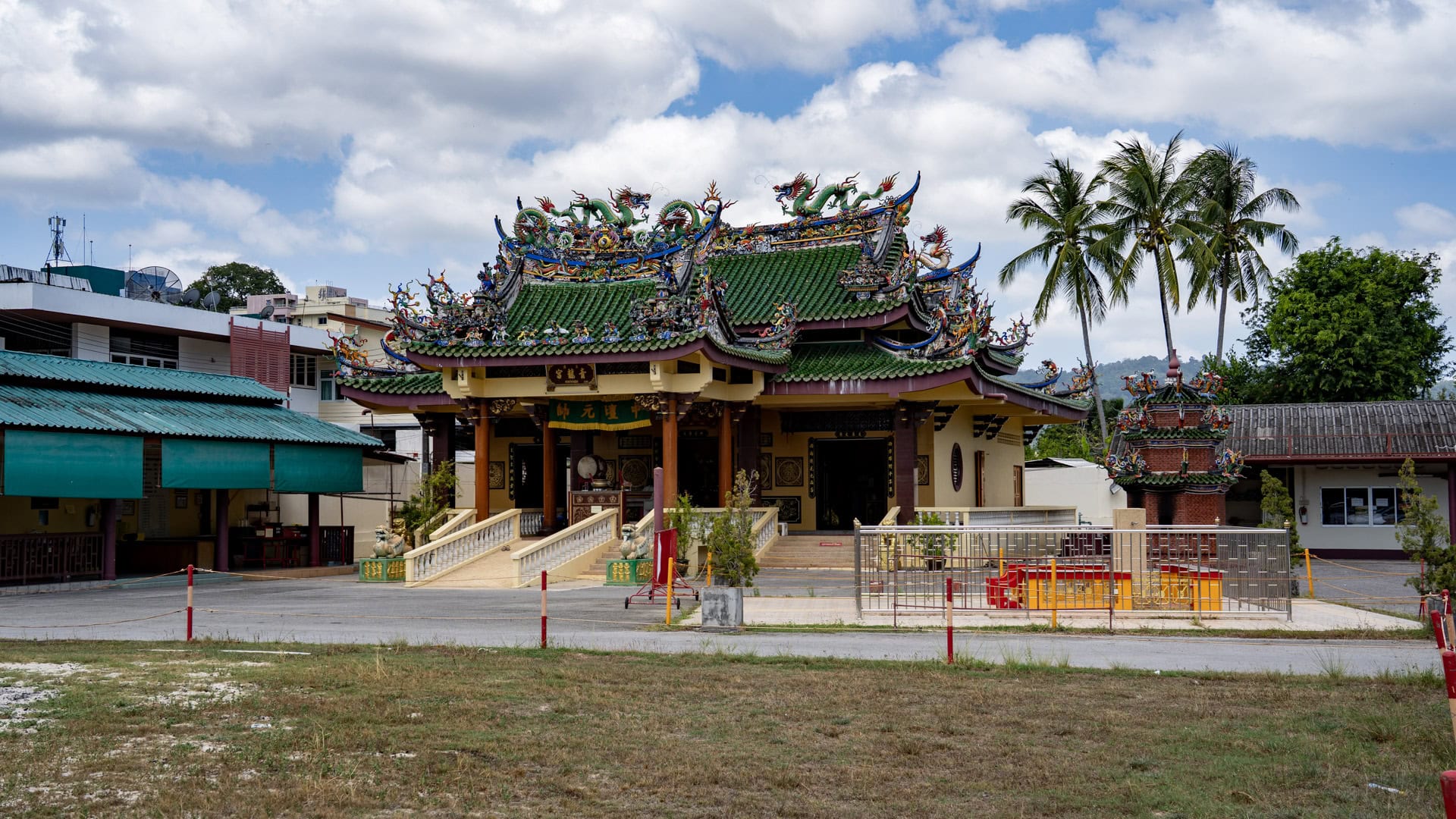
The shrine sits directly on Yaowarat Road, one of the main routes linking the northern side of Phuket Town with Sam Kong and the bypass road. Its setting is strongly roadside and urban, with traffic moving close to the compound. A small concrete forecourt helps separate the shrine from the road and creates space for incense activity, short stops, and temporary festival use.
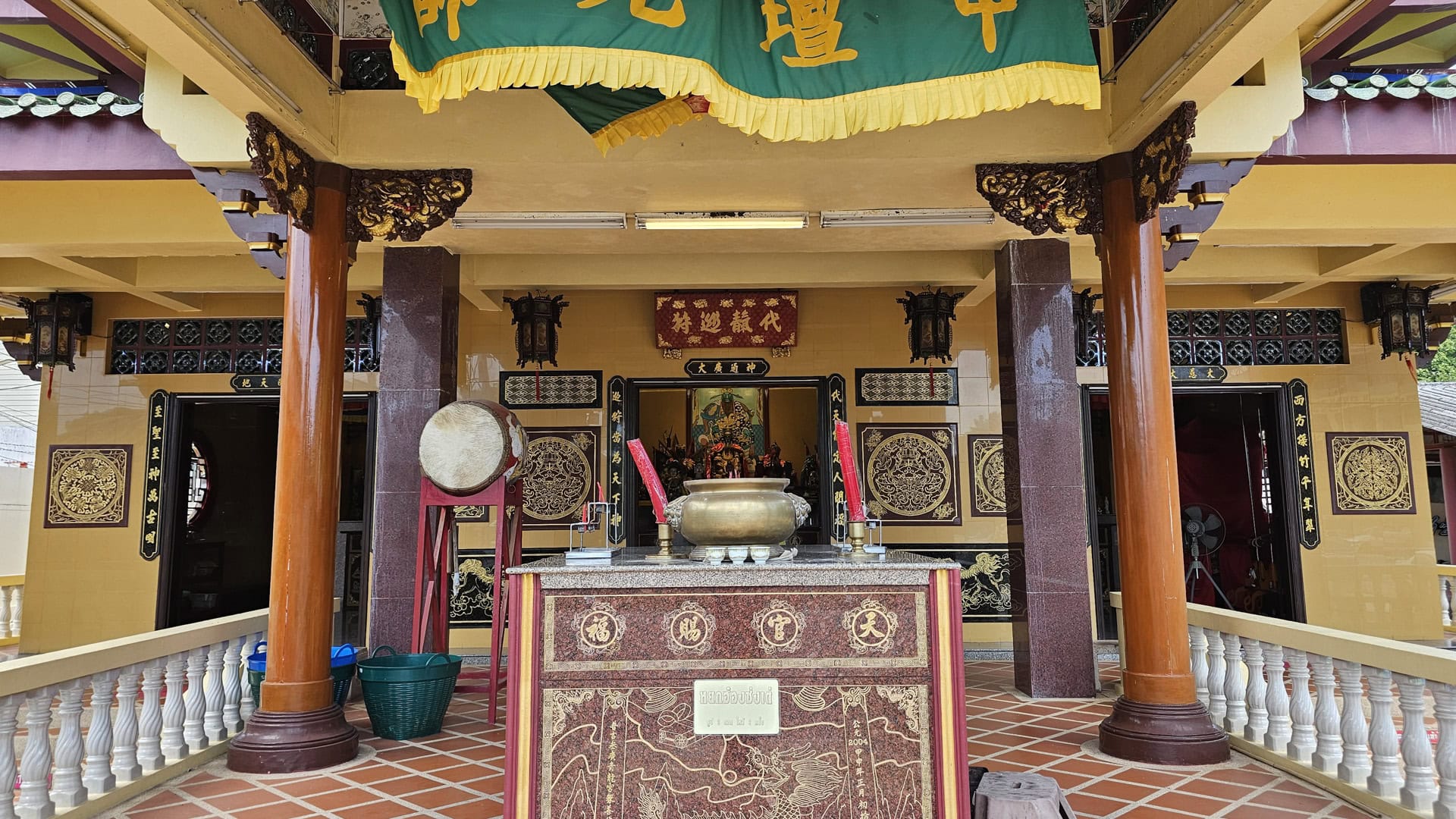
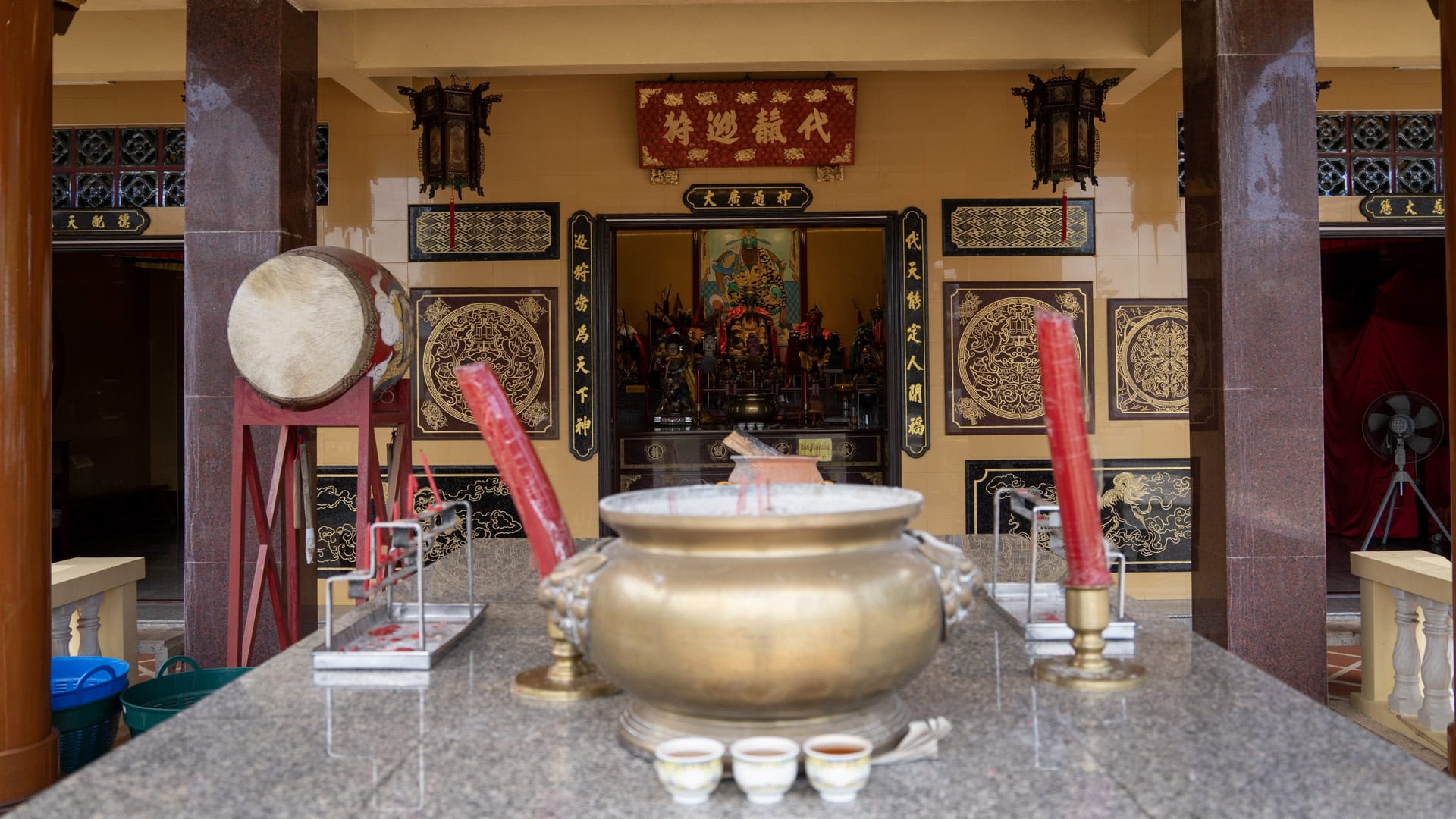
The layout is compact and formal. Visitors move inward from the outer apron through an entrance marked by stone lions and a large incense burner, then into the main prayer hall. The site does not spread outward in the way some larger Phuket shrines do, and the limited footprint gives the compound a tighter, denser arrangement.
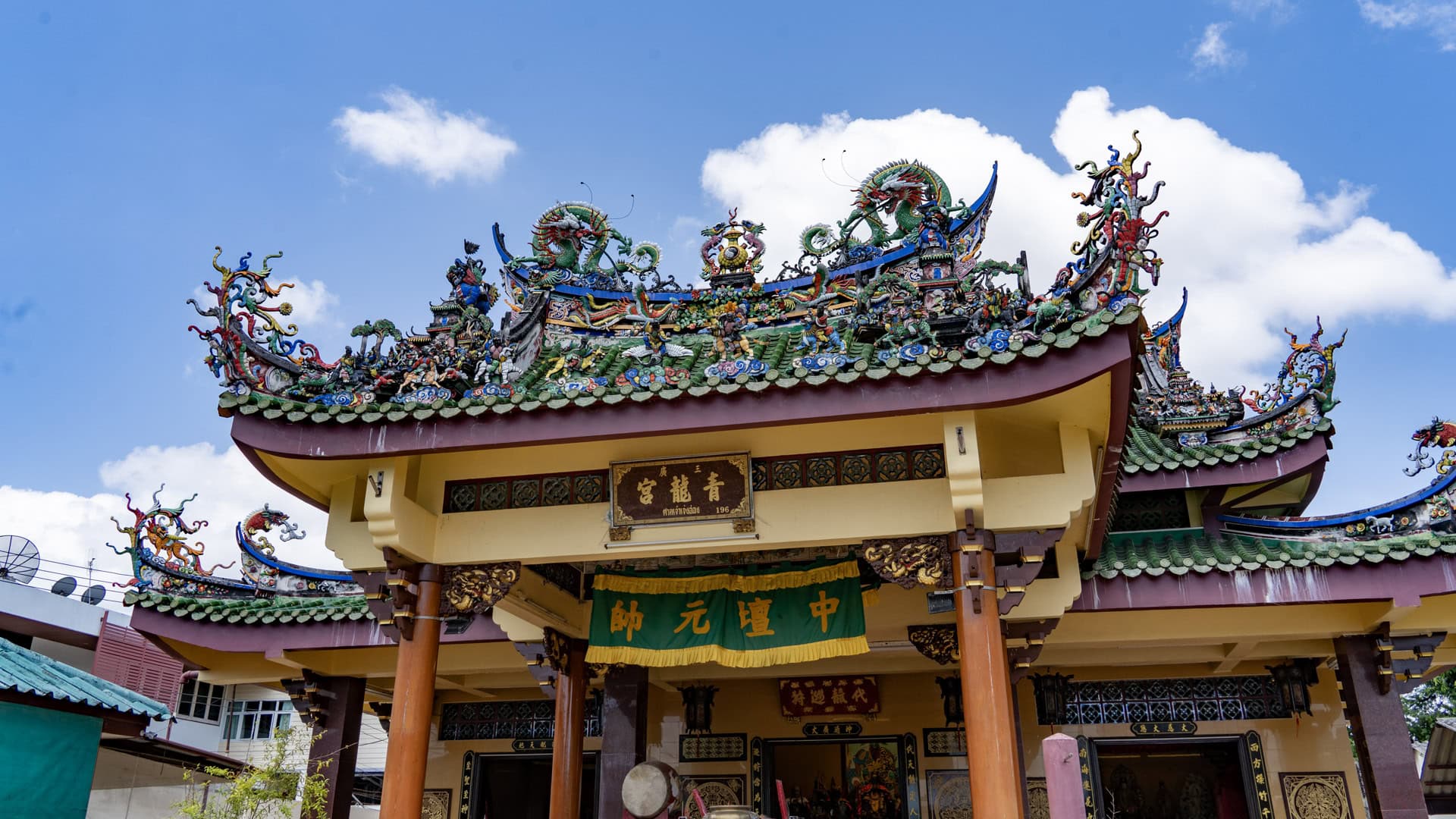
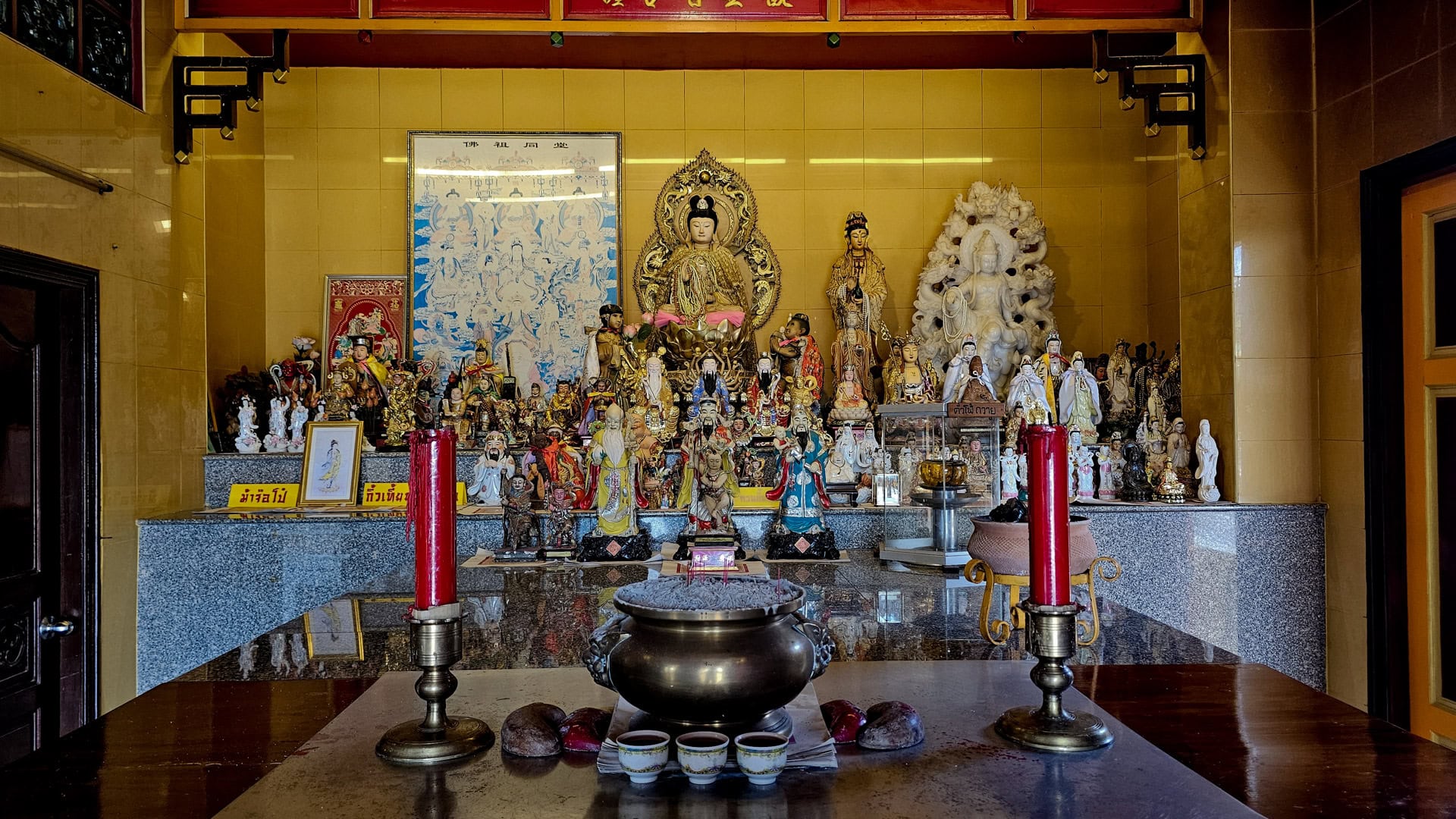
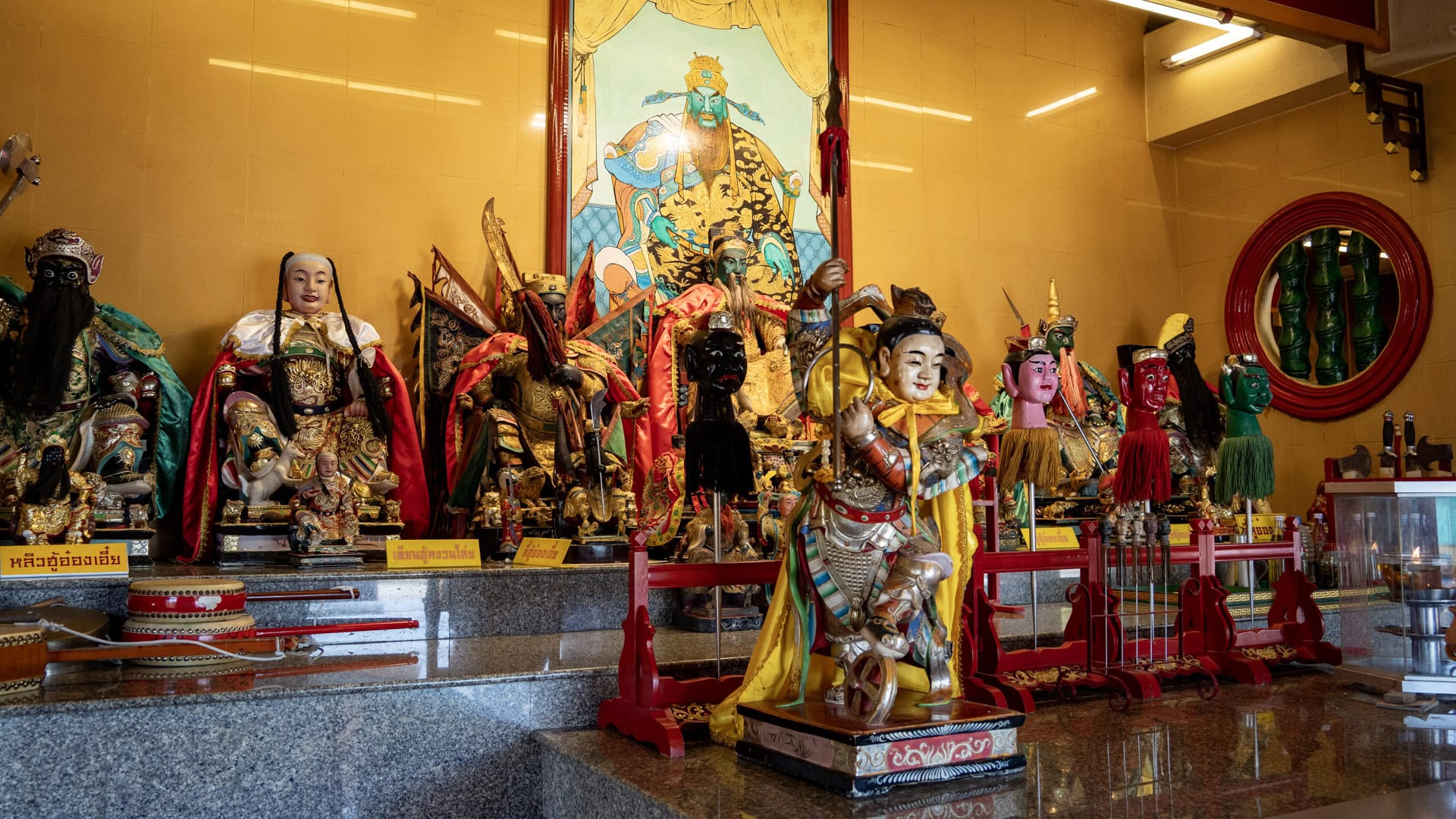
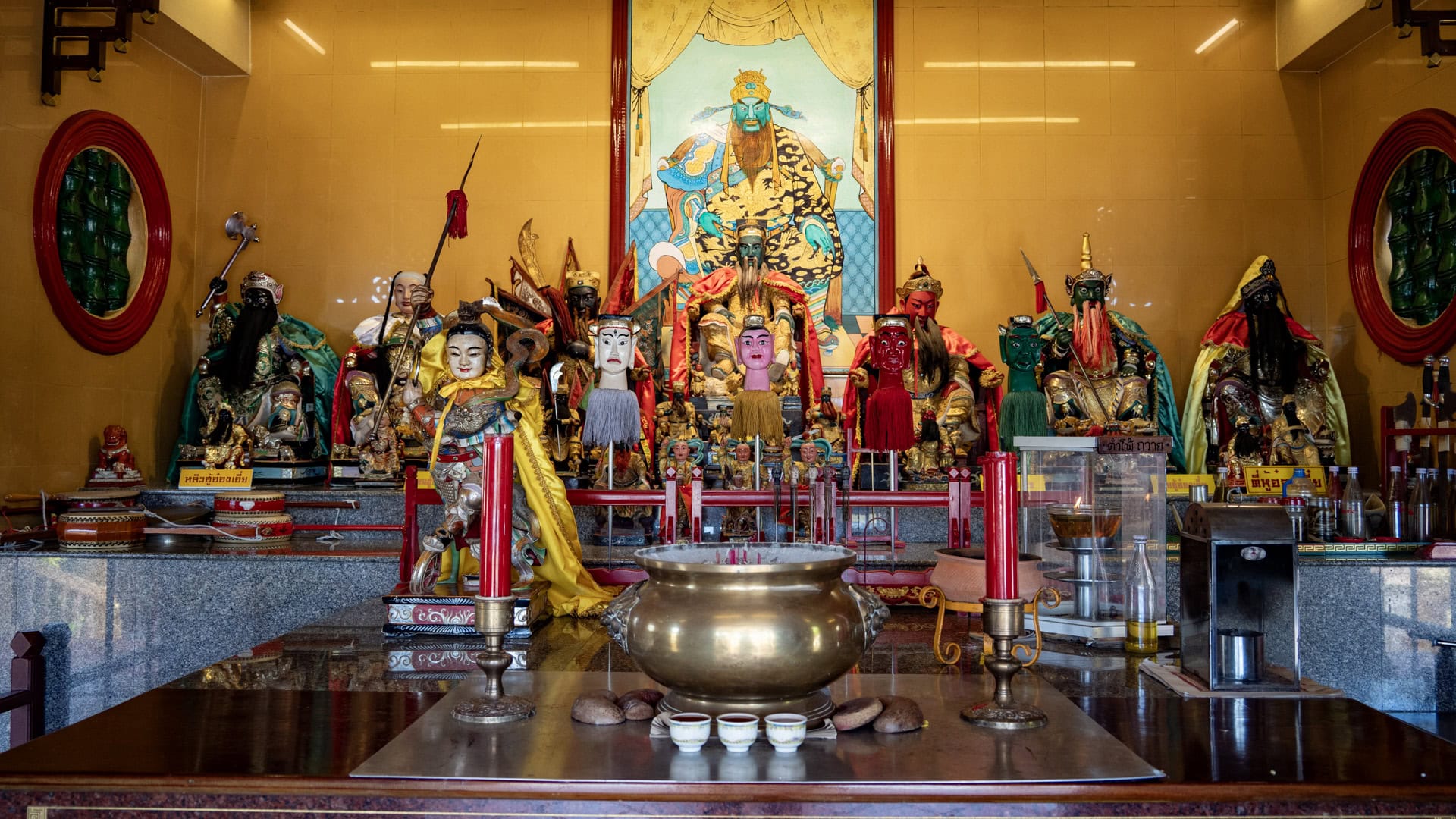
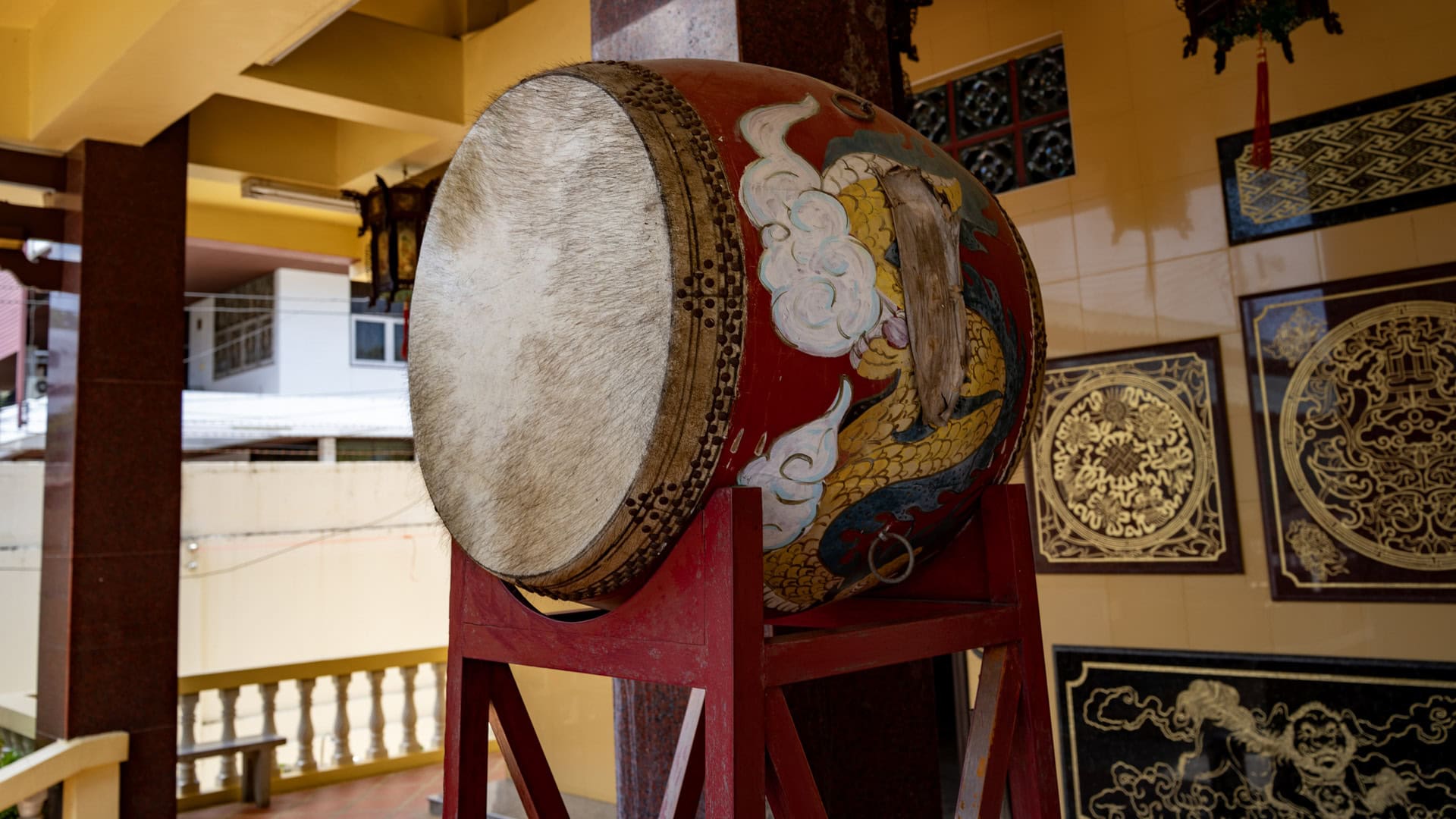
Inside, the main hall follows a linear shrine layout with a central altar dedicated to Jeng Ong. Ornate pillars, including dragon-wrapped columns, help define the interior space. Side altars extend the devotional function of the hall and are associated with other Taoist figures, including Guanyin and guardian deities. Architectural detail is one of the shrine’s stronger visual features, especially the dragon pillars and the ceramic shard work along the roofline.
In daily use, Jeng Ong Shrine operates as a working place of worship rather than a visitor-led landmark. Offerings of incense are a regular part of activity here, and the shrine is woven into the routines of people living or working in the surrounding area.
Its social role is shaped by its location opposite the hospital. That gives the shrine a practical connection to prayers for health, recovery, and protection, and this relationship appears to be part of its everyday identity rather than an occasional association.
During the Phuket Vegetarian Festival, the shrine becomes much more active and outward-facing. It takes part in the island’s ritual cycle through processions, spirit medium activity, and communal vegetarian dining. In that context, the shrine shifts from a steady neighborhood religious site to a more intense ceremonial hub, while still retaining a more local scale than the largest festival shrines in central Phuket Town.
The shrine appears most legible in the morning, when local worship activity overlaps with the start of the working day and with hospital-related movement across Yaowarat Road. At that time, the relationship between the shrine, the pavement, and the road is most visible.
A second visual shift comes in the evening, when the lit shrine stands out more clearly against the surrounding traffic corridor. The site does not become nightlife-oriented, but the contrast between ceremonial space and the road is stronger after dark.
Its most intense annual period is the Phuket Vegetarian Festival in the ninth lunar month. During those nine days, the shrine becomes louder, more crowded, and more processional in character, with firecrackers, ritual movement, and communal activity changing the normal scale of use. Chinese New Year also brings a noticeable increase in offerings and local foot traffic.
Jeng Ong Shrine is easy to identify from the road, but practical access is less simple than its visibility suggests. Parking is limited, and the roadside setting means arrivals are usually brief and functional rather than slow or spacious.
The site is compact, so visits tend to be relatively short outside festival periods. The layout is straightforward, with a clear movement from the forecourt into the main hall. Standard shrine etiquette applies, including modest dress and respectful behavior around the altar space. Shoes are typically removed before entering the inner hall.
The main practical drawback is the traffic environment. Crossing from the hospital side can be awkward, and the constant road noise affects the experience. This is not an isolated or quiet temple compound. Its character comes from being fully integrated into the movement of everyday Phuket Town life.
Jeng Ong Shrine is on Yaowarat Road on the western side of Phuket Town, near the edge between Talat Nuea and Vichit. It sits directly opposite Vachira Phuket Hospital, which is the clearest immediate landmark.
This position places it on an important urban approach into the town from the north. In broader Phuket terms, it functions as part of the northern gateway into the Phuket Town cultural zone rather than as a shrine deep inside the older historic core.
The surrounding context is urban, road-led, and institutionally active. That distinguishes it from shrines set within denser old-town streets or within more residential neighborhood pockets.
Compared with Jui Tui Shrine, Jeng Ong Shrine is smaller, tighter in layout, and less exposed to broad visitor traffic. Its role feels more neighborhood-based, with a stronger everyday connection to local routine than to citywide visibility.
Compared with Lim Hu Tai Su Shrine in Sam Kong, it shares a similarly local pattern of use, but the setting is different. Jeng Ong Shrine is more strongly defined by a major road and by its relationship to the hospital, while Sam Kong’s shrine setting feels more centered within its surrounding community fabric.
Within Phuket’s wider shrine network, Jeng Ong Shrine fits the model of a complete but second-tier local shrine. It carries real ceremonial importance, especially during the Vegetarian Festival, but its identity is tied more to its immediate district and daily use than to island-wide prominence.
Jeng Ong Shrine is located on Yaowarat Road on the western side of Phuket Town, directly opposite Vachira Phuket Hospital.