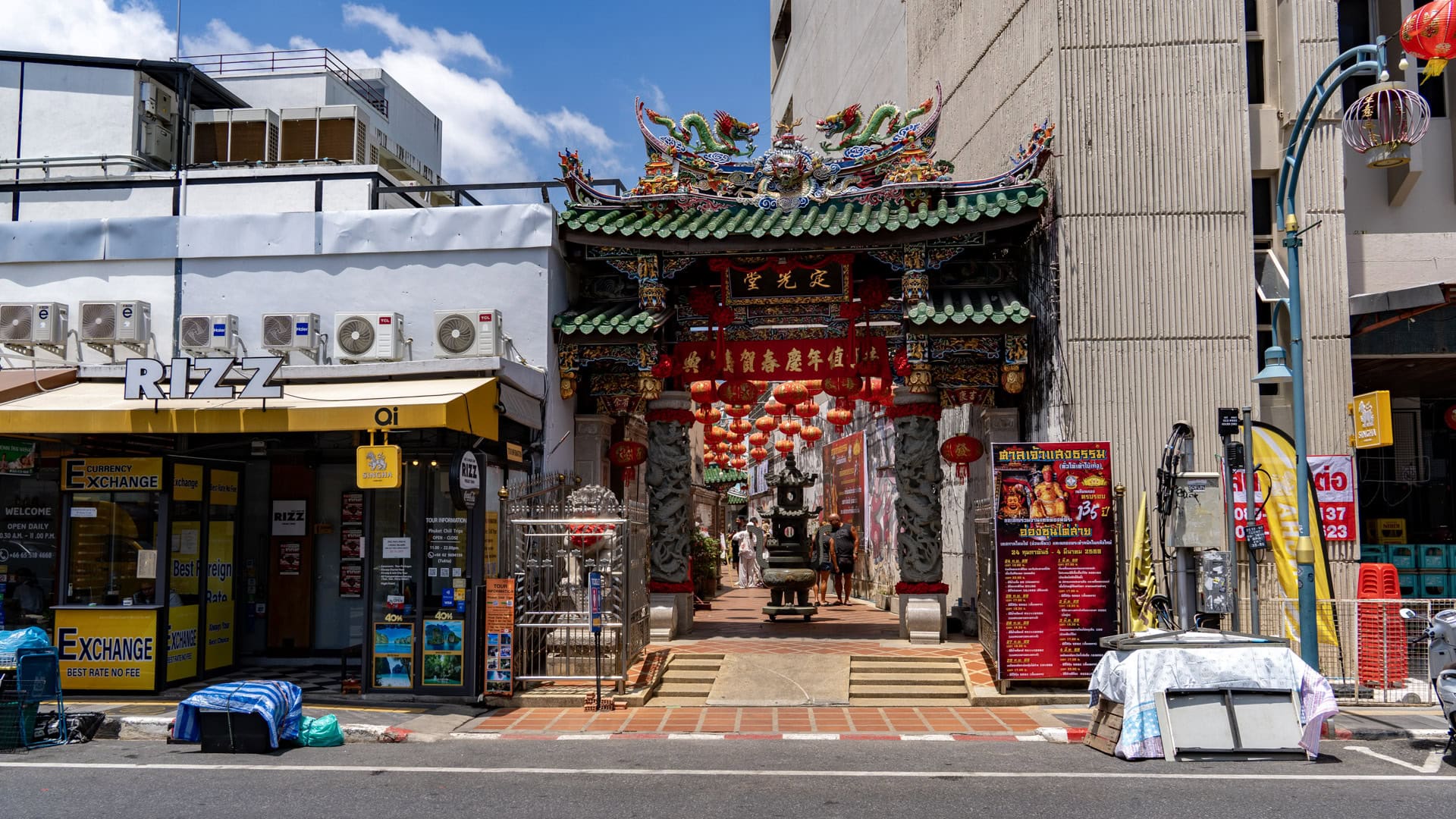
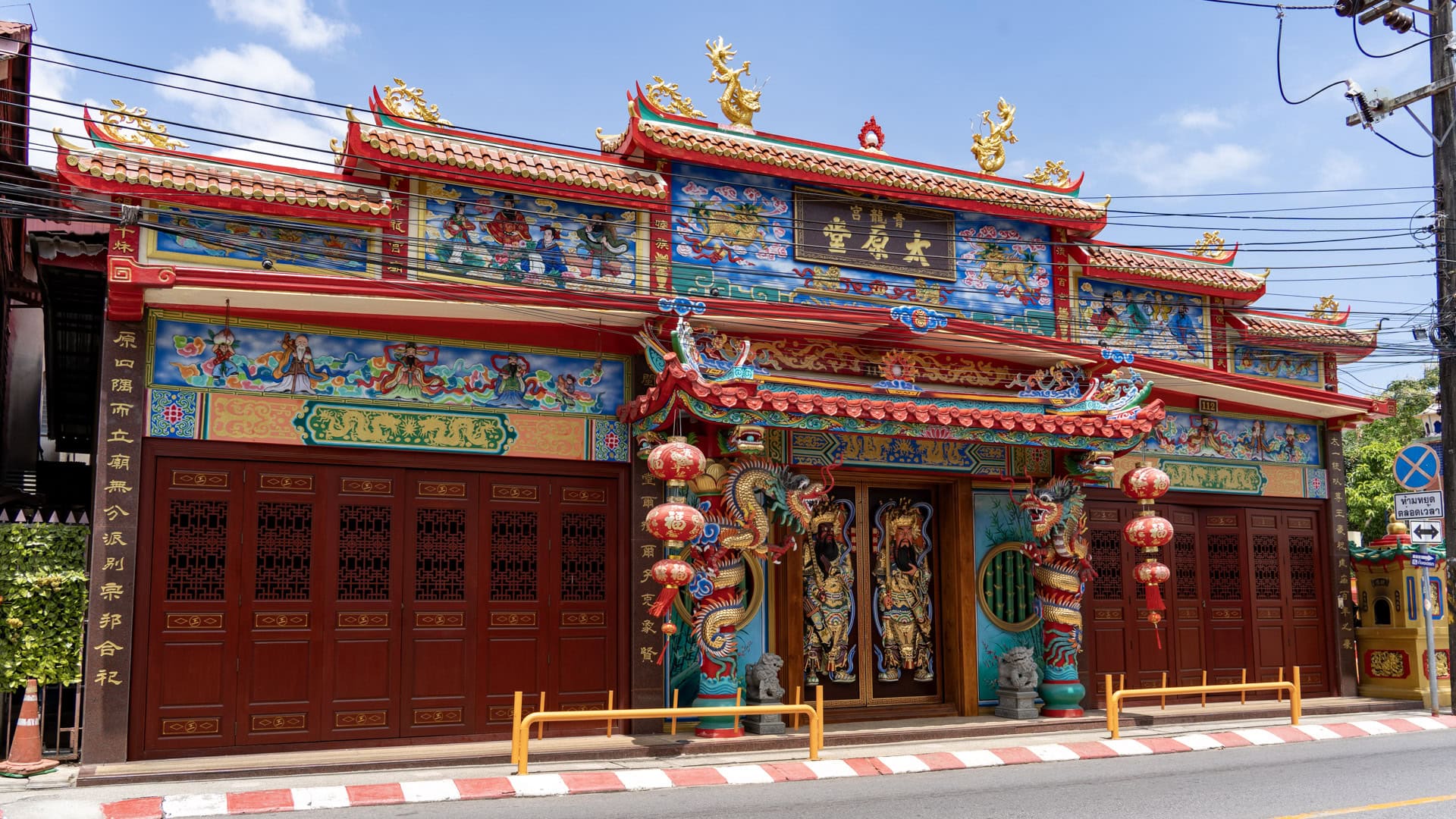
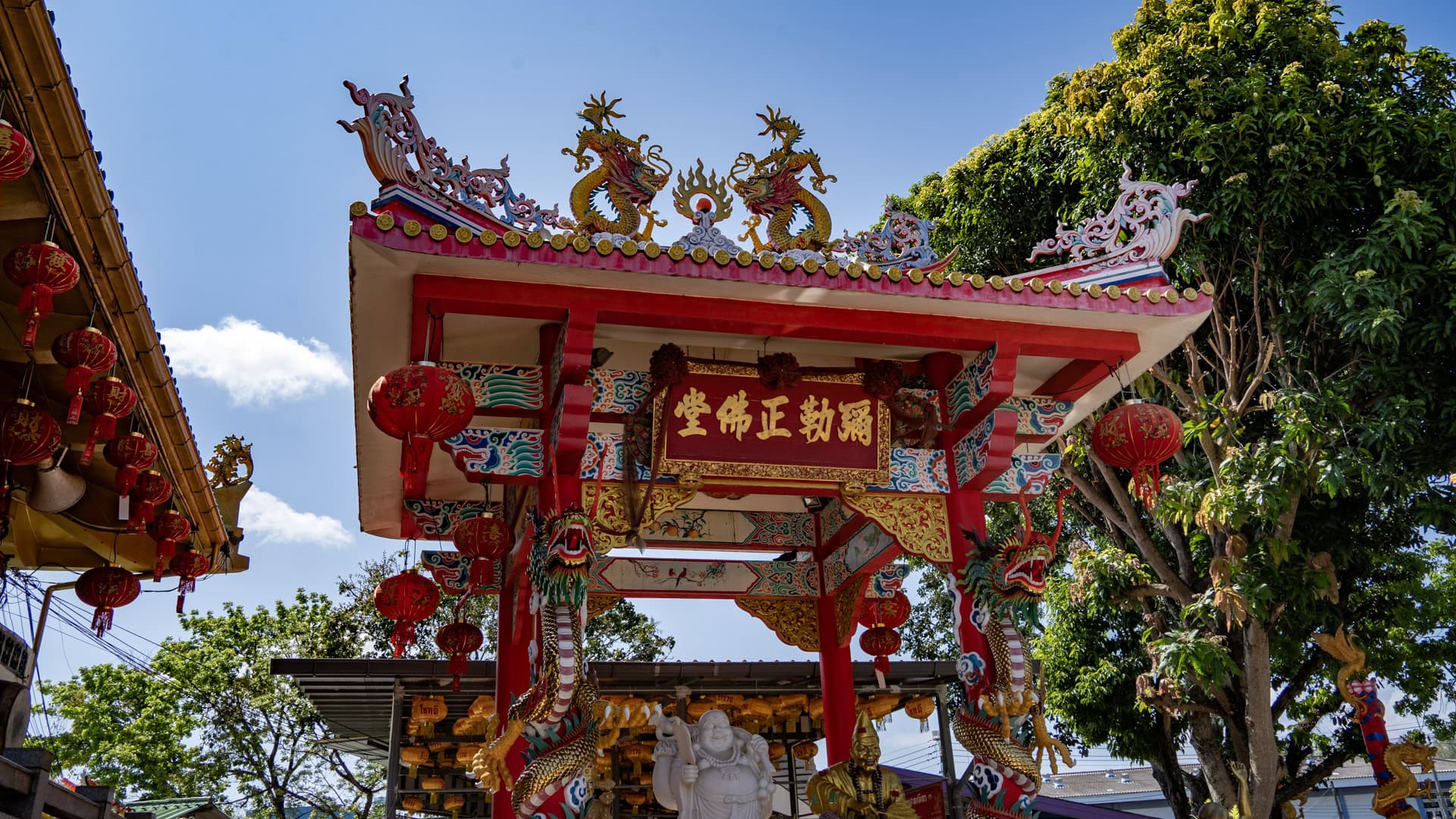
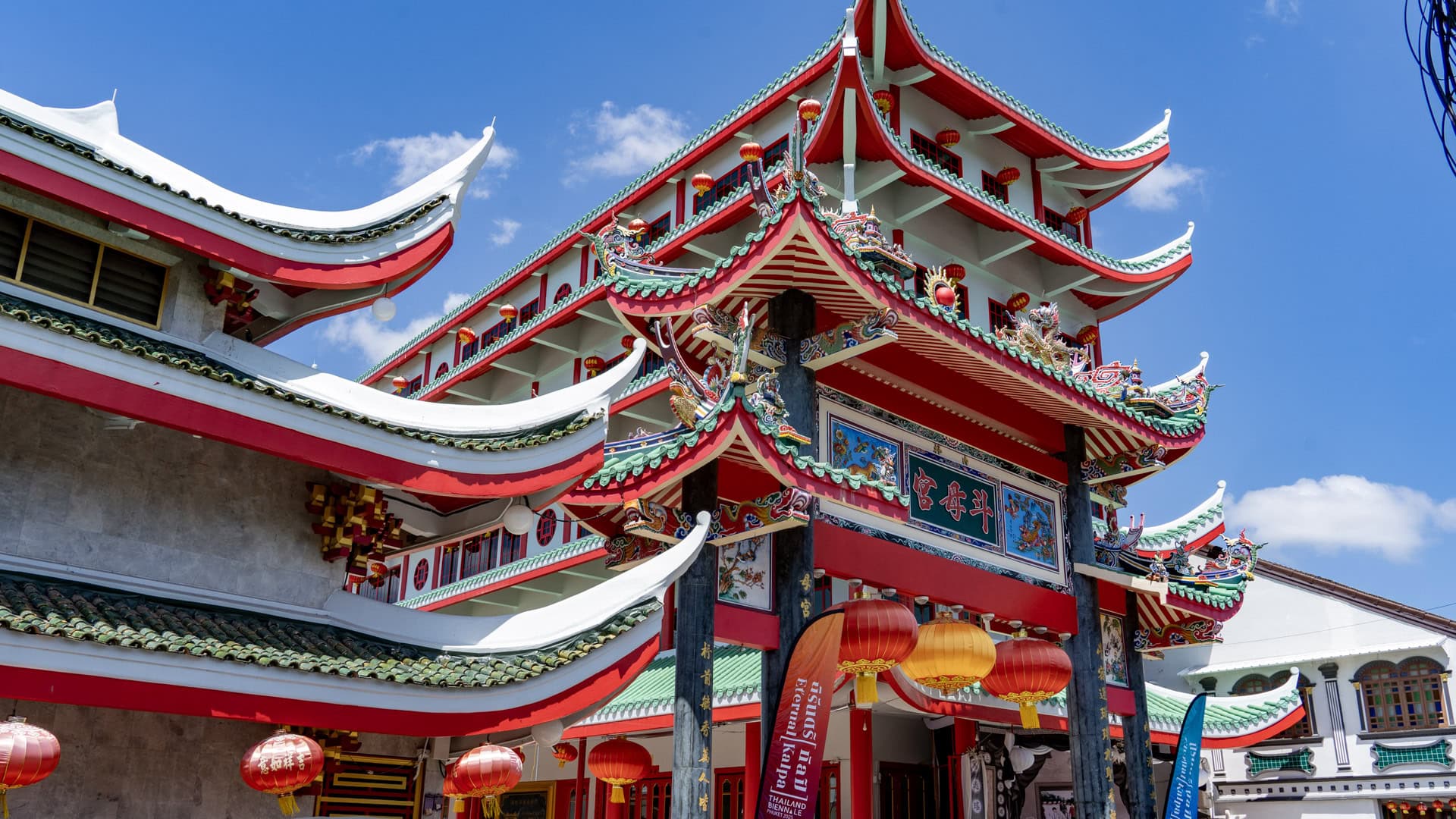
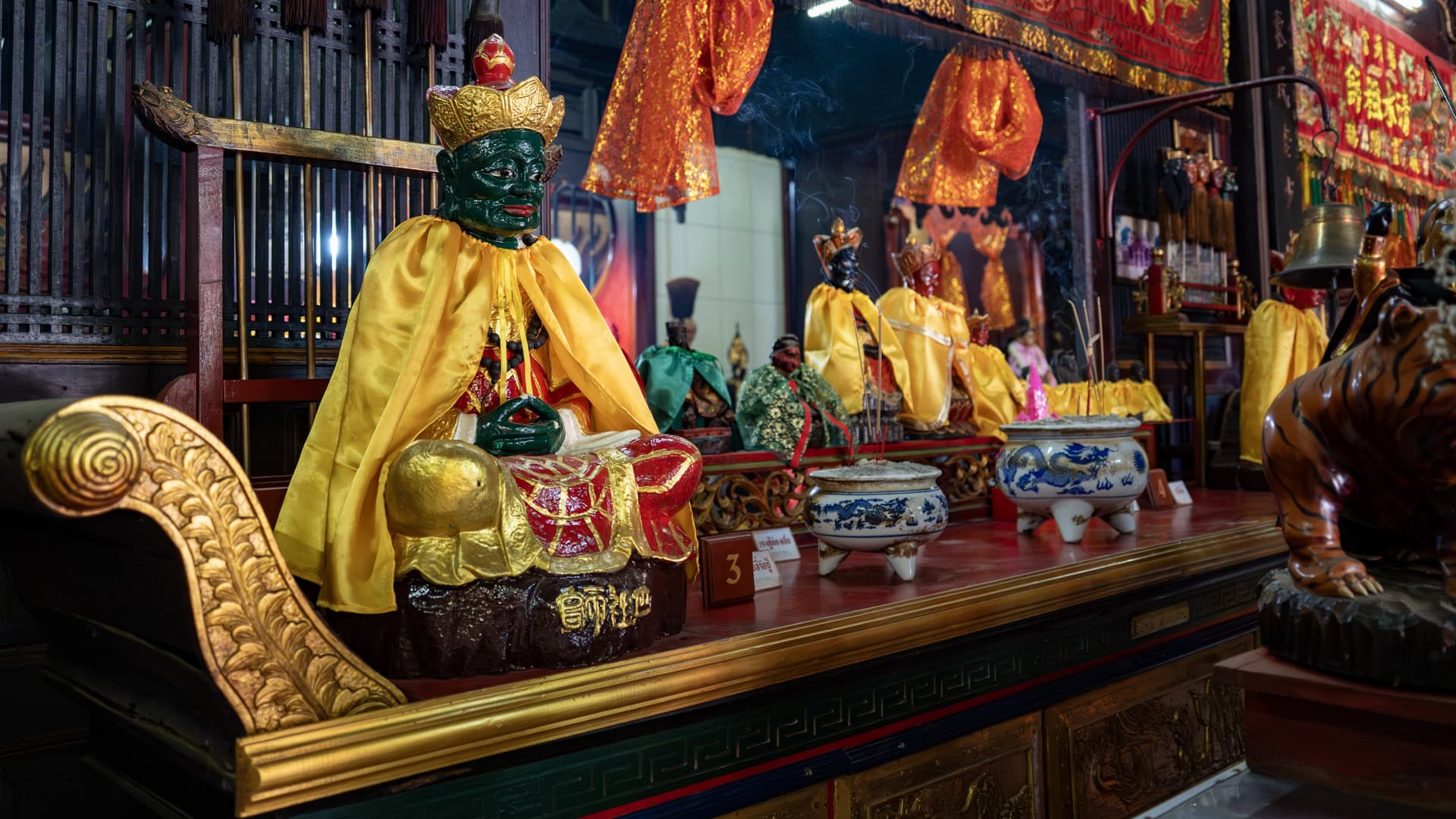
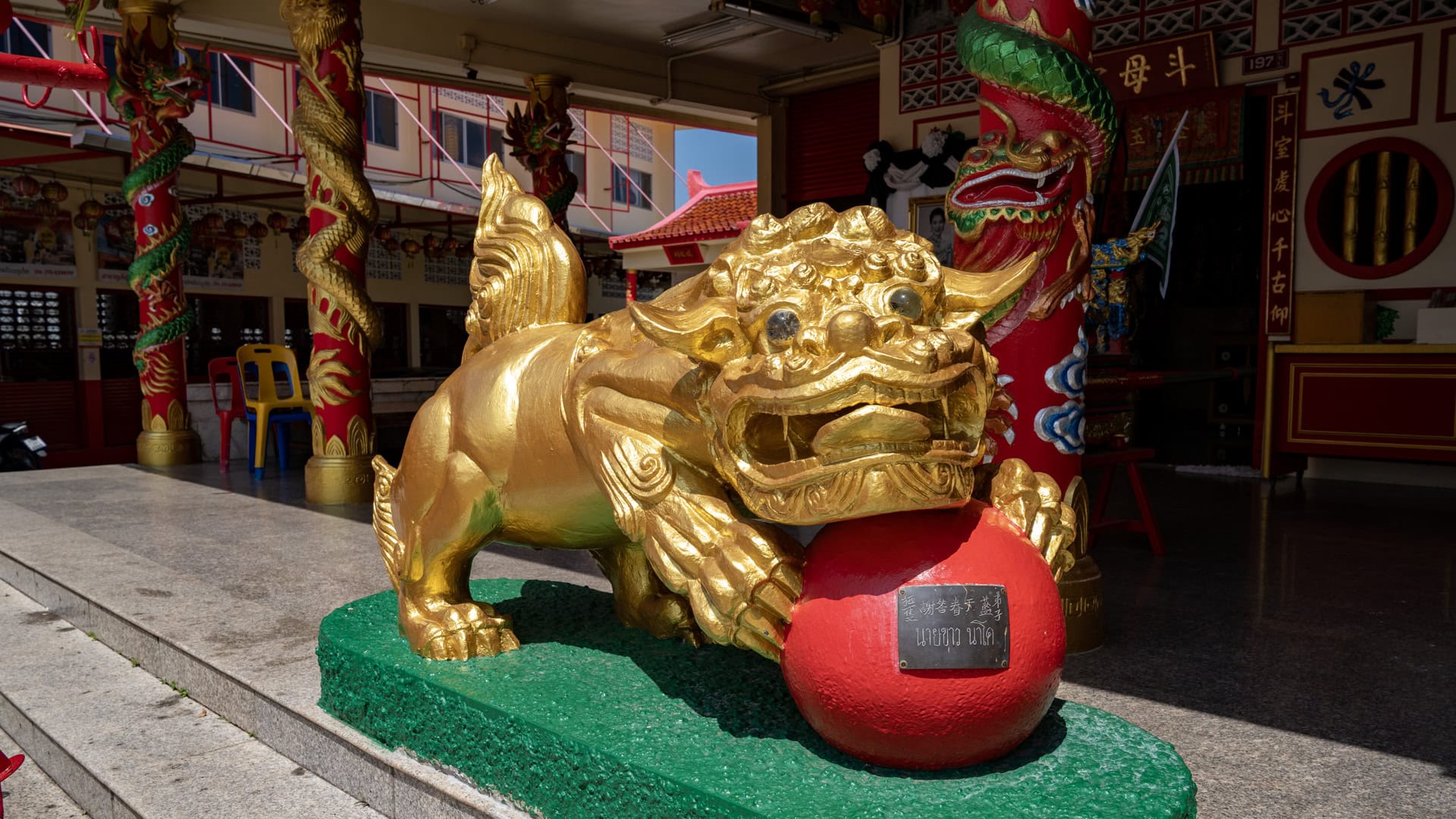
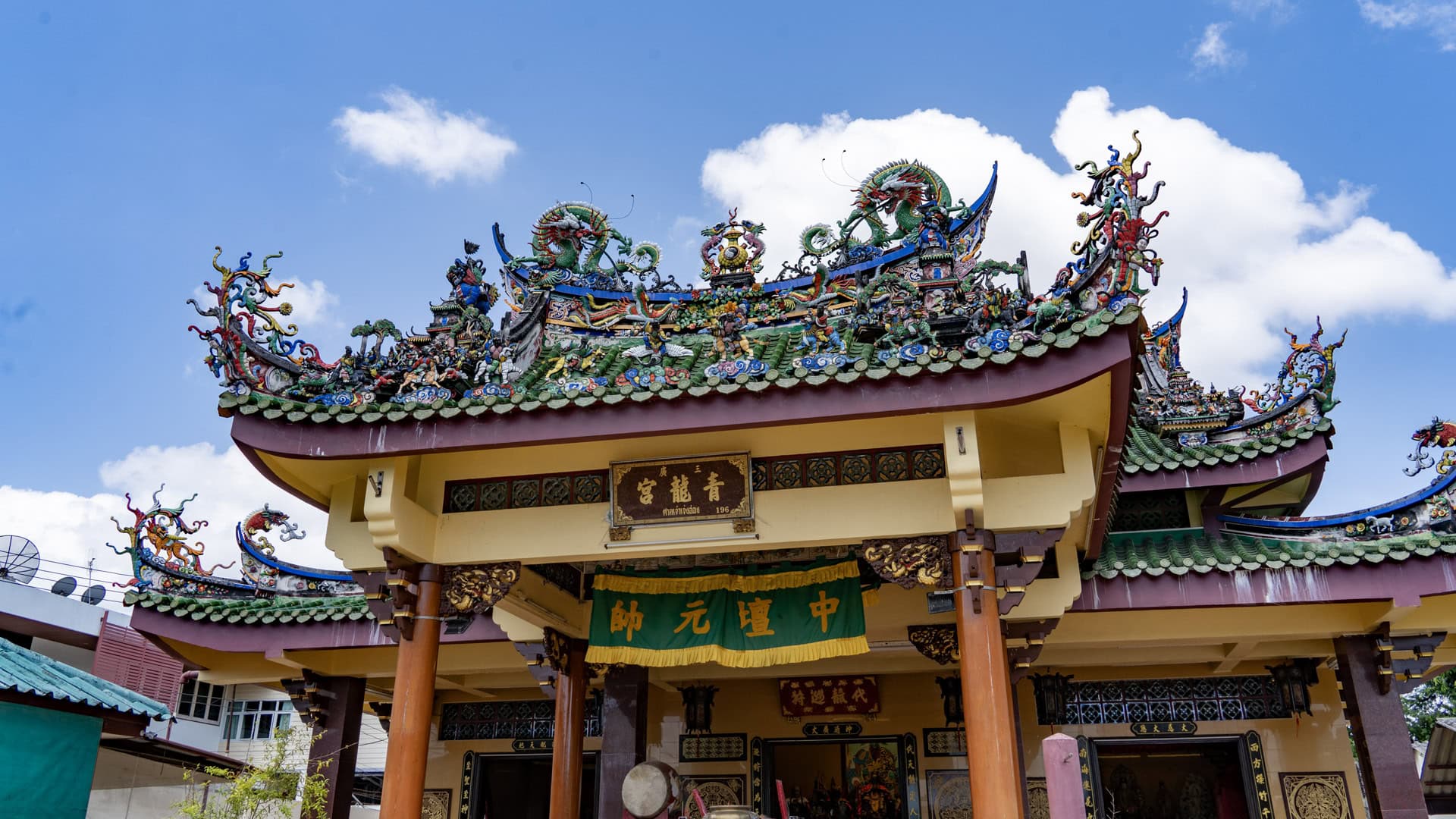
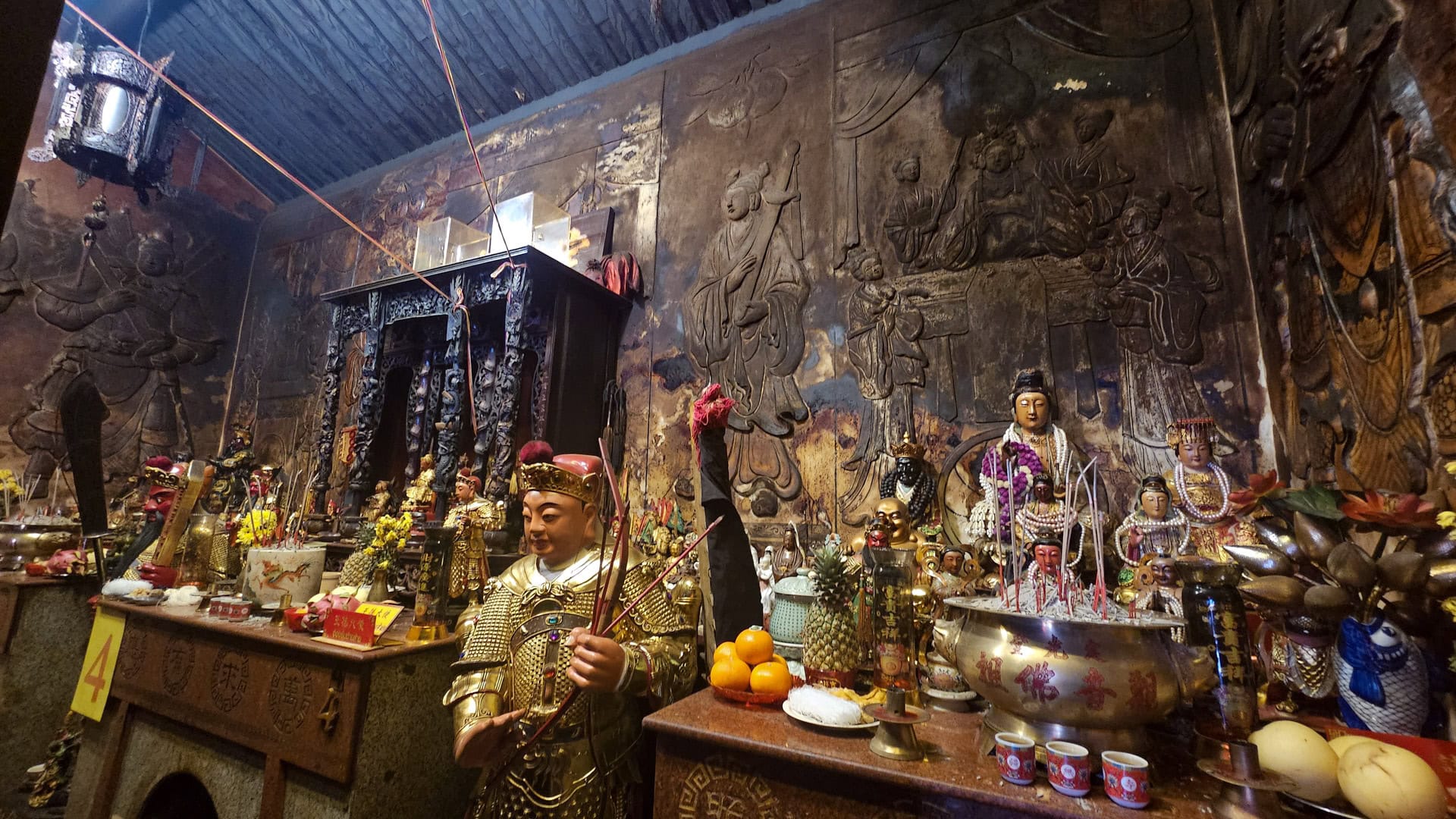
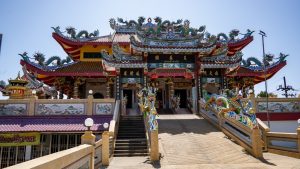
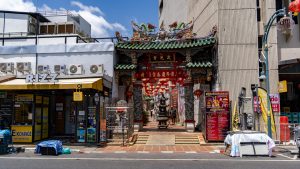
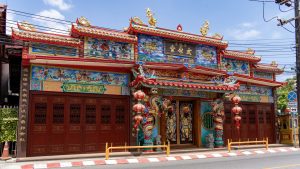
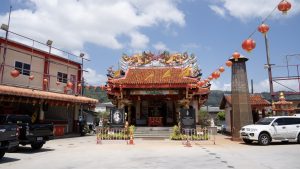
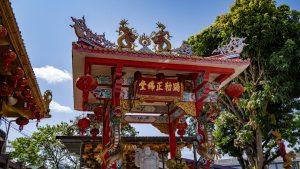
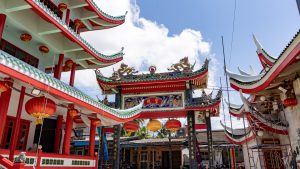
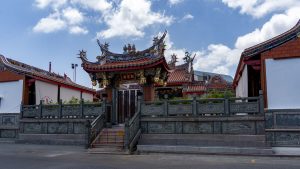
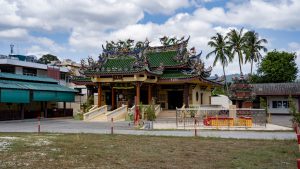
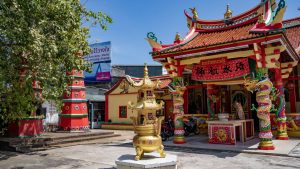
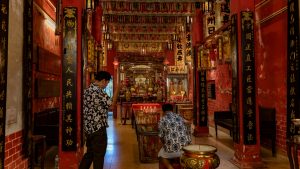
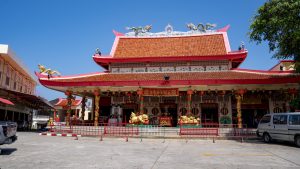
Chinese shrines in Phuket are active places of worship found across Phuket Town, Kathu, Thalang, and other long-settled parts of the island. Smaller and more compact than most Buddhist temples, they are marked by altar halls, incense burners, lanterns, and guardian figures, reflecting Phuket’s Chinese heritage through architecture, ritual life, and community history.
Chinese shrines are among the most immediate expressions of Phuket’s Chinese heritage. Scattered through old commercial streets, neighbourhood compounds, waterfront edges, and former mining areas, they remain active places of worship embedded in the island’s daily life rather than set apart from it. Many still function as community anchors, tied to long-established patterns of ritual, offering, and local observance.
Compared with most Buddhist temples, they usually feel smaller, denser, and more closely contained. Red pillars, lanterns, incense burners, altar halls, painted roof details, and guardian figures create a visual language that is recognisable across the island, even as each shrine carries its own scale, setting, and degree of ornament. Some sit directly in busy urban streets. Others open out toward the sea or stand within older settlement areas shaped by tin-mining history.
Taken together, they reveal more than a series of individual religious sites. They form a distributed map of Chinese presence in Phuket, showing how migration, trade, settlement, and ritual life became fixed in the island’s physical landscape. Seen this way, the shrines are not isolated landmarks but part of a larger cultural network that still remains visible across Phuket today.