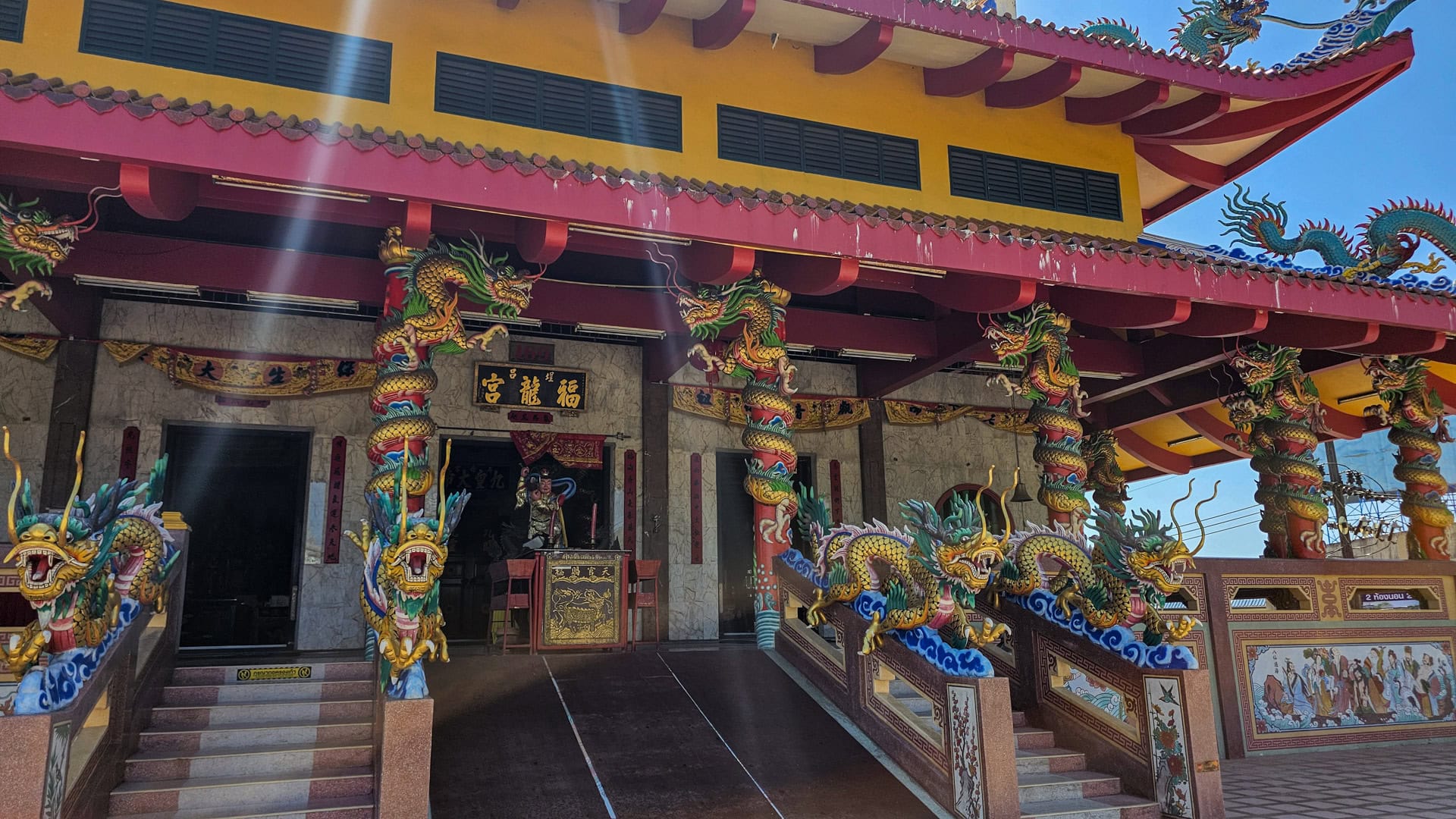

Tha Ruea Shrine is a historic Chinese shrine in Srisoonthorn, central-east Phuket, known for its prominent roadside setting and its important role in the Phuket Vegetarian Festival.
Tha Ruea Shrine, also known as San Chao Tha Ruea, is a Chinese shrine in the Srisoonthorn area of Thalang. It is one of Phuket’s major historic shrines and is closely associated with the island’s Hokkien Chinese-Thai community. Within Phuket’s ceremonial landscape, it is especially well known for its role during the annual Vegetarian Festival, when the shrine becomes one of the island’s main ritual centres.
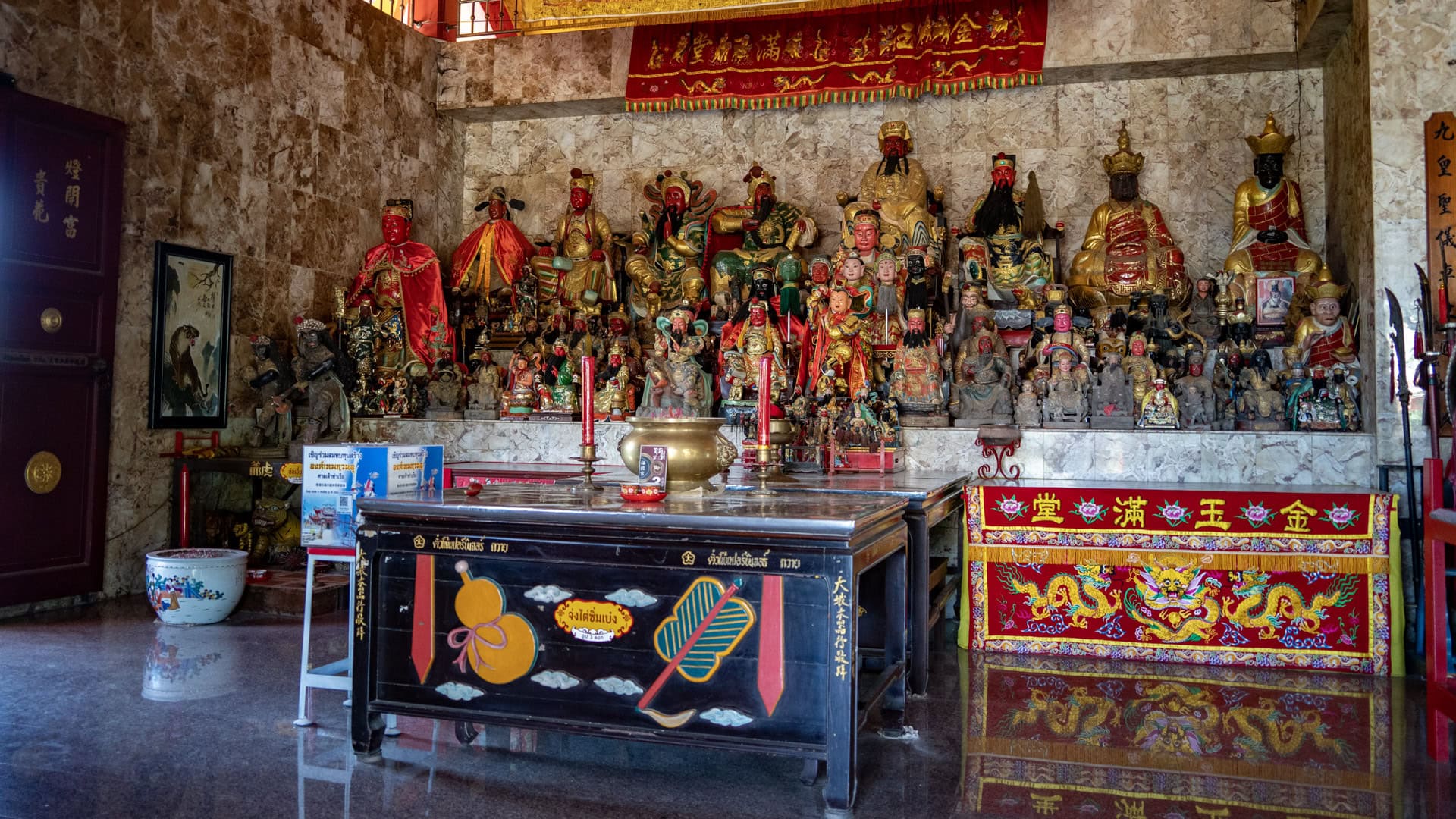
The shrine is commonly identified with Guan Yu and with Tean Hu Huan Soy, giving it a distinct religious identity even within Phuket’s wider network of Chinese shrines. In everyday terms, it functions both as a place of worship and as a community anchor for the surrounding Thalang and Srisoonthorn area.
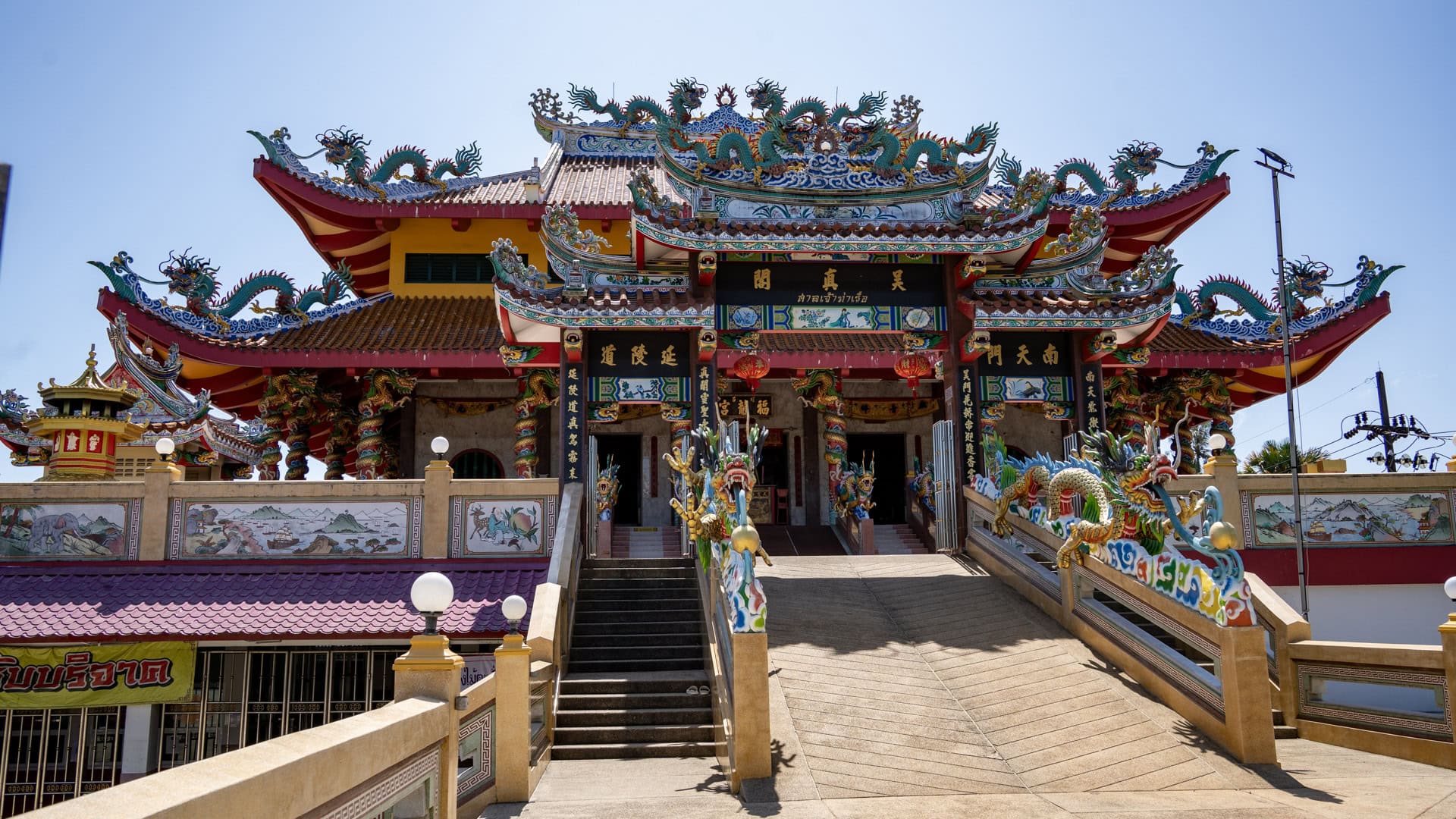
The shrine stands directly on Thepkasattri Road, giving it a strong roadside presence that differs from the more enclosed setting of some older shrine compounds in Phuket Town. The site is arranged in a formal linear sequence, with an entrance facing the main road, an open forecourt, and the main hall set behind it.
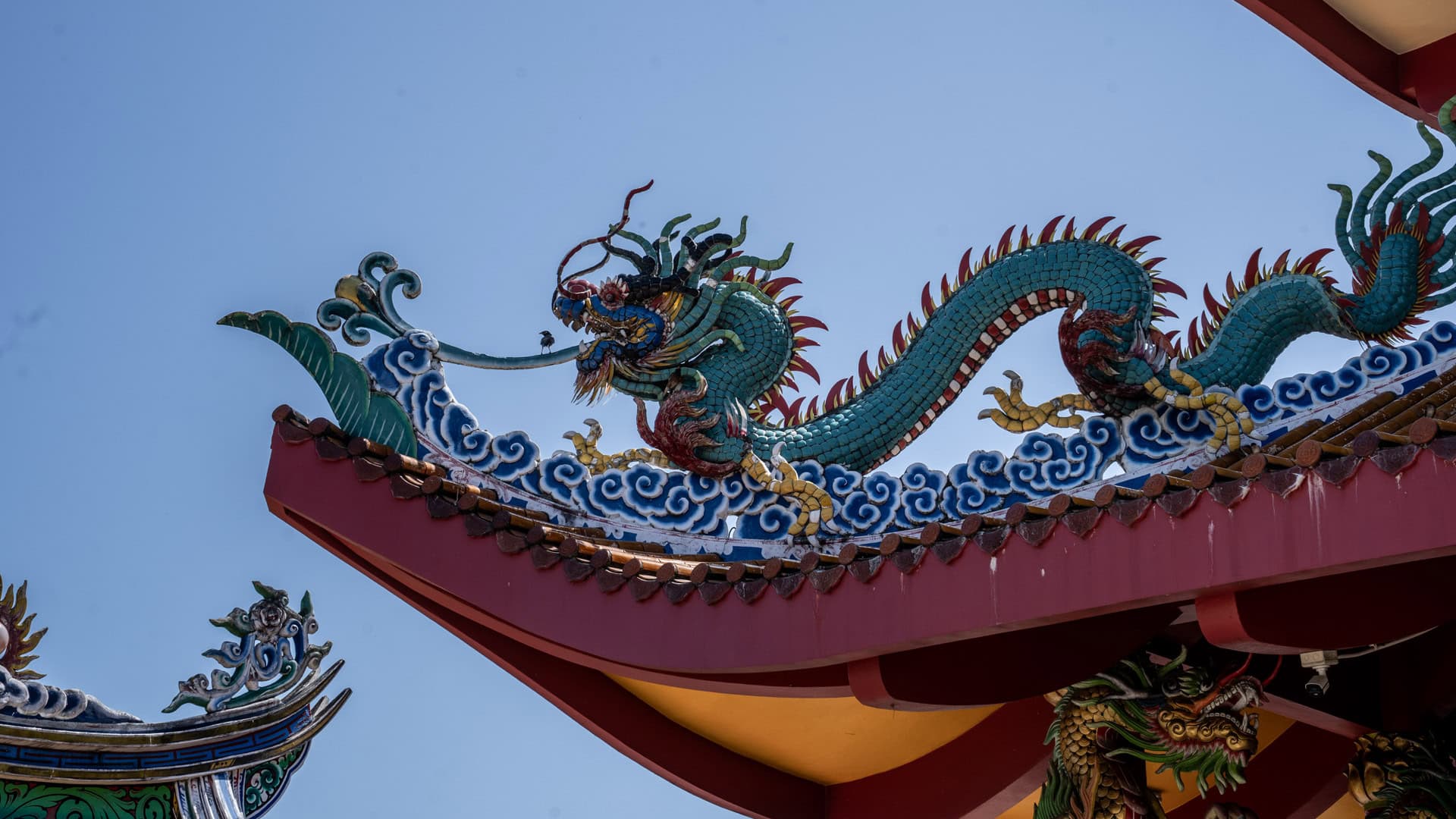
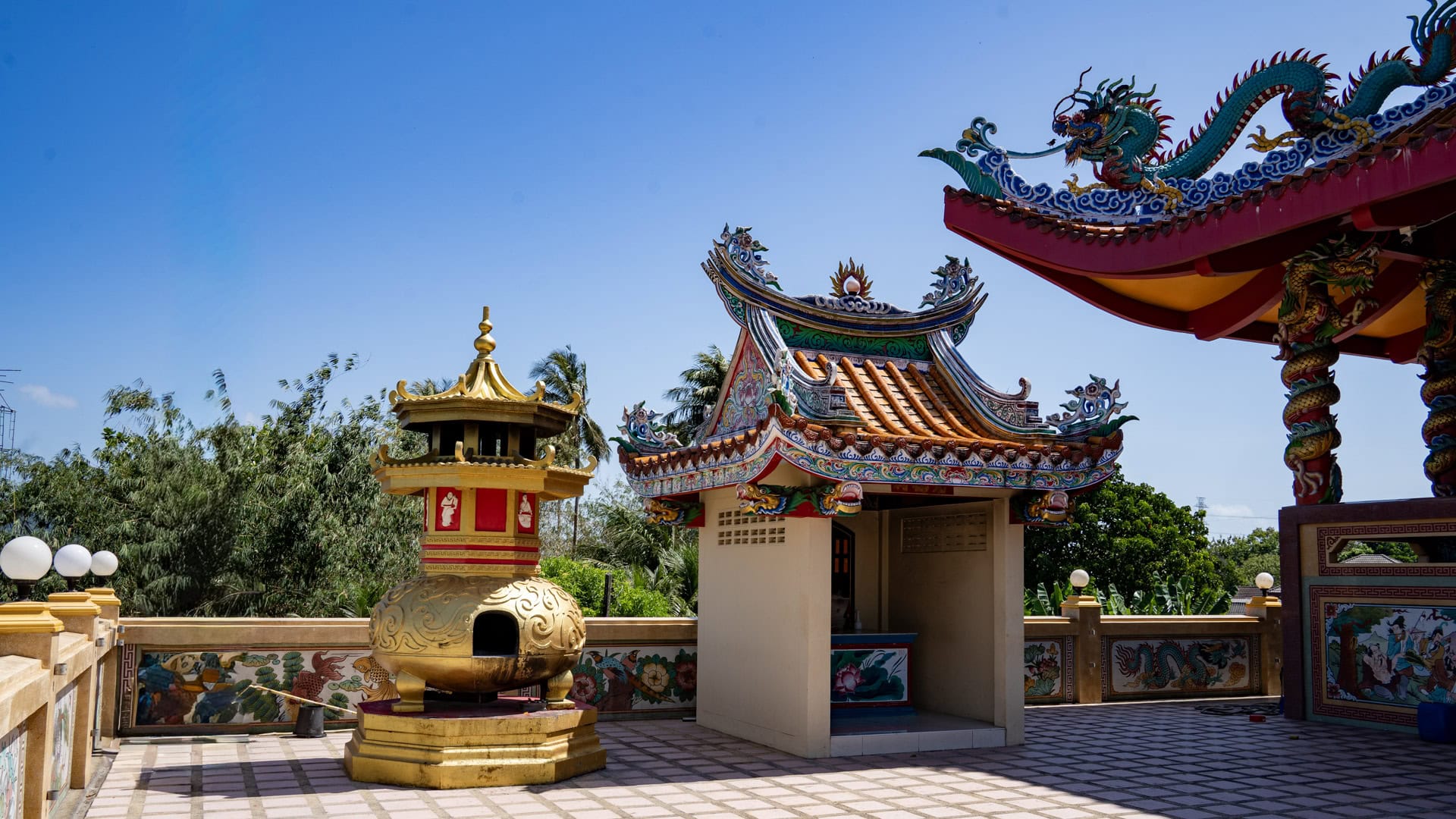
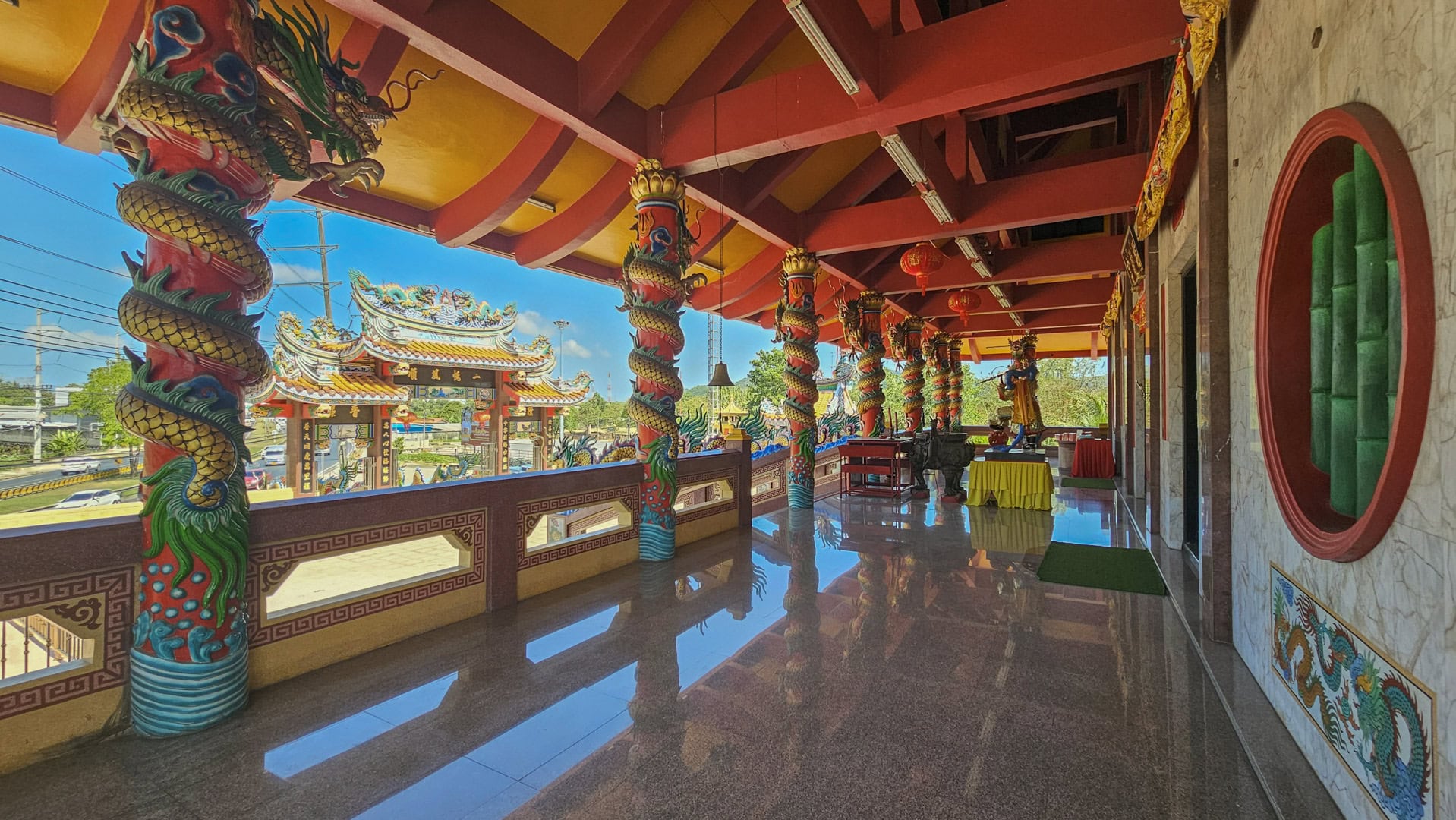
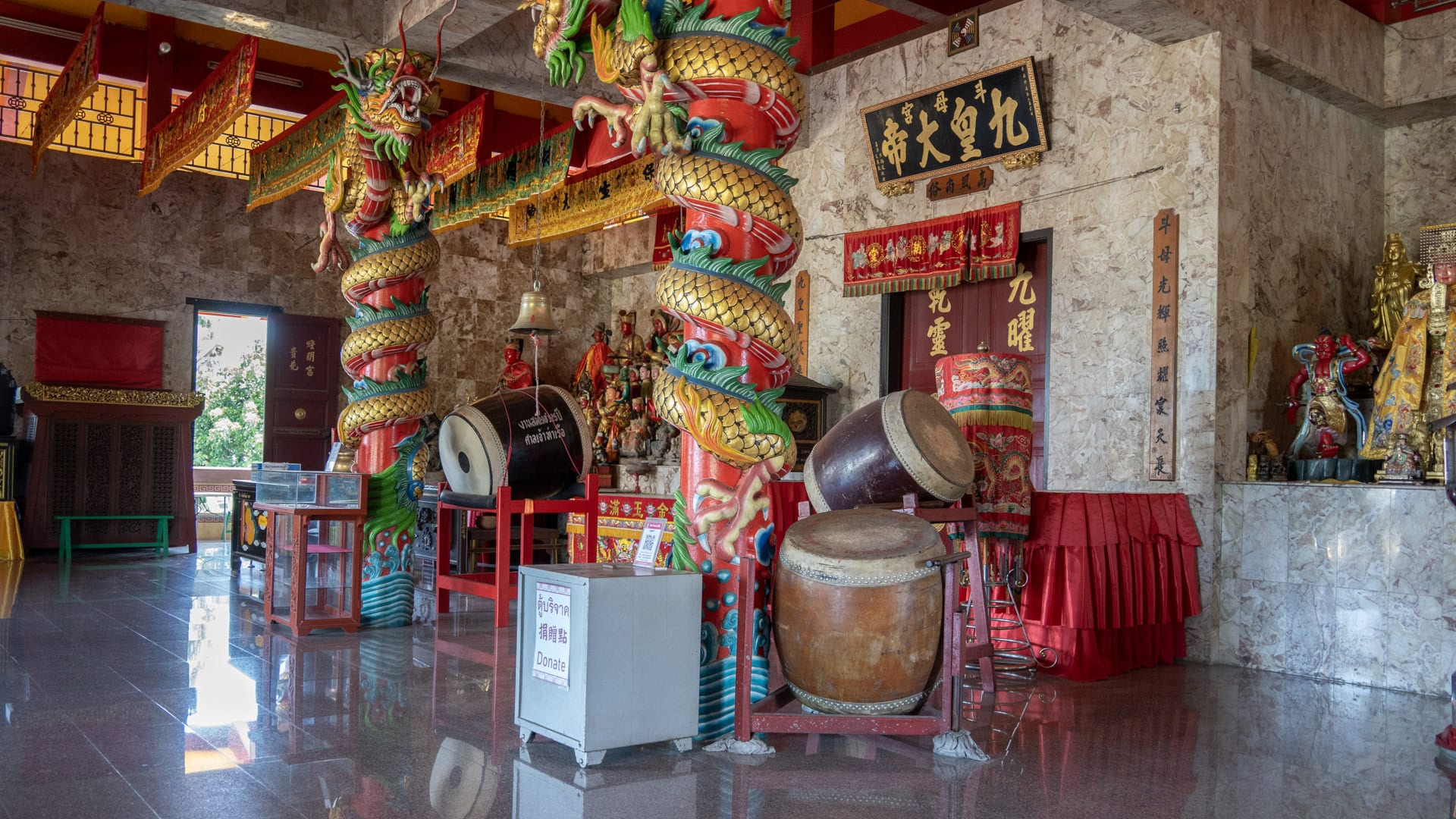
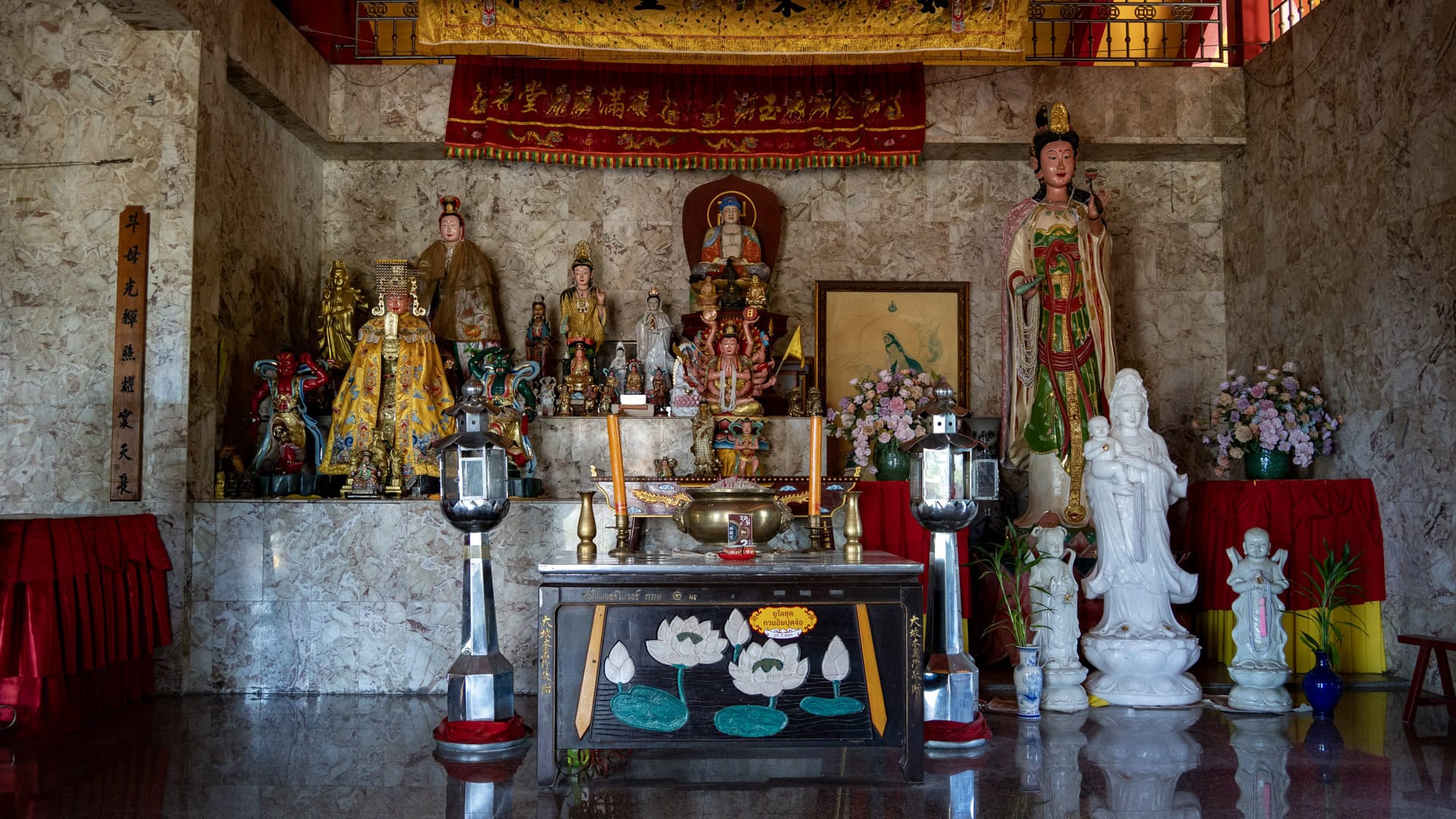
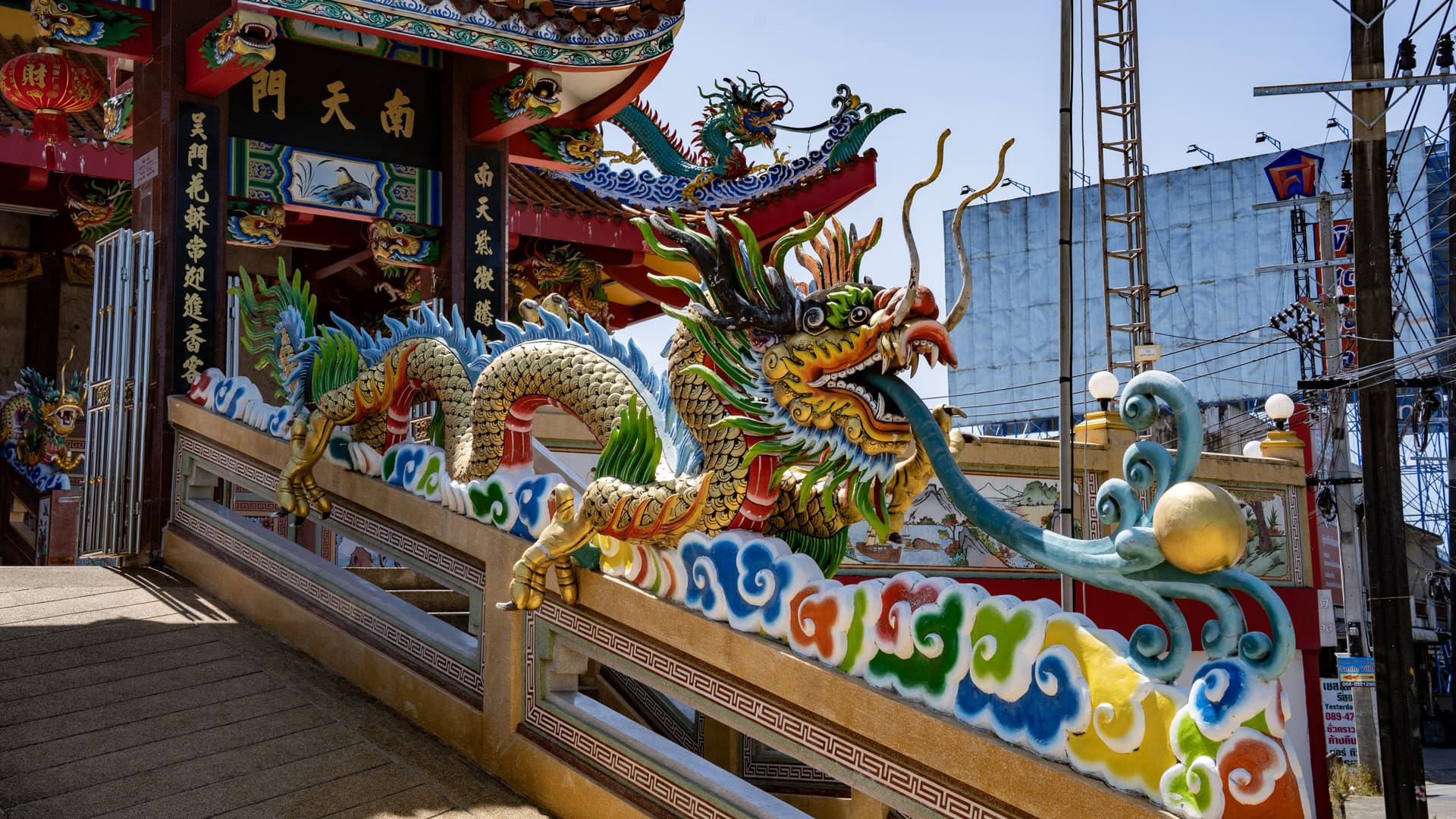
Its architecture follows a Southern Chinese shrine style, with a brightly finished main structure, ornate rooflines, and a highly decorative entrance zone. The front area includes a prominent incense burner or pagoda structure, while the porch is marked by large carved stone columns. Inside, the layout is more hierarchical, with principal altars placed deeper within the shrine and supporting spaces extending to the sides.
In daily use, Tha Ruea Shrine is a functioning place of worship where local residents come to pray, make offerings, and maintain ties with the shrine’s religious calendar. Its role is primarily ceremonial and communal rather than tourist-facing, although it is also visited by people interested in Phuket’s Chinese religious heritage.
That role expands sharply during the Phuket Vegetarian Festival. At that time, the shrine becomes a major gathering point for ritual activity, including processions, offerings, spirit-medium practices, and other forms of festival observance. The outer grounds and courtyard take on a much more public and collective role, while the shrine’s identity as a neighbourhood religious site shifts into that of a large island-wide ceremonial hub.
On an ordinary day, the shrine is relatively calm, with a steady flow of worshippers rather than constant crowd movement. Activity tends to be more noticeable in the morning and around important dates in the lunar calendar, when devotional use becomes more concentrated.
Its most intense rhythm appears during the Vegetarian Festival in the ninth lunar month. During that period, the site becomes far more crowded, louder, and more physically charged, with ritual movement, chanting, firecrackers, and festival traffic reshaping the atmosphere around the shrine. The contrast between normal days and festival periods is one of the clearest parts of its character.
Tha Ruea Shrine is easy to identify and approach because of its position on Phuket’s main north-south road. The setting is convenient, but it also means the surrounding environment is affected by constant traffic movement and road noise.
The site is generally understood as free to enter, though the experience is shaped by normal shrine etiquette rather than by formal visitor infrastructure. Modest dress is appropriate, and the inner areas should be treated as active religious space rather than as a purely visual stop. During festival periods, smoke, crowds, and noise levels can become significant, making the shrine feel very different from its usual day-to-day state.
Tha Ruea Shrine is in central-east Phuket in the Srisoonthorn area of Thalang District. It sits on Thepkasattri Road, the island’s main highway spine, just south of the Heroines Monument area. This gives it a position between Phuket Town and the airport corridor, rather than within the denser historic shrine cluster of Phuket Town itself.
In island terms, the shrine belongs to the broader inland north-central movement corridor of Phuket. Its setting makes it one of the more visible major shrines for people travelling by road through the centre of the island.
Compared with older shrines such as Jui Tui or Kathu Shrine, Tha Ruea Shrine feels more open, more road-facing, and more visibly monumental in its present form. Its current structure is commonly understood as more polished and more recently rebuilt than some of Phuket’s older shrine compounds, which often carry a denser historic texture.
It also occupies a different geographic role. While Jui Tui is tied closely to Phuket Town and Kathu Shrine is strongly associated with the historic origins of the Vegetarian Festival, Tha Ruea Shrine represents the Thalang side of Phuket’s Chinese shrine network. That gives it a distinct place within the island’s ceremonial geography rather than making it simply another version of the same shrine type.