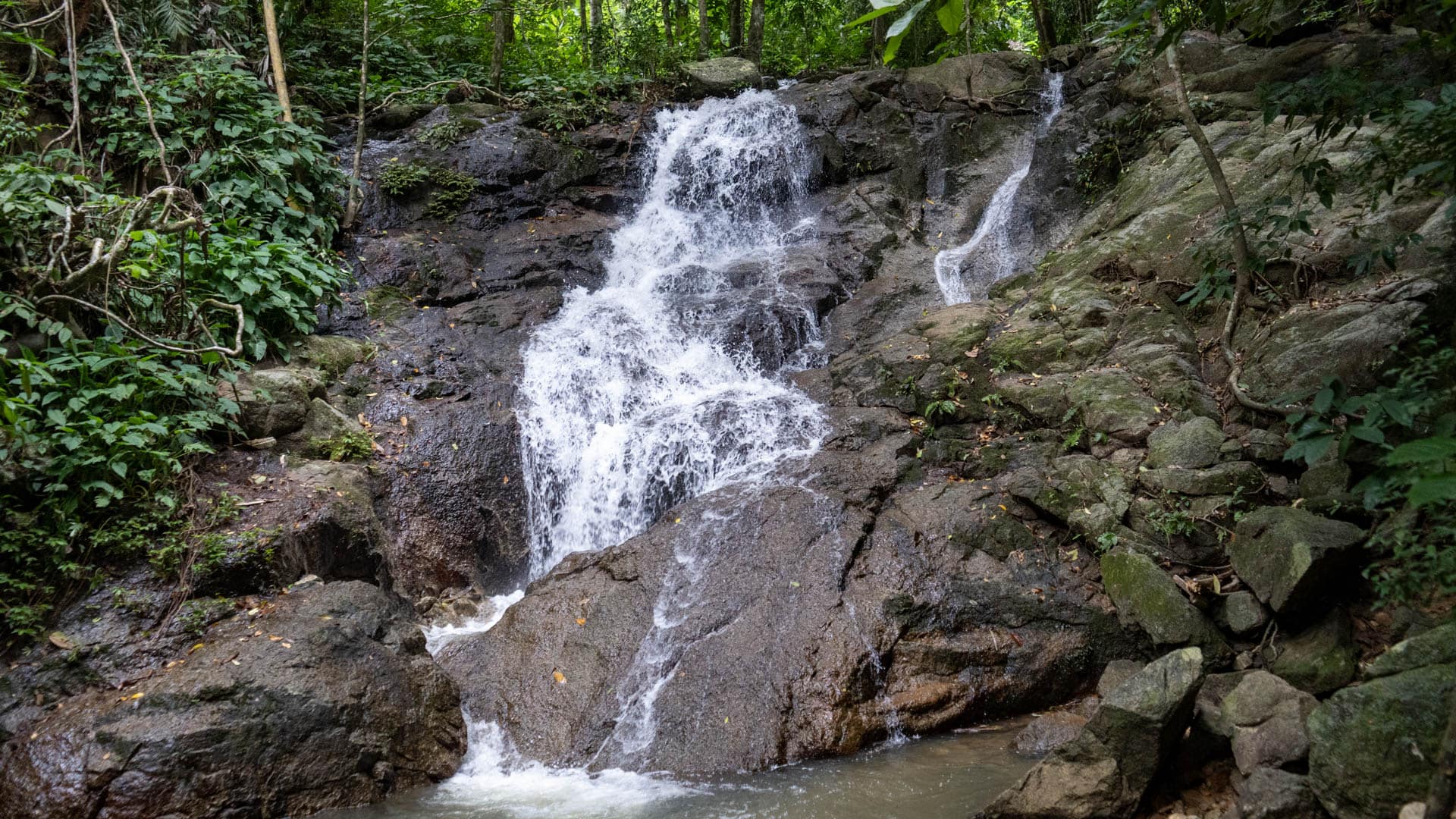
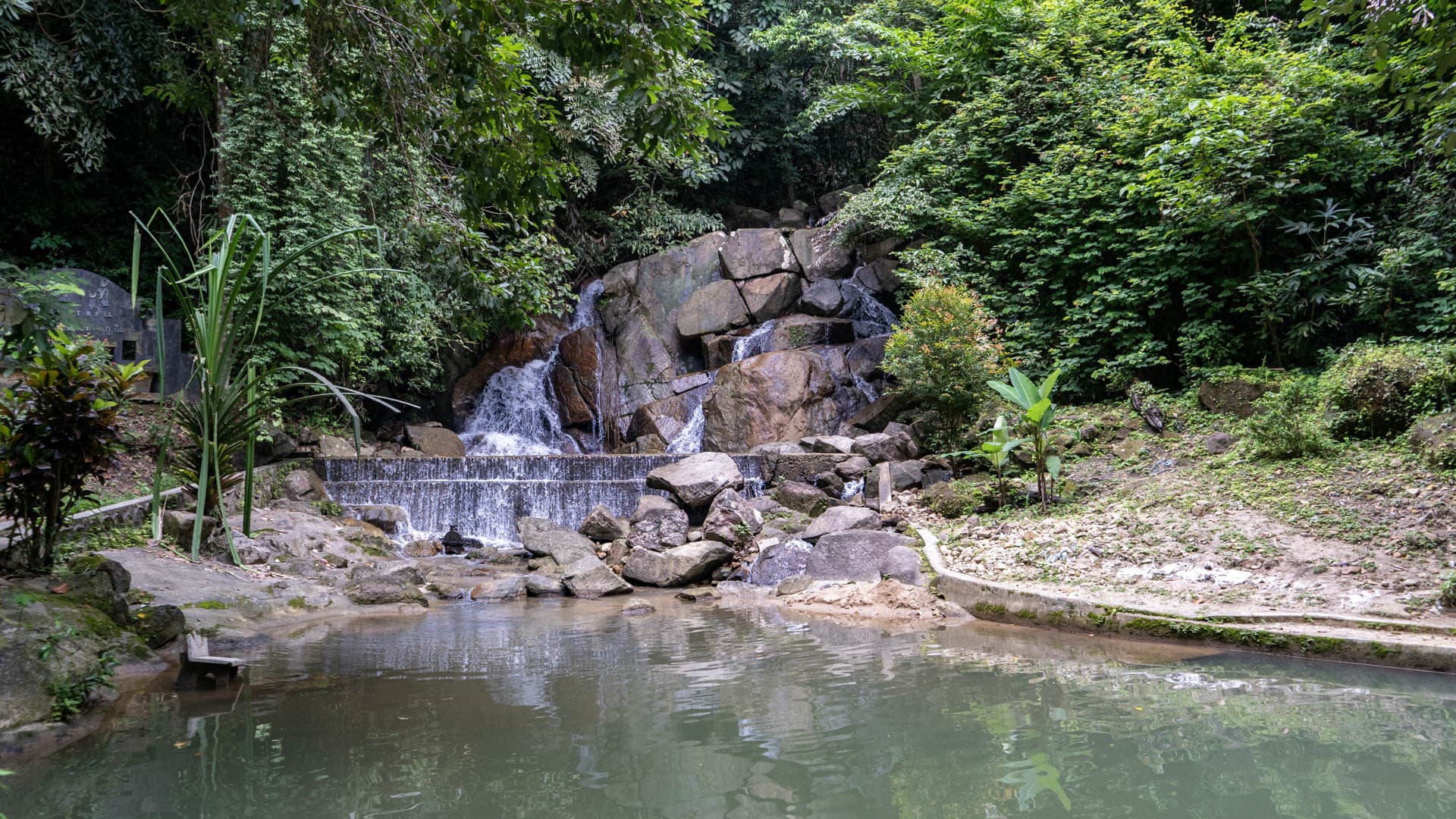
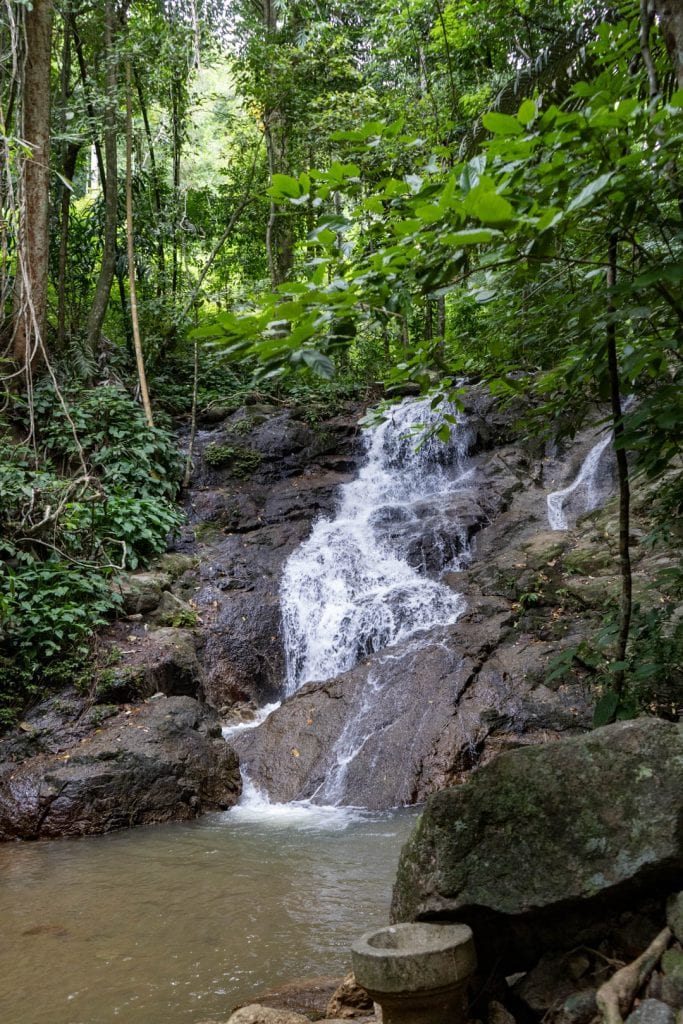
Kathu Waterfall is a multi-tiered cascade at the end of Soi Namtok Kathu, in Kathu Subdistrict in the center of the island, roughly 8 kilometers from Patong Beach and 7 kilometers from Phuket Town. It sits closer to more Phuket residents than any other waterfall on the island, and that proximity shapes everything about it.
Closest to Patong
Most of Phuket’s waterfalls require a deliberate drive to the island’s north — Khao Phra Thaeo, Thalang District, forty minutes from the resort strip. Kathu asks nothing like that. From Patong, it is a 15-minute drive. From the Kathu residential zone, less. That alone explains why it functions the way it does: not as a destination people plan around, but as a place people fit into a morning.
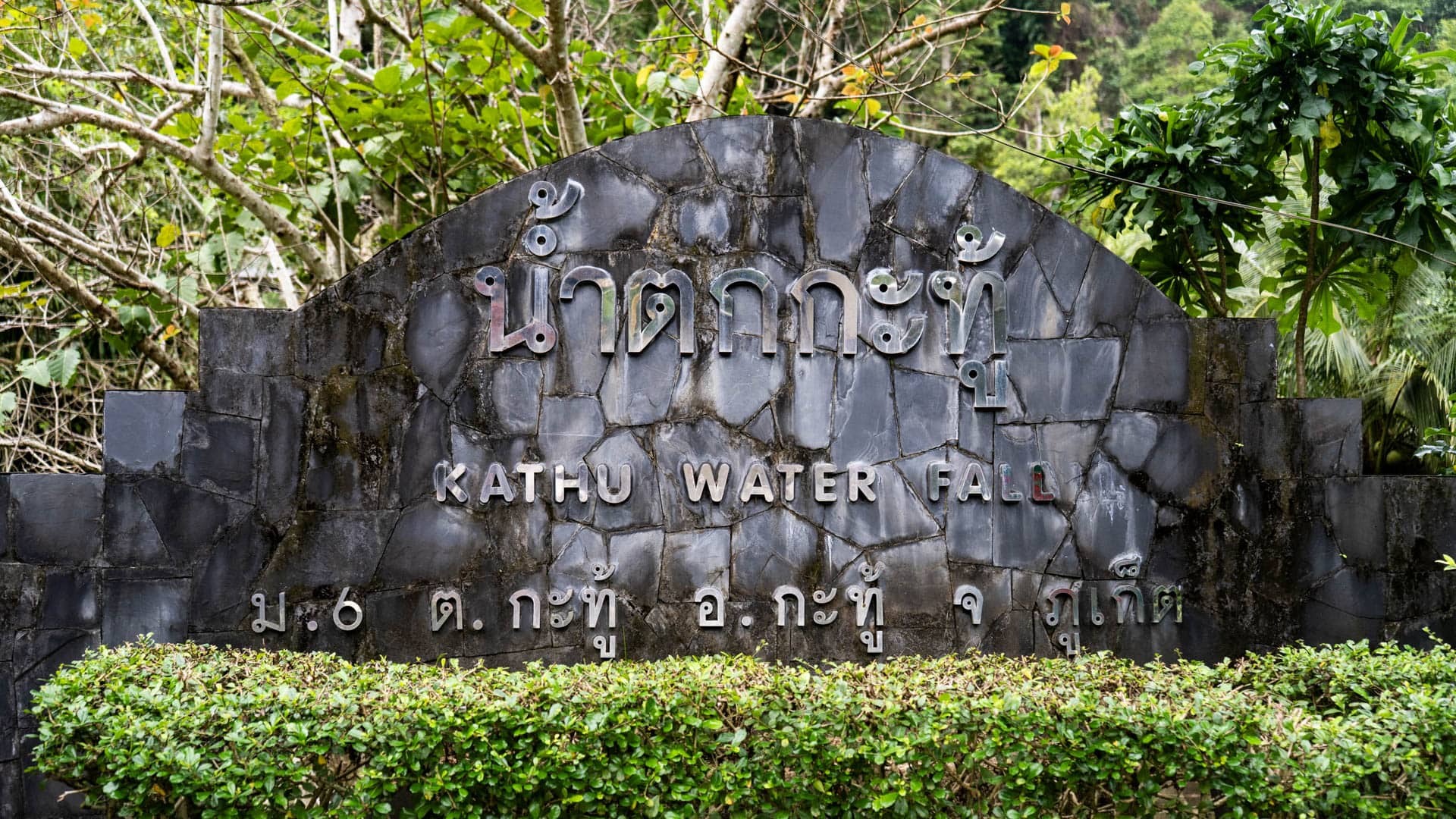
The access road is paved all the way to the entrance, the parking area is large and surfaced, and signage begins at the main road with black marble and blue street signs. There is no logistical friction here. The site is well-marked and easy to find.
The Climb
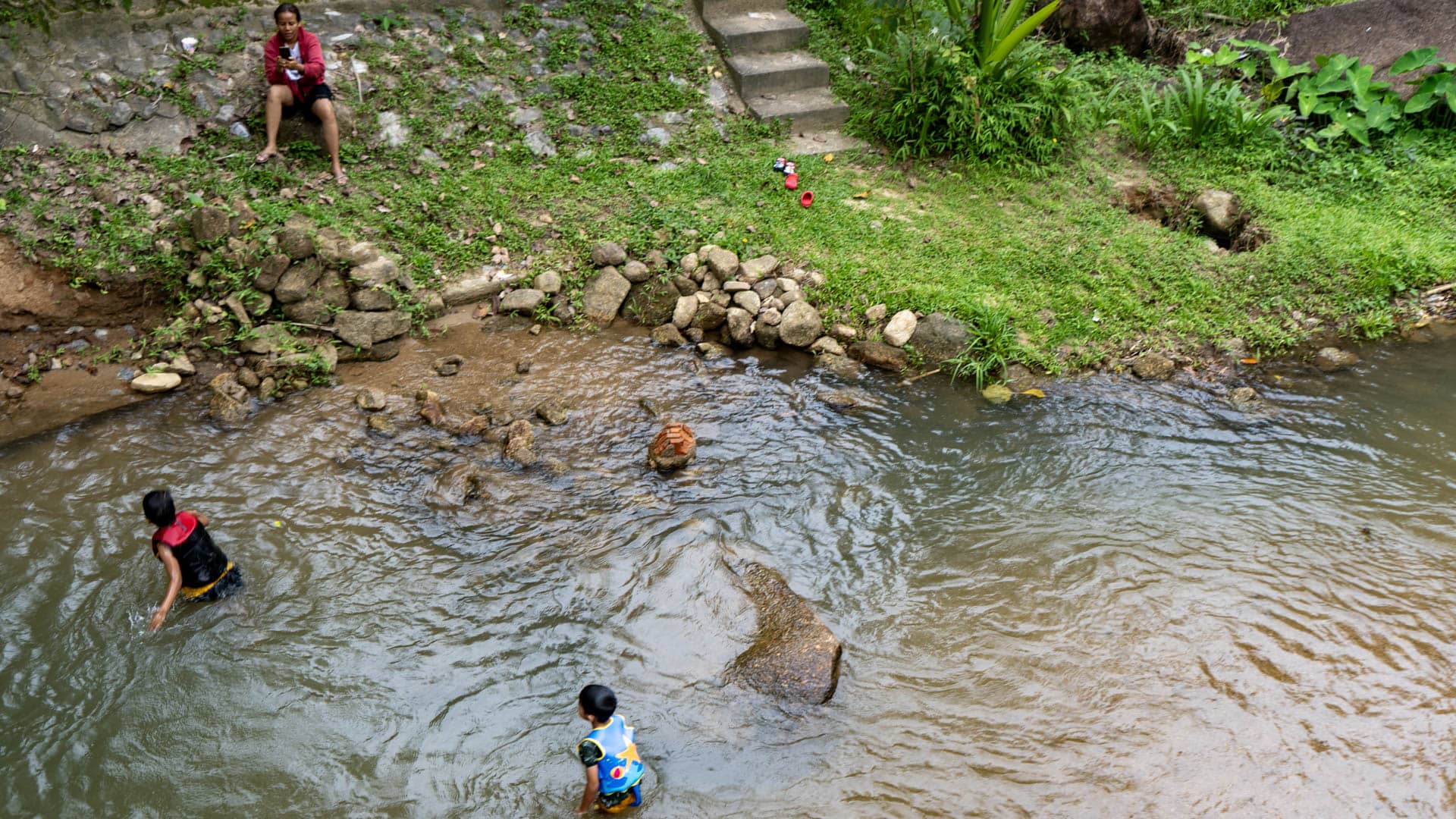
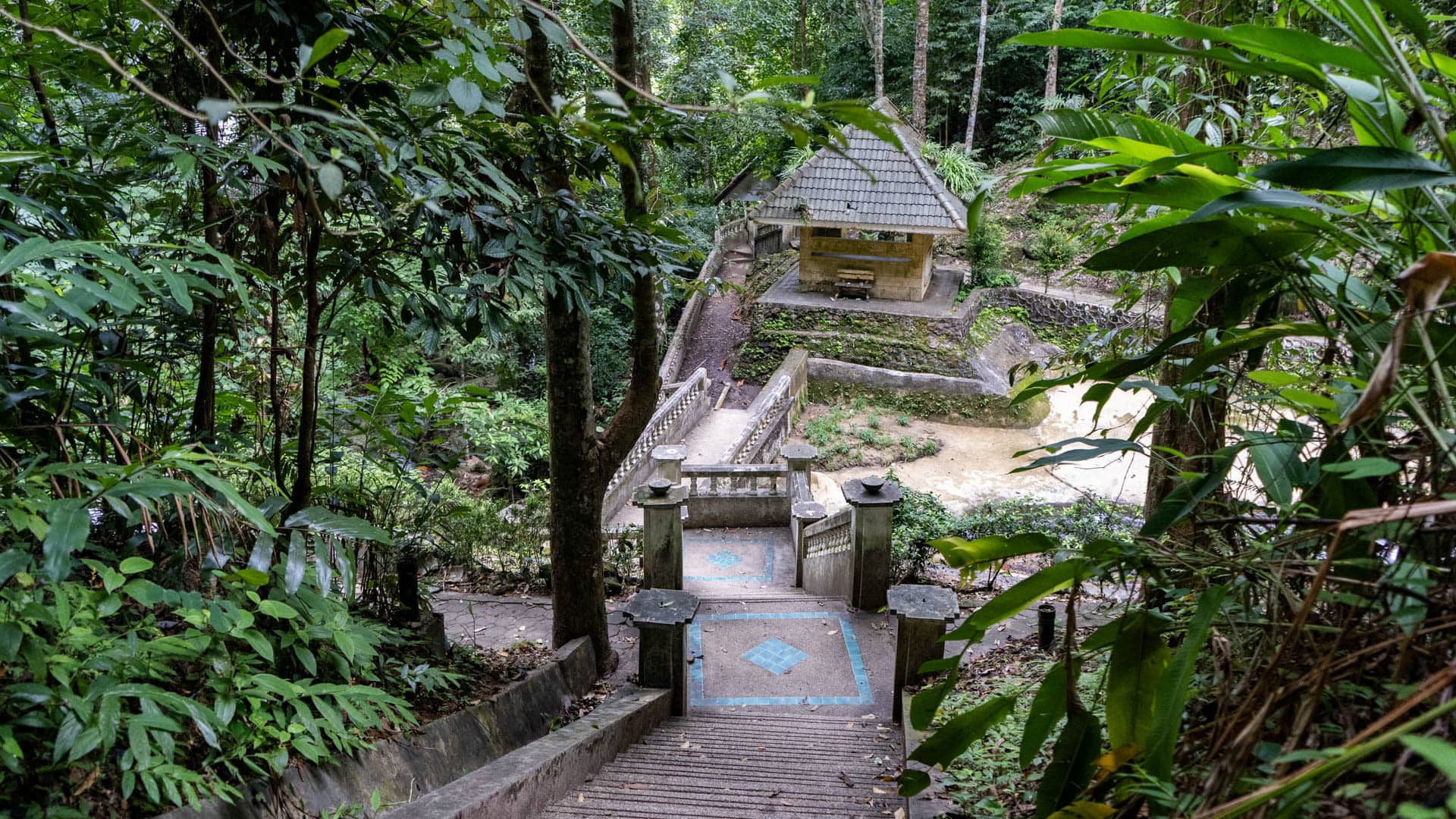
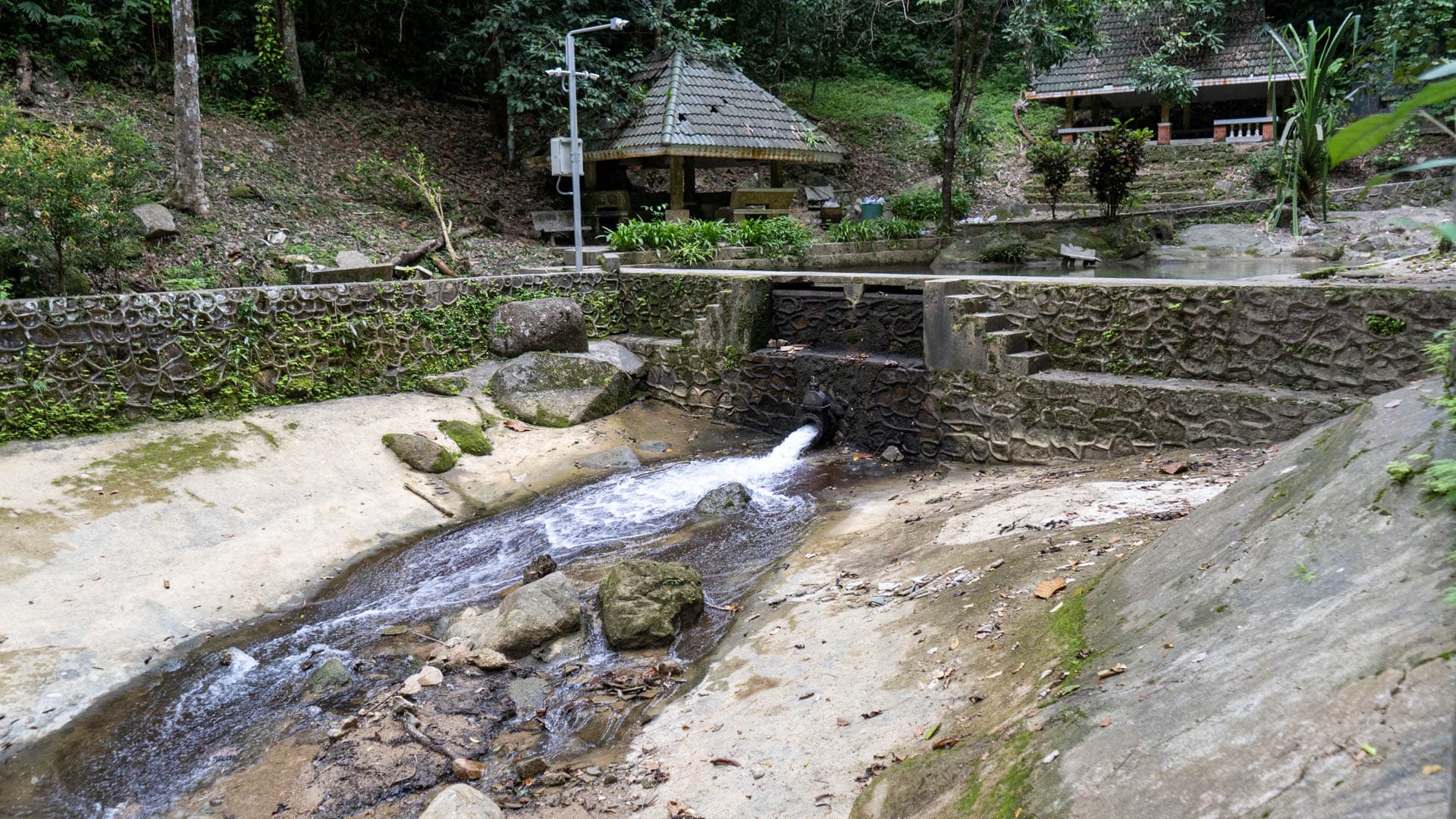
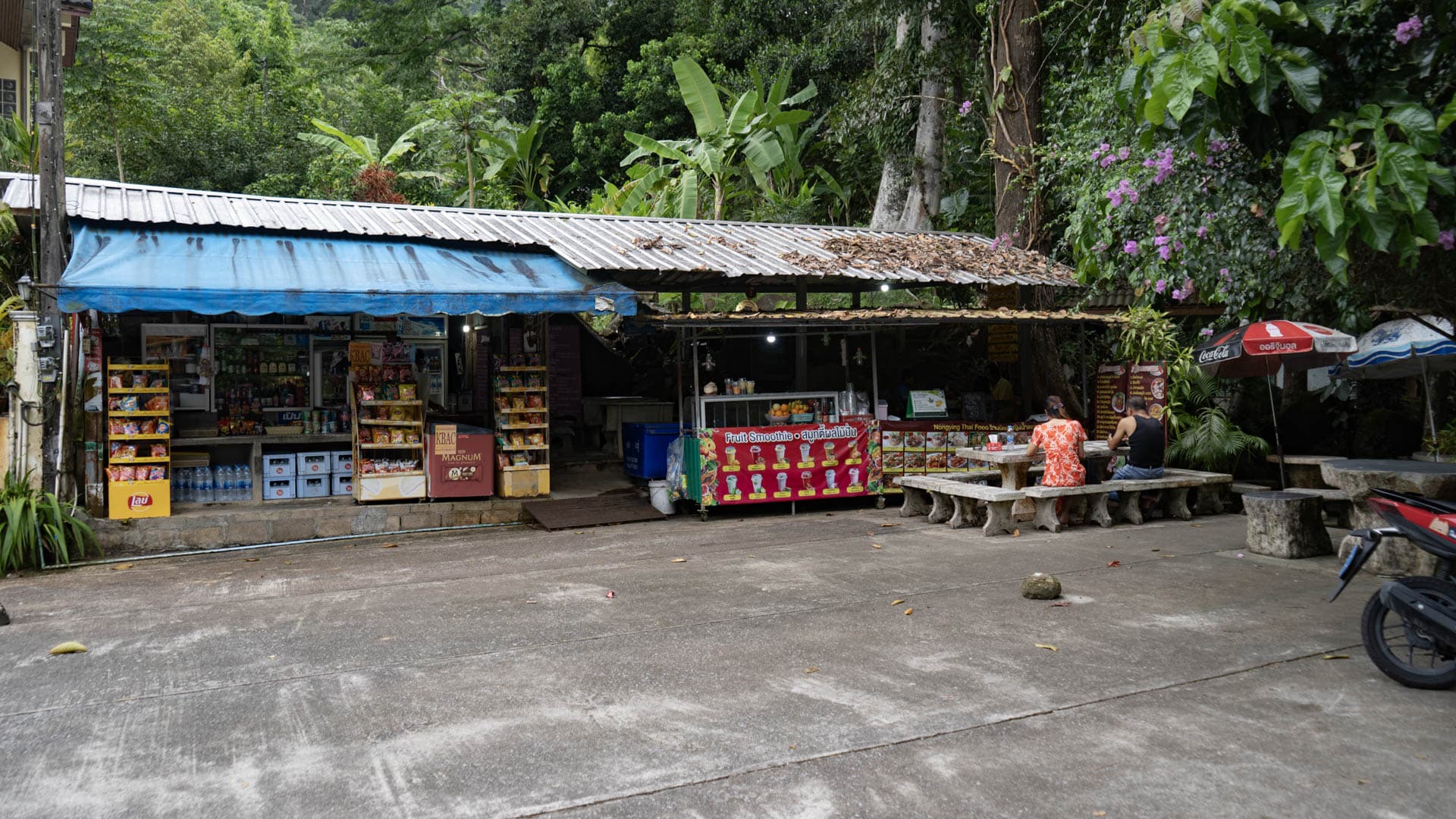
The lower level sits at the base of the staircase — a shallow pool, a bridge, pavilions, and a cluster of small food stalls and restaurants that are there because the local market sustains them. On weekend mornings, families set up picnics here while children wade in the shallows. It is a functioning community space, not a curated visitor attraction.
The waterfall itself requires climbing. A concrete staircase of roughly 130 to 150 meters rises through the forest to the upper tiers, and it is steep enough that local residents use it specifically as a workout — arriving early, climbing repeatedly, leaving before the tourist traffic arrives. The stairs are the point for them, not the water at the top.
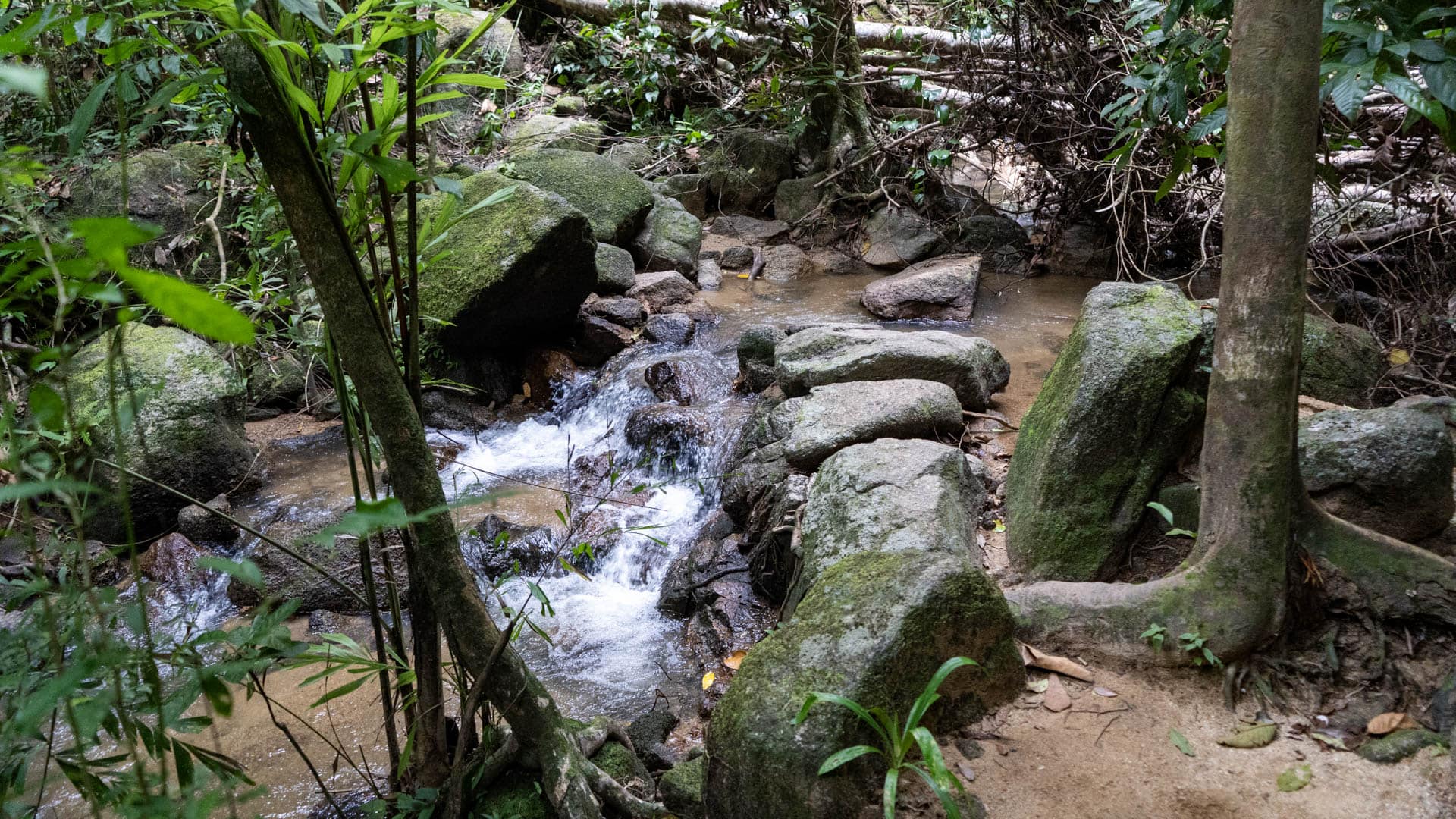
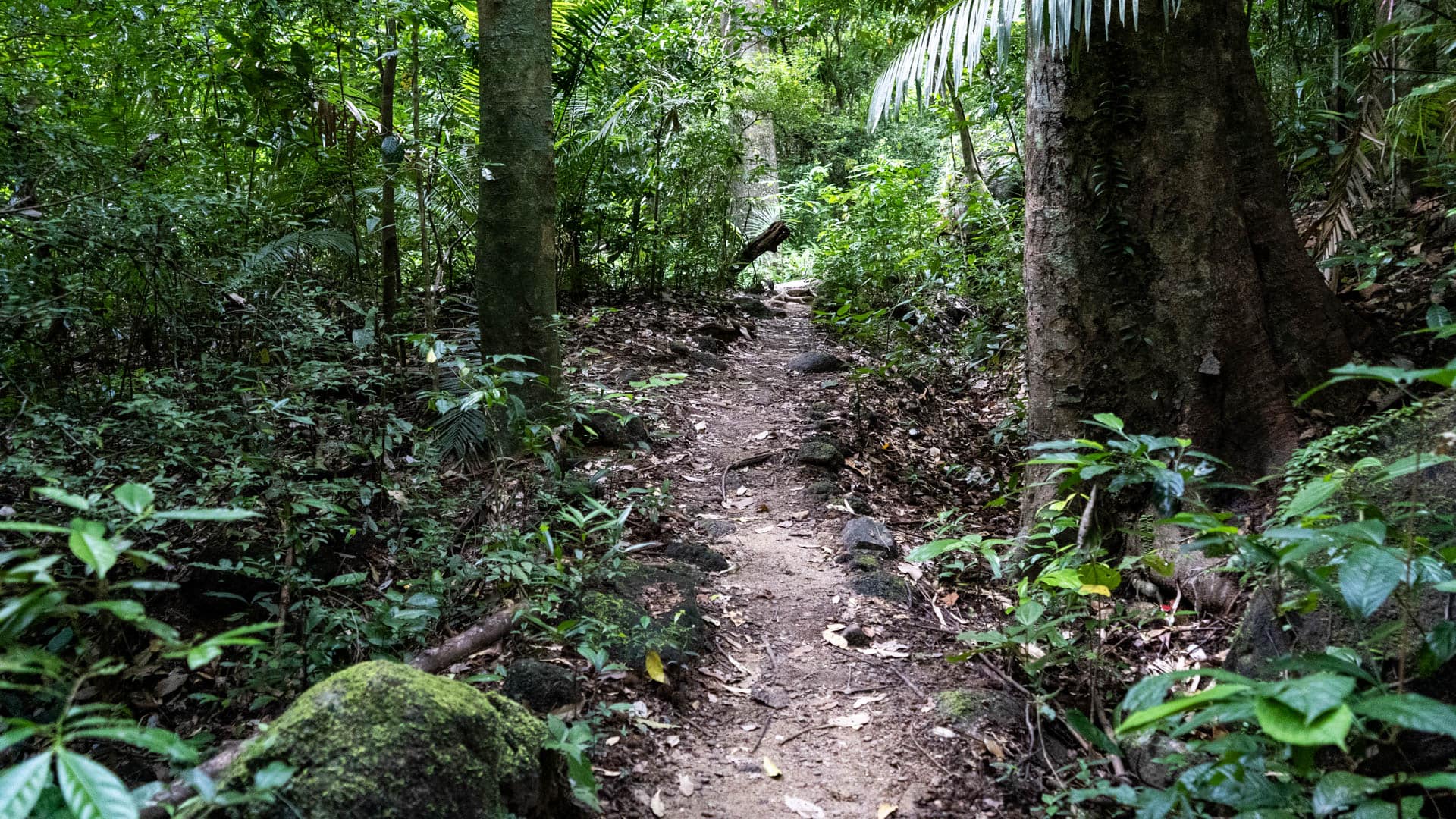
Beyond the concrete, the upper tiers open onto dirt paths and root-covered ground. The number of distinct levels is somewhere between three and four, depending on where you count, and in the wet season, the highest sections become overgrown enough that the boundary between tiers blurs. Footing throughout is serious — the stone and concrete run wet and mossy when the falls are flowing, and the combination of steep angle and slick surface demands attention.
July to November
The seasonal reality at Kathu is more extreme than at the island’s other waterfalls, and it is the single most important factor for anyone planning a visit. From July through to November — with the peak flow typically arriving in August and September — the cascade runs properly, the plunge pools at the upper levels fill to a depth that allows a genuine dip, and the surrounding forest earns its density. The light through the canopy on the approach is the specific green-filtered quality of a working rainforest, and the sound of water carries down the staircase before the falls come into view.
From January through April, that picture reverses. The flow drops to a trickle in January, and by March or April, the rocks can be dry. The staircase is still there, the forest is still there, and the lower area still functions as a local gathering place — but a visitor arriving in April expecting a waterfall may find only the idea of one. There is no reason to soften this. It is a highly seasonal site, and a poorly timed visit delivers little.
A Local Place
Kathu Waterfall is not trying to be Ton Sai or the falls inside Khao Phra Thaeo National Park. Those sites have scale, protected forest, and the weight of a genuine national park designation behind them. Kathu is a municipal-level facility — free to enter, lightly maintained, embedded in the daily life of the district. The restaurants at the base serve the neighborhood as much as they serve visitors. The fitness crowd on the stairs at 7 am is not there for the scenery.
That distinction is not a criticism. Within Phuket’s central zone — for anyone staying in Patong, Kalim, or the Kathu residential area — it is the most accessible piece of working jungle on the island. The forest cover is genuine. The staircase is a real climb. In the right months, the water is real water. The site just carries no illusions about what it is.
What to Know
Entry is free, or close to it — unlike the national park sites at Bang Pae and Ton Sai, Kathu Waterfall sits outside Khao Phra Thaeo’s boundary and carries no park fee. Carry small change in case a parking or maintenance contribution is collected at the entrance; local sources differ slightly on this point. The parking area is large enough to handle weekend traffic without difficulty.
Swimming is possible in the wet season in the upper pools, though the depth varies and conditions should be assessed on arrival. Wading at the base level is more reliable. The stairs and rocks are genuinely slippery when wet — footwear with grip is not optional. The site is unlit and unsafe after dark.
The waterfall sits near Phuket Wake Park and within a short drive of the zipline operations around the Kathu hills. A morning at the waterfall followed by an afternoon at one of the activity operators nearby is a coherent itinerary for visitors based on the west coast who want to cover ground without crossing the island.