Overview
Rawai sits on Phuket’s southern coast, below Chalong and east of Nai Harn. It is not a classic swimming-beach resort in the same way as Kata, Karon or Nai Harn. Its strength is different: local life, seafood, boats, villas, long-stay accommodation and access to the southern end of the island.
The waterfront has restaurants, piers, longtail boats, seafood markets, local shops and views across the bay toward nearby islands. Behind the coast, roads lead through residential areas, cafés, gyms, villa developments, small hotels and everyday services used by both visitors and residents.
For travellers who want a polished beach-resort strip, Rawai may feel too spread out and local. For visitors who want a practical southern base with food, transport, island access and a more lived-in rhythm, it can be one of Phuket’s most useful areas.
Who Rawai Suits
Rawai suits long-stay visitors, villa guests, returning Phuket travellers, families with transport, seafood lovers and people who want access to Nai Harn, Promthep, Chalong and the southern islands.
It is less suitable for visitors who expect a perfect swimming beach directly outside the hotel. Rawai Beach is more of a working waterfront and boat area than a main swimming beach. Visitors who want a classic beach day usually go to Nai Harn, Ao Sane, Ya Nui or other nearby beaches.
The Beach and Waterfront
Rawai Beach is better understood as a waterfront than a main swimming beach. The bay has boats, piers, seafood restaurants and views, but the shallow water and boat activity mean most visitors do not choose it for swimming.
The waterfront is still valuable. It gives Rawai its character and connects the area to island trips, seafood dining and everyday southern Phuket life. The atmosphere is more practical than resort-polished.
Where Rawai Sits on the Map
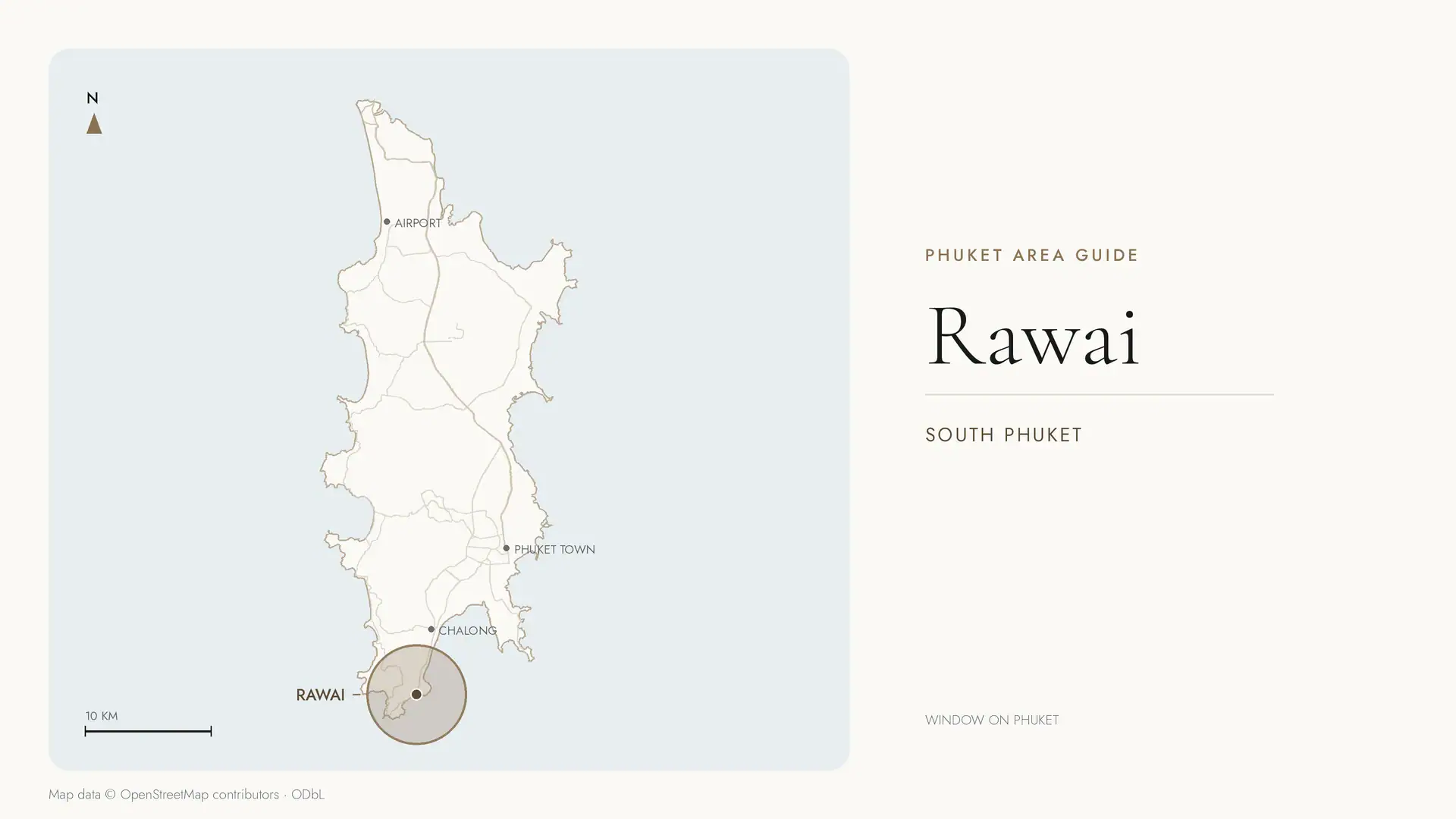
Rawai sits near the southern end of Phuket, close to Nai Harn, Ya Nui, Promthep Cape, Chalong and Phuket’s southeastern coast. This makes it useful for visitors who want the southern circuit rather than the Patong-centred west coast.
Patong, Kamala and Bang Tao are reachable but not especially close. Rawai works best for visitors who plan to spend more time around the south.
Hotels, Villas and Longer Stays
Rawai is strong for villas, apartments, small hotels and longer stays. Many properties offer more space than a standard beach hotel, but exact location matters because the area is spread out.
Visitors should check whether they want to be near the waterfront, close to Nai Harn, in a quiet villa zone or near restaurants and services. Most stays are easier with a car, motorbike or arranged transport.
Food and Daily Life
Food is one of Rawai’s strengths. The area has seafood restaurants, Thai kitchens, cafés, international food, local shops and daily services. The seafood market and waterfront dining are major parts of the visitor experience.
Rawai also feels lived-in. It is not only a holiday strip, and that gives it practical value for longer stays.
Getting Around
Rawai is not a compact walking area. Visitors can walk short local sections, but beaches, restaurants, viewpoints and accommodation areas are spread out.
A car, motorbike or arranged driver is useful. Motorbike riders should be careful with rain, traffic and insurance conditions, especially when moving between Rawai, Nai Harn, Chalong and viewpoint roads.
Nearby
Nearby places include Nai Harn, Ya Nui, Promthep Cape, Windmill Viewpoint, Ao Sane, Chalong Pier, Phuket Big Buddha and island departure points.
Rawai is a strong base for the southern end of Phuket and for visitors who want local food, boats and flexible access rather than a single resort beach.
Rawai in One Sentence
Rawai is a practical southern Phuket base for seafood, boats, villas and long stays, best for visitors who want local access rather than a classic swimming-beach resort.