
Loy Ruea Festival of the Urak Lawoi
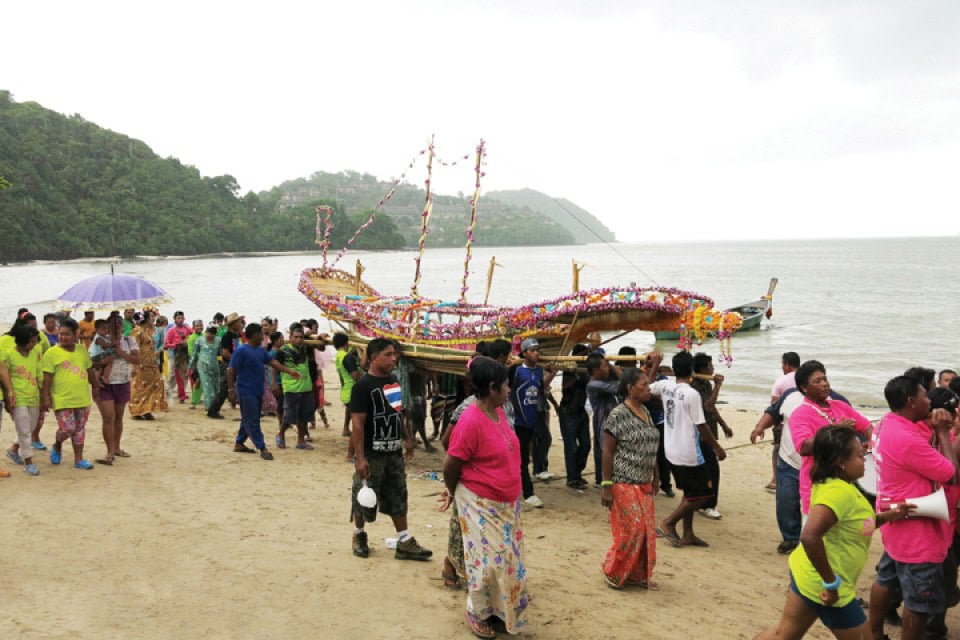
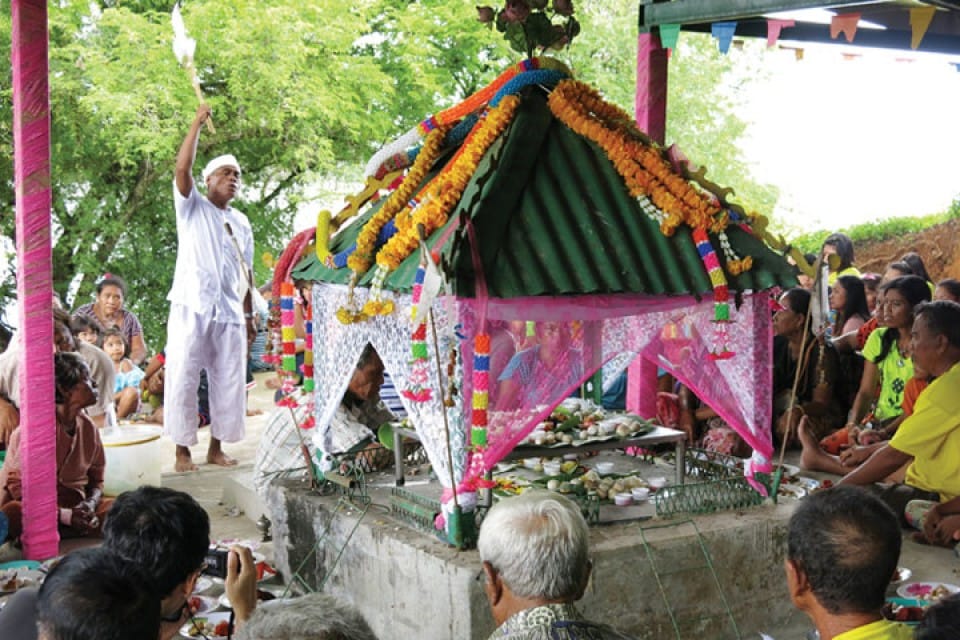
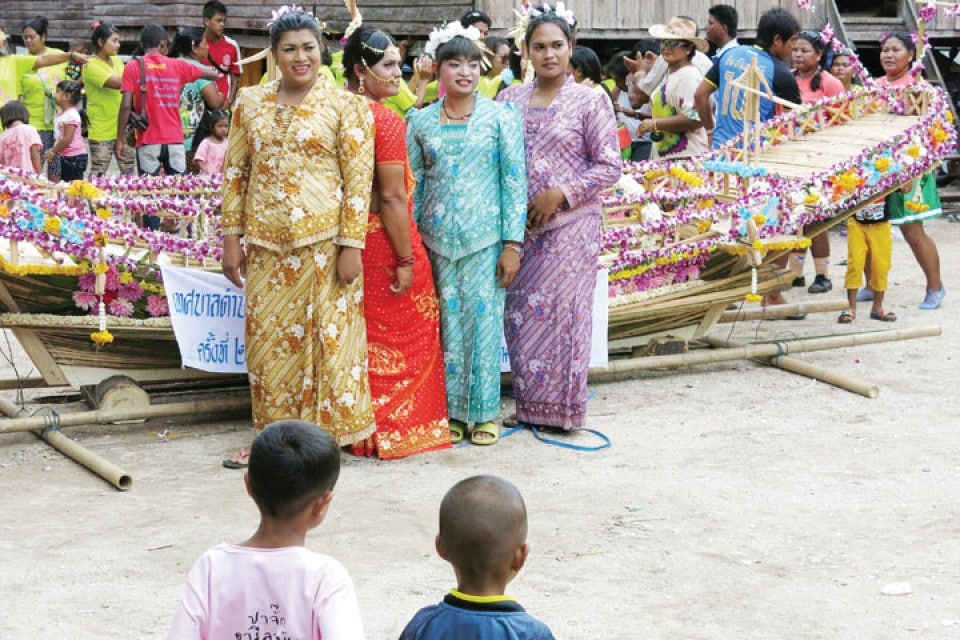
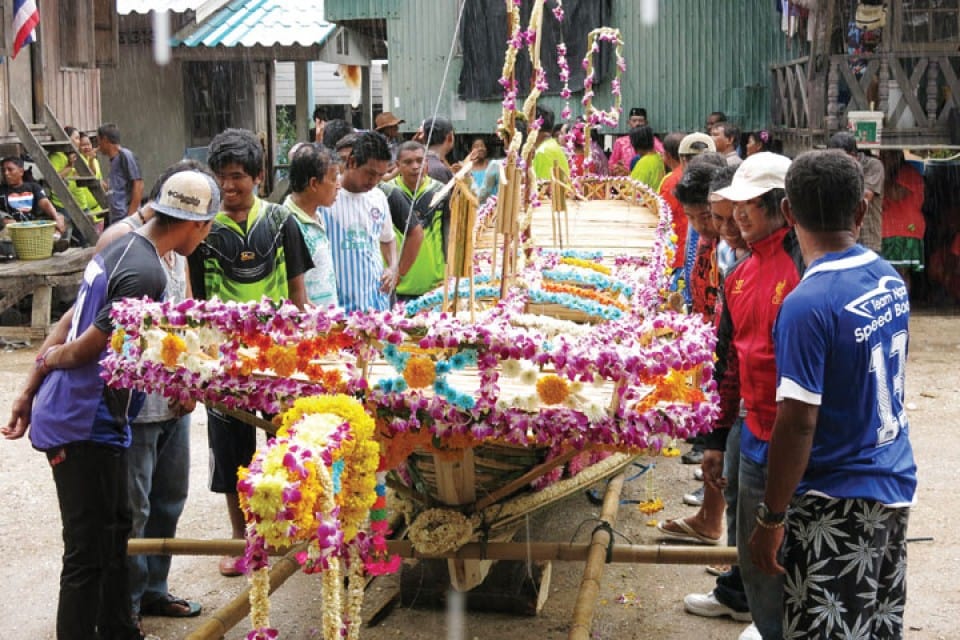
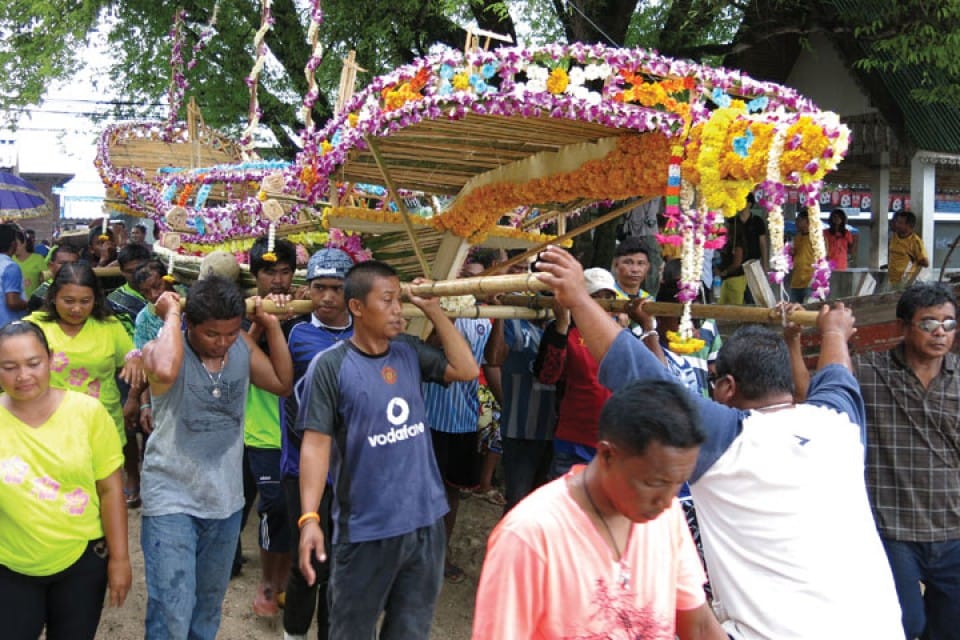
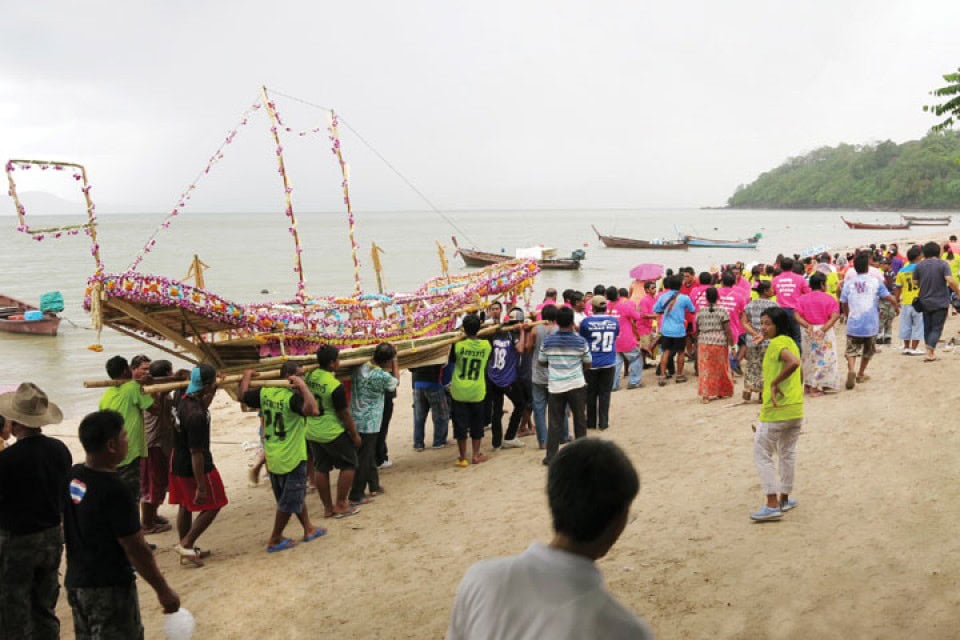
Loy Ruea means “Float the Boat” and is a living Urak Lawoi community tradition held around the sixth and eleventh lunar months. A village builds one ceremonial boat representing its families, ancestors and hopes for protection and renewal. Dates and arrangements for visitors must be confirmed locally each year.
Loy Ruea is one of the most important living traditions of the Urak Lawoi communities of the Andaman region. The festival is centred on the collective building and launching of a ceremonial boat, but it also brings together family, music, dance, ancestor remembrance and the community’s long relationship with the sea.
The original Window on Phuket account focused on the Urak Lawoi village at Tukkae Cape on Koh Siray, east of Phuket Town. It described a multi-day gathering that culminated in a pre-dawn boat launch offshore.
What Loy Ruea Means
The Thai name Loy Ruea means “Float the Boat”. The ceremony is traditionally held twice each year, around the full moon of the sixth and eleventh months of the lunar calendar.
Exact dates and programmes are determined by each community. Dates mentioned in older reports, including those from 2014, are historical and must not be treated as a current festival calendar.
Each Urak Lawoi village observes Loy Ruea in its own way. The details may differ, but the ceremonial boat, family participation and the symbolic sending away of misfortune remain central themes.
One Boat for the Community
Loy Ruea differs from Loy Krathong, where individuals or families release small decorated krathongs. In Loy Ruea, the village works together to construct one elaborate ceremonial boat.
According to the original account, coins, locks of hair and nail clippings may be placed inside the boat as part of wishes for protection and good fortune. Small carved wooden pieces may also be added, with each piece representing a member of a participating family.
The boat therefore represents more than a single person. It carries the concerns, hopes and symbolic identity of the wider community.
The Pre-Dawn Launch
The launch is the most sacred part of the festival. Only a limited number of participants normally accompany the ceremonial boat offshore, while most of the community takes part in the gatherings and rituals held before it leaves.
The launch is associated with renewal, protection and the removal of misfortune. It also reflects the Urak Lawoi belief that the sea is not simply a place of work, but part of a wider relationship connecting families, ancestors, nature and protective spirits.
Because the offshore ceremony takes place before dawn and may include private ritual elements, visitors should not assume that every stage is open to observation or photography.
Music, Dance and Village Life
During the days before the launch, the ceremonial boat becomes the centre of village activity. People gather around it to pay respect, socialise and take part in music and dancing.
The original report described both traditional and popular music, together with large communal dances around the village pavilion. The atmosphere could be lively and informal, but the festival was not organised as a staged tourist performance.
Its purpose was to strengthen community ties and maintain traditions shared between generations.
A Community Built Around the Sea
The original article recorded the memories of village elder and boat carver Mani Pramongkit, who said that the Urak Lawoi community had lived at Tukkae Cape for approximately 400 years.
Fishing, boatbuilding and long-distance movement through the Andaman Sea were central to community life. Although many younger residents had begun working in tourism and other industries, Loy Ruea continued to provide a direct connection with the community’s maritime past.
Khun Mani also explained that only a small number of people still knew how to build boats using traditional methods. This knowledge was once essential to everyday survival, but it had become increasingly difficult to maintain as access to timber, coastline and traditional fishing areas changed.
Traditional Boats and Long Voyages
The old WOP account described traditional long-tail boats built in an upward-curving style known locally as jangnga. Boatbuilders once sourced suitable timber from nearby forests and shaped the boats by hand.
When the sailing season began, crews could leave for several months at a time. The vessels were powered by sails and paddles, and a single boat might carry around twelve people.
According to Khun Mani’s oral history, voyages extended north towards Myanmar. These journeys exposed crews to storms, limited supplies and the risk of attacks at sea.
He recalled that dogs were sometimes taken aboard for protection. Before departure, knives might also be brought to a village spiritual figure to receive a protective blessing. These accounts form part of the community’s oral history and should be understood in that context.
Fishing, Diving and Maritime Knowledge
Life at sea required extensive practical knowledge. Urak Lawoi crews fished, gathered marine resources and searched for valuable shells, including pearl nautilus shells.
The original source described divers working without oxygen tanks, masks or modern scuba equipment. Skills such as breath-hold diving, underwater vision and knowledge of tides and currents were learned through generations of experience.
These abilities were part of a wider maritime culture rather than isolated displays of endurance. Fishing grounds, seasonal movement, weather and boat handling all formed part of the knowledge needed to live from the sea.
Changes to a Formerly Mobile Way of Life
The Urak Lawoi are now more settled than in earlier generations, and memories of extended voyages are gradually fading. Traditional movement along the Andaman coast has also been affected by changing land ownership, coastal development and restrictions governing marine areas.
The original account recorded community concerns about the privatisation of coastal land and the creation of protected marine areas that limited access to places traditionally used for fishing, gathering and travel.
Loy Ruea therefore has importance beyond the festival itself. It provides a visible setting in which maritime history, family identity, boatbuilding knowledge and respect for ancestors can be carried forward.
Visiting Loy Ruea Respectfully
- Confirm the current dates directly with community representatives or local authorities.
- Check whether outside visitors are welcome at the particular ceremony.
- Follow instructions from organisers and avoid private or restricted areas.
- Do not touch the ceremonial boat, offerings or ritual objects.
- Ask before photographing people, especially elders, spiritual figures and close ceremonies.
- Do not assume that the pre-dawn offshore launch is accessible to visitors.
- Use the community name Urak Lawoi where known rather than relying on generic labels.
Planning a Visit to Tukkae Cape
The Urak Lawoi village described in the original article is located at Tukkae Cape on Koh Siray, east of Phuket Town.
Festival information may not always be widely advertised, and arrangements can change close to the event. Before travelling, confirm the lunar timing, village programme, parking, visitor access and appropriate behaviour through current community or local-authority information.
Original Window on Phuket Source
WINDOW on Phuket: Launching a Better Future — Loy Ruea Festival of the Urak Lawoi
For the wider overview, see Phuket Festivals and Living Traditions.