
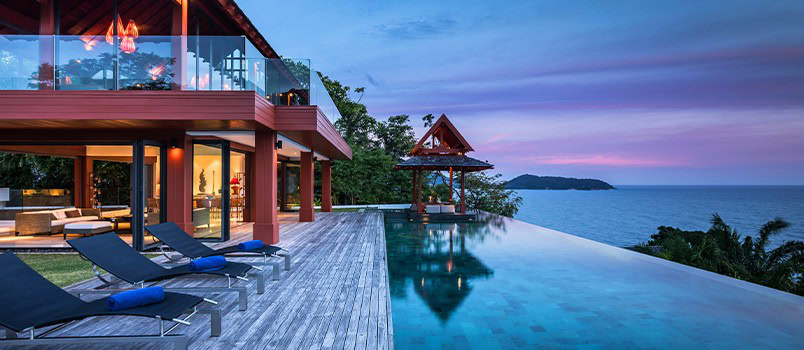
The Phuket property market has matured well beyond a destination for those simply seeking an investment property or a holiday home.
While the island of Phuket is still ideal for investors or vacation home buyers, it has gradually developed into a primary residential destination for foreigners and Thais alike.
Phuket is called the “Jewel of the Andaman” for a reason: its immaculate scenery, crystal clear waters, and pristine sun-drenched beaches have attracted holiday makers here for decades.
Arriving at first as awe-struck tourists, ‘farang’ quickly began buying property. Over the years we have seen foreigners buy condos or villas for holiday homes, then investment properties, but never before have we seen so many young professionals, families and retirees make Phuket their home.
So in this issue we ask what it is about Phuket that has lured so many people to live here full-time. Of all the sun-drenched islands in the world, what makes Phuket so special?
Working and living in paradise
Prior to the pandemic, Phuket was already a popular destination for people working in Asia’s major cities, but wanting to live somewhere more relaxing and less expensive. This was especially true of families with young children. One parent could spend Monday to Friday in Kuala Lumpur, Hong Kong, Singapore or Shanghai, before flying back to their family in Phuket on a Friday evening.
In fact, long before the pandemic popularised the term ‘digital nomad’, Phuket had a thriving population of IT professionals who could connect remotely to their offices or customers around the world. When lockdowns came, digital nomads in every industry flocked to Phuket and saw out the pandemic from a tropical island.
The fear of new variants and new lockdowns has seen unprecedented numbers of people continuing to arrive in Phuket, and the numbers do not seem to be abating.
The high demand for real estate has been accompanied by constant upgrades in the infrastructure and services on the island, from roads to restaurants, from shopping to schools.
Taking care of yourself and your family
Covid-19 highlighted for many people what was truly important in their lives, and prompted millions of people around the world to reassess their priorities. This article is not about the pandemic, but the lifestyle changes many people chose to make as a result – which include relocating to idyllic destinations like Phuket.
One key attraction Phuket offered to young families with children was a large choice of international schools, with a range of competitive fees and high standards of education. To satisfy the growing demand, each year seems to see new international schools opening across the island.
While the schools have helped many families of all nationalities settle in Phuket, after a global medical emergency it was also the quality of the hospitals on the island which appealed to foreigners of all ages.
Phuket is home to two internationally accredited hospitals, offering first-class care ranging from pre-natal to childbirth to old age. In addition to the hospitals, there are modern dental offices and smaller medical centres offering routine care in every area of the island.
This high standard of medical care has made Phuket an attractive place for foreigners to retire. In fact, Thailand is a major hub for medical tourism in Southeast Asia.
Stay just a little bit longer
Any foreigner who wants to travel to Thailand needs some type of visa to travel here. Of course, a 30-day visa exemption for tourism is automatic for many nationalities, but anyone wishing to stay longer needs a long-stay visa. This will require a little homework and a fair amount of paperwork.
There are a few different categories of visa which may be suitable for someone buying a property in Phuket, but these are the main ones a foreigner might consider (requirements and conditions for each visa are subject to change, but are accurate at the time of writing):
-
Thai Elite Visa: long-term visa offered to Thailand Privilege Card members (5, 10 or 20 years). Fees range from THB 900,000 to THB 5 million and include perks such as medical check-ups, expedited immigration processing, free domestic flights, and even supercar test drives.
-
Thailand SMART Visa: designed to attract highly skilled workers, executives, and entrepreneurs in targeted industries.
-
Retirement Visa (1-Year or 5-Year): available to foreigners aged 50 and over. Requires THB 800,000 in a Thai bank (1-year) or THB 3 million for 5-year option.
-
Business Visa (Non-Immigrant ‘B’): for foreigners employed or doing business in Thailand, later extendable after obtaining a work permit.
-
Non-Immigrant ‘O’ Visa: 90-day visa suitable for property owners staying up to three months.
-
Non-Immigrant ED Visa: for children studying in Thailand; parents can apply for accompanying ‘O’ Visas.
Conclusion
Whether you are buying a property for investment, holiday or for permanent relocation, Phuket has something to offer everyone. The infrastructure caters to individuals of all ages, as well as families, and the array of visas available to foreigners means your personal circumstances and length of stay can be well catered for.
This article is from the Thai Residential Phuket Property Guide.
